The first sign is always the hiss. You turn your back for one second to grate a little parmesan, answer a text, shout “Dinner in ten!” down the hallway. When you look again, your perfectly calm pot of pasta water has turned into a foamy volcano, spitting starch and steam all over the stovetop. You lunge for the handle, twist the heat down, maybe say a few words you wouldn’t repeat in front of your grandma. The mess is already done: sticky rings of water burned onto the burner, that faint smell of scorched starch hanging in the air. And dinner, somehow, suddenly feels like work instead of comfort.
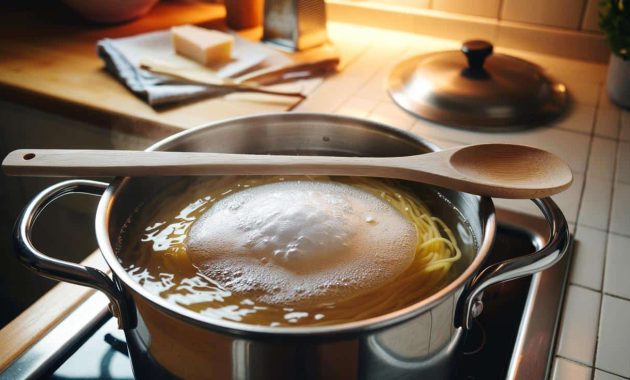
Then there’s that one friend who casually balances a wooden spoon across the pot and walks away like it’s no big deal.
The water rises, touches the spoon… and retreats.
What kind of kitchen magic is that?
Why your pasta water turns into a foamy disaster
Watch a pot of pasta water from the side and it looks almost alive. At first, a few lazy bubbles wander up from the bottom. Then they multiply, bumping into each other, dragging starch with them, building this thick, pearly foam on the surface. That foam is the real troublemaker.
Once it gets high enough, it acts like a lid, trapping steam and pressure. The bubbles underneath grow bigger, push harder, and suddenly your calm simmer is a full-on eruption. One second it’s fine, the next second it’s boiling over like a science fair volcano made of spaghetti dreams and poor timing.
Ask any seasoned home cook and you’ll hear the same confession. The worst boil-overs always happen when you’re cooking for someone else. Date night, family dinner, the first time the in-laws come over. You swear you’ll watch the pot this time, then an email dings, the garlic needs stirring, a kid yells from the other room.
A 2020 consumer survey on kitchen habits found most cooks walk away from the stove “for just a minute” at least three times during a single meal. That tiny gap is all the foam needs. By the time you smell the starchy steam, the pasta has staged its coup, flooding the burner and turning your cozy dinner plan into an emergency cleanup operation.
What’s really happening here isn’t drama, it’s physics. The starch that leaches out of pasta into the water lowers the surface tension at the top. That lets more bubbles form and stick together in the foam. The hotter the water, the more violent and frequent those bubbles become. At some point, the foam becomes so thick and energetic that it simply has nowhere to go but over the rim. The boil-over isn’t random or “bad luck.”
It’s your pot quietly saying: there is more gas and starch down here than this surface can handle.
The quiet power of a simple wooden spoon
Here’s where that humble wooden spoon comes in. When you rest it across the top of the pot, it sits right where the trouble starts: at the surface of the water, just above the rim. As the foam rises, it meets the cooler, drier spoon. Bubbles bump into the wood, stretch, and pop. That breaks up the smooth, thick foam layer into smaller patches, giving trapped steam more places to escape.
The result is simple: fewer giant angry bubbles, less pressure, and a much lower chance of that sudden, catastrophic overflow.
Picture this scene. You’ve got a busy weeknight, two burners going, maybe a toddler hanging off your leg. You toss in the spaghetti, set the timer for nine minutes, and lay a wooden spoon across the pot almost on autopilot. The water climbs, flirts with the edge, taps the spoon, and collapses back down. A bit of foam creeps up, touches the handle, and seems to sigh as it disappears. You glance over just in time to see the water “thinking” about boiling over, then changing its mind.
You still turn the heat down a notch, because you’re not reckless. But your shoulders don’t tense up every time you hear a new bubble burst.
The science behind this isn’t mystical; it’s wonderfully ordinary. Wood doesn’t conduct heat as quickly as metal, so the surface of the spoon stays relatively cooler than the boiling water. That temperature difference is enough to destabilize the bubbles that touch it. The solid barrier also briefly breaks the continuity of the foam blanket, which disrupts the chain reaction of bubbles feeding more bubbles. And because wood is slightly rough and porous, tiny pockets on the spoon’s surface act as little “foam traps,” catching and collapsing bubbles as they rise.
It won’t rescue a pot that’s raging at full blast with a tight lid on, but it shifts the balance just enough that a simmer behaves like a simmer again.
How to actually use the wooden spoon trick (so it works)
The move itself is almost laughably simple. Once your pasta is in and the water returns to a steady boil, lay a clean wooden spoon flat across the diameter of the pot, so each end rests on the rim. That’s it. The handle should sit horizontally, not leaning in. You want the middle of the spoon right above where the foam tends to rise. Then adjust the heat so the boil is lively but not furious.
The spoon isn’t a forcefield. It’s more like a gentle bouncer at the door, quietly sending back the rowdiest bubbles before they cause trouble.
Where people get tripped up is treating the spoon like a magical guarantee. Crank the stove to maximum, slap on a lid, walk away for ten minutes, and no piece of wood is going to save that pot. The trick works best when the water is at a strong simmer or light rolling boil, not a jet engine. Also, a small spoon on a huge stockpot leaves wide open gaps for foam to escape. Pick a spoon that spans most of the pot so the center is covered.
Let’s be honest: nobody really does this every single day. But on the nights you remember, it can be the tiny difference between cooking and damage control.
*A wooden spoon doesn’t change your recipe, it changes your stress level,* a Brooklyn chef told me, laughing as she wiped a tiny ring of foam off her pot. “It gives you just enough leeway to cook like a human, not a hawk staring at boiling water.”
➡️ The shoe deodoriser hack that gym trainers desperately need this winter it’s a lifesaver
➡️ People who feel emotionally guarded often learned to prioritize control over comfort
➡️ HVAC engineers recommend this thermostat schedule for maximum savings
➡️ Simple brow lamination techniques create fuller thicker brows without salon visits
- Use real wood – Not bamboo-coated metal, not plastic. Plain, unfinished wood handles the heat and foam best.
- Avoid super high heat – Aim for an enthusiastic boil, not an aggressive roar that hurls water over any barrier.
- Skip the tight lid – A half-cover is fine, but a sealed lid plus foam defeats the spoon’s whole purpose.
- Clean it well – After starch-heavy cooking, wash and dry the spoon thoroughly so it doesn’t stay gummy or harbor odors.
- Retire damaged spoons – If the wood is cracked, burned, or splintering, use it for decor or compost, not boiling water.
More than a hack: what this tiny ritual says about our kitchens
There’s something oddly reassuring about this whole trick. In a world of smart ovens, air fryers, and endless kitchen gadgets, the thing quietly keeping your pasta in line is a simple piece of wood your grandmother probably used too. It doesn’t beep at you, doesn’t run on an app, doesn’t need a manual. You just lay it across a pot and trust it.
We’ve all been there, that moment when dinner feels like one more spinning plate, ready to shatter if you blink. A wooden spoon across boiling water is the opposite of that feeling. It’s a small, physical reminder that not every solution has to be complicated or perfect to be effective.
| Key point | Detail | Value for the reader |
|---|---|---|
| Wooden spoon disrupts foam | Cooler, solid surface pops rising bubbles and breaks the foam layer | Reduces sudden boil-overs and messy stovetops |
| Heat level still matters | Works best at a strong simmer or light rolling boil, not on maximum heat | Helps readers adjust their cooking habits for calmer, more controlled boiling |
| Right tool, right placement | Plain wooden spoon laid flat across the pot, spanning most of the rim | Quick, practical setup that anyone can copy in seconds |
FAQ:
- Does the wooden spoon trick really work every time?It works reliably when the boil is controlled and the spoon spans the pot. If the heat is too high or the pot is covered tightly, foam can still spill over.
- Why does it have to be a wooden spoon and not metal?Wood stays cooler on the surface and doesn’t conduct heat as aggressively as metal, so bubbles are more likely to pop when they touch it.
- Is it safe to rest a spoon on a pot like that?Yes, as long as the spoon is heat-safe, not coated in plastic, and the handle is stable on the rim so it doesn’t slip into the pot or onto the burner.
- Will this trick work for rice, potatoes, or soups too?It helps with any starchy boil that creates foam, like potatoes or some soups, though you still need to watch the heat and pot size.
- Does putting a spoon on the pot change the taste of the pasta?No, it doesn’t touch the food directly in a way that would alter flavor. It simply interacts with the foam and steam at the surface.