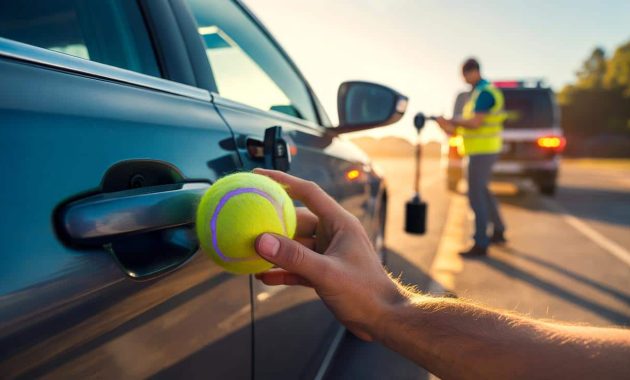
Keys on the seat. Door clicks shut. A stranger mentions a clever hack.
Your phone is out of reach. The sun feels louder. You remember a viral clip with a tennis ball and a miracle fix. The mind grabs at shortcuts when stress spikes. Some work. Most don’t. Here’s what’s real, what’s risky, and what gets you back on the road without wrecking your car or your wallet.
The tennis ball myth, unpacked
The promise sounds irresistible. Cut a hole in a tennis ball. Press it over the keyhole. Squeeze hard. The door unlocks. The internet loves a tidy rescue.
Modern locking systems shut that door. Most cars built in the last two decades isolate the mechanical cylinder from the electronic latch. The fob, control unit and sensors run the process. Air pressure from a rubber ball cannot actuate that chain.
Even on older vehicles, seals and tolerances disperse the pressure you create. The keyway is not an airtight chamber. The theory falls apart under physics and under a screwdriver.
Viral does not mean viable. Central locking modules will not pop open because a tennis ball squeezes air at the keyhole.
MythBusters and professional locksmiths tested the gimmick. The result stayed the same across brands and ages: no unlock. YouTube successes usually hide a second key or a pre-unlocked latch. The spectacle sells. The method doesn’t.
What actually helps when you’re locked out
Do a calm 60-second check
- Try every door and the boot. Some cars leave one door unlocked after a partial cycle.
- Look for a window dropped a fraction. Do not pry it. That cracks glass and bends guides.
- Check whether your phone or watch can unlock the car. Many brands offer remote unlock in their apps.
- If a spare key exists, call the person who has it now. Share your precise location.
- If a child or pet is inside and heat is rising, call emergency services immediately (911 in the US, 999 in the UK).
If a life is at risk, break the window or call emergency services. Cars heat fast. Minutes matter.
Use official help before DIY damage
Roadside assistance teams carry wedges, inflatable bags and long-reach tools. They open doors without harming airbags, paint or sensors. They also verify ownership, which protects you.
Your options depend on cover and time of day. Dealer support may unlock connected cars remotely. Some warranties include recovery. Credit cards and insurers often hide a lockout benefit in small print. Ask before you pay cash.
➡️ Meteorologists warn early March signals suggest the Arctic is entering uncharted territory
➡️ More people are putting aluminum foil on door handles : here’s why
➡️ After Exercises in the Pacific and Philippine Sea, USS George Washington Returned to Japan
Independent locksmiths work too. Call ahead. Get the price, the call-out fee and any out-of-hours surcharge. Ask for an invoice and proof of ID requirement. The cheapest option is rarely the one that leaves your door card intact.
Coat hangers, screwdrivers and pry bars cost more in the end. Door seals, window channels and side airbags do not forgive guesswork.
| Option | Typical cost | Wait time | Risk to car |
|---|---|---|---|
| Car brand app remote unlock | Usually free with subscription | 2–10 minutes | None |
| Roadside assistance (AA, AAA, etc.) | Included or £/$60–120 | 20–90 minutes | Very low |
| Professional locksmith | £/$80–200, more at night | 20–120 minutes | Low if reputable |
| Break a window (last resort) | £/$150–450 per pane | Instant | High, injury risk |
| DIY wedges/coat hanger | £/$20–60 in tools | Varies | High: airbags, wiring, paint |
Why we keep falling for quick fixes
Shortcuts soothe panic. A neat trick shrinks a big problem to a small action. Social feeds reward that feeling with tight edits and applause. The result looks repeatable. The setup hides the trick.
Cars moved on. Security hardened. Sensors and encrypted fobs replaced rods and levers. The tennis ball became a prop from a simpler era. We still want control. We just need smarter backups.
Build quiet redundancy that actually works
Make a spare work for you
- Store a spare with someone who answers the phone during your usual driving hours.
- Add a key safe at home with a code you change quarterly.
- Use a tracker tag on the spare key. Labels fall off. Bluetooth pings do not.
Use the tech you already own
- Install your car’s official app. Set up remote unlock and test it once in a safe place.
- Add your partner as an authorised user if the brand allows digital key sharing.
- Create a pre-drive routine: keys, phone, wallet. Touch each item before you shut the door.
Know your car’s behaviour
- Many cars auto-unlock if the fob stays inside. Others lock and arm anyway. Check your manual.
- Weak fob batteries cause false lock signals. Replace them yearly and keep a spare coin cell in the glovebox.
- Some older cars with pull-up door pins can open with a shoelace loop. Modern frameless or shielded pins won’t.
Safety and law you should know
Trying to open a car in public draws attention. Keep your ID and proof of ownership ready. Police may ask questions. Professionals will ask as well, which protects you against theft claims.
If you must break glass because a child or pet is in danger, choose a small pane away from occupants. Cover the area with a jacket. Hit near the corner. Turn your face aside. Clear shards before reaching in. Seek medical help for cuts.
Some US states have Good Samaritan protections for forced entry to save a life. Conditions usually include calling 911 first, using no more force than necessary and staying on scene. The UK expects the same reasonable steps. Document the situation if you can do so safely.
Common questions, straight answers
- Can a vacuum pump or plumber’s bellows open a modern car? No. The latch logic sits in electronics, not air pathways.
- Will insurance cover a locksmith? Breakdown cover often does. Standard policies vary. Keep receipts.
- Is there any harmless DIY method? A plastic wedge and long-reach tool in trained hands can work. Untrained hands bend frames and trip airbags.
- Does window tint stop breakage? No. Film holds shards together but the pane still fails. Cutting through film takes time and care.
Choose the fix that protects life first, then the car, then your timetable. That order makes hard moments simpler.
Extra context that saves money and stress
Ask your insurer about “zero-mile” roadside assistance. That means they come to your driveway as well as the motorway. Add this to a policy before you need it. Newer cars sometimes include remote services for a trial period. Set reminders to renew, or you lose the unlock button without noticing.
Do a five-minute drill at home. Lock the car with a window cracked and practice calling your chosen service. Save the policy number as a contact. Add your number plate to the contact name. Small prep turns a shaky moment into a routine call. That beats a tennis ball every day of the week.