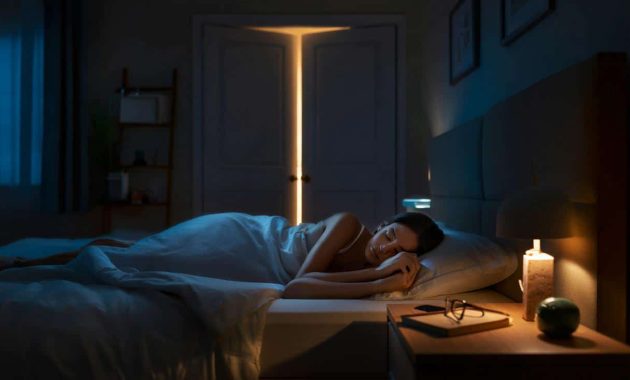
The light in the hallway is still on, leaking a thin golden line under the bedroom door.
Inside, the room is quiet, almost wrapped in its own bubble. The handle clicks, the door closes, and suddenly the world shrinks to four walls, one bed, one breathing rhythm. Some people can’t fall asleep without that small ritual. They’ll double-check the latch, pull the door tight, and only then let their mind soften at the edges.
Others find that habit a bit extreme.
Yet if you pay attention long enough, you start to notice something: those who sleep with the door closed often share a certain way of moving through life.
They guard their space.
They love control just enough to feel safe.
And they may be more alike than they think.
Why closed-door sleepers are wired a little differently
Spend one night in a shared holiday house and you’ll see it immediately.
One friend falls asleep on the couch, wide open to every sound. Another leaves their bedroom door half open, “so I can hear if someone needs me.” Then there’s the person who disappears early, shuts the door with a quiet but firm click, and doesn’t reappear until morning.
That last one is rarely the most chaotic person in the group. They give off a low-key, contained energy, like someone who knows where their phone charger is at all times and always carries tissues. Behind that closed door, their brain finally lets go of the day’s constant scanning. That small physical border offers a mental border too.
Take Clara, 32, who travels constantly for work.
Hotels blur into each other, but one rule never changes: she always locks and fully closes her bedroom door, even in boutique places that feel safe. “I can’t sleep if it’s open,” she admits. “I need to know what’s ‘in’ and what’s ‘out.’”
She’s not alone. A YouGov survey in the US found that a majority of people sleep with their bedroom door closed or mostly closed, often saying they feel safer and more “contained.” It’s rarely only about security. Closed-door sleepers often describe a feeling of having their own little ship in the night, sealed from currents they don’t control. That speaks volumes about how their mind organizes the world.
Psychologists would call this a preference for boundaries and a higher need for environmental control.
Not control in the toxic sense, but in the quiet, background way your brain scans for threats and loose ends. People who sleep with the door closed tend to regulate that scanner by limiting sensory input. Less hallway light, fewer sudden shadows, fewer random noises.
Logical, yes, but also emotional. They often grew up needing a small corner of privacy to feel like themselves. So as adults, they carve out micro-territories: a desk arranged just so, a carefully curated home screen, a bedroom that “ends” at the door. *Their nervous system relaxes when space has clear edges.* That same pattern shows up far beyond bedtime.
The daily habits that reveal a closed-door personality
You can almost guess a closed-door sleeper by how they start their evenings.
They’re the ones dimming the lights, closing the curtains fully, setting the alarm for the next day before they even change into pajamas. That little pre-sleep choreography is not just about rest. It’s a way to tell their brain, “The outside world stops here.”
A simple gesture you can try if you’re curious: before bed, do a quick three-step ritual. Shut the door. Put your phone face down or on airplane mode. Take one minute to look around the room and notice what’s inside this space and what’s not. It sounds almost too simple, but that physical boundary often unlocks a mental one.
Of course, some people feel guilty about this. Especially parents, caregivers, or roommates who think leaving the door open proves they’re available, kind, flexible.
Closed-door sleepers are often quietly judged as “rigid” or “overly private,” and they internalize that more than they admit. They may even start sleeping with the door half-open at someone else’s place, just to seem easy-going, only to lie awake longer.
There’s a tender irony here: many of these people are actually very dependable, the kind who remember birthdays and respond quickly to messages. They just need one place in their life where they don’t have to be “on.” Let’s be honest: nobody really does this every single day without slipping once, yet they keep trying to protect that last 8-hour window of peace.
“Closing the bedroom door at night is like putting a lid on the day,” says one sleep coach I spoke to. “People who crave that lid often have big internal worlds and a lot of emotional responsibility. The door is their pause button.”
- They respect boundaries
Closed-door sleepers tend to understand “no” and “not now.” Physical space mirrors emotional space. - They lean toward planning over improvising
Not necessarily control freaks, but they like knowing what’s coming next, especially at night. - They recharge alone
Even social, talkative closed-door people often need solitude to reset, away from shared spaces. - They notice tiny details
That cracked-open door, that flickering hallway light, that draft under the frame — their brain picks it all up. - They value inner privacy
There’s usually a part of them that no one fully accesses. The door is just the visible symbol.
What your bedroom door says about you (and what you do with that)
Once you start paying attention to your door habit, it’s hard to unsee what it reveals.
If you’re a closed-door sleeper, you might recognize yourself in the person who needs a moment alone after social events, even when you had fun. Or in the colleague who prefers a quiet office to an open-plan circus.
This doesn’t mean you’re antisocial or cold. It often means your internal volume is already high, and outside noise quickly tips you into overload. The door simply gives your nervous system a fighting chance. You can absolutely lean into that, instead of apologizing for it, by building more “doors” into your day: clear work hours, quiet breaks, honest no’s.
If you’re on the other side — you sleep with the door open and can’t stand the feeling of being shut in — reading this might feel a little foreign. You might associate closed doors with conflict, secrets, or childhood rules.
For you, openness equals safety. You like hearing the house breathe, knowing others are close. That’s just as valid, and it often signals a more externally oriented personality, someone who is energized by shared space. The key is not to pathologize either style. The real mistake is pretending you’re one type when your body knows you’re the other, all because you think you “should” be different.
Around this tiny, almost invisible nightly choice, entire stories of personality, history, and coping strategies unfold.
Some readers will recognize the quiet relief of turning the handle and claiming a room. Others will feel anxious at the very idea and reach for the doorframe again.
What matters most is the conversation this opens: how much space do you allow yourself, and how do you protect it without shutting others out? The line between safety and isolation is thin. The bedroom door becomes a daily test of where you place that line, and how kindly you treat the part of you that still needs a small, closed world to sleep.
➡️ Cancer Uses Tiny Bubbles To Prepare Its Spread Through The Body
➡️ The trick you need to know to do a chic bun in under a minute
➡️ A retiree wins €71.5 million in the lottery, but loses it all a week later because of an app
➡️ The simple trick to clean wooden furniture: they stay like new
➡️ Goodbye, Christmas tree : meet the plant hitting florists that’s set to trend in
| Key point | Detail | Value for the reader |
|---|---|---|
| Closed doors signal boundary needs | Sleeping with the door shut often reflects a stronger desire for control and clear limits | Helps readers understand their own (or others’) need for space without shame |
| Night rituals reveal personality | Pre-sleep gestures like checking the lock or dimming lights show how a person regulates anxiety | Offers ideas to tweak routines for calmer, deeper rest |
| Neither style is “right” | Door open vs. closed ties to personal history, nervous system, and social habits | Encourages more tolerant, nuanced conversations at home and in relationships |
FAQ:
- Does sleeping with the door closed actually improve sleep?For many people, yes: less light and fewer noises reduce micro-awakenings, especially in noisy homes or shared spaces.
- Is preferring a closed door a sign of anxiety?Not automatically; it can be linked to mild anxiety, but it can also simply reflect a healthy need for boundaries and privacy.
- What if my partner wants the door open and I want it closed?Try small compromises: nearly closed door, white noise, or specific “open door” nights when one of you feels more vulnerable.
- Can childhood experiences affect my door habit?Very often; strict parents, noisy homes, or a lack of private space growing up can shape how you feel about doors as an adult.
- Should I force myself to change my door preference?Only if it’s clearly harming your well-being or safety; otherwise, it’s usually wiser to understand the need behind it and adapt your environment around that.