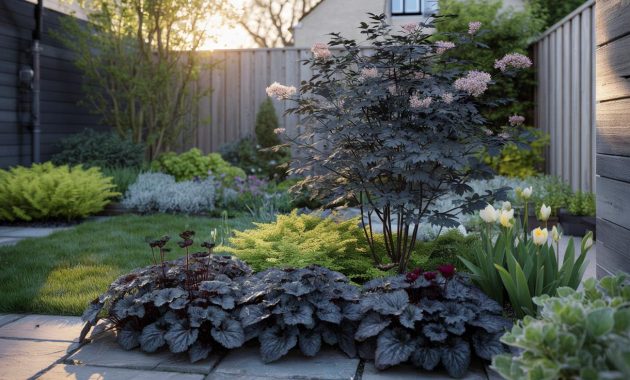
Something’s missing.
Across Europe and increasingly in the UK and US, home gardeners are flirting with a darker idea: beds and borders built around nearly black foliage. This shift is less about a gothic mood board and more about smart plant design, pest pressure, and climate resilience. The “black garden” is no longer a niche Instagram trend; it’s quietly becoming a practical strategy.
The quiet drama of a black garden
When green starts to feel boring
Most gardens run on one default setting: green, everywhere, all the time. It signals life and health, but when every shrub, lawn and hedge shares the same tone, the overall effect can feel flat, especially at the end of winter when the light is dull and low.
Deep purple and near-black leaves change that rule instantly. They break up the visual monotony without needing expensive landscaping or hardscaping. A single dark shrub or clump of almost black perennials can pull the eye, add depth to a border, and make ordinary plants around it look sharper and brighter.
Black foliage acts like eyeliner for the garden: it sharpens the shapes and makes colours around it stand out.
Designers sometimes talk about “negative space” and “anchors” in a planting scheme. Dark leaves can play both roles at once. They ground a composition, frame lighter plants, and create a feeling of structure even in a small city courtyard or rental balcony.
Instant design without a full makeover
Many homeowners want a more modern looking garden but stop at the price tag for new paving, lighting or garden furniture. Black-foliage plants offer a shortcut. Place them strategically and they deliver a sense of intention, as if a professional has redrawn the whole space.
- In a tiny front garden, one dark shrub in a large container can define the whole entrance.
- On a patio, a low, black-leaved groundcover threads between pots and visually “links” them.
- In a large border, a group of dark plants marks a focal point from the house or terrace.
Because these plants work through contrast rather than size, they are especially effective in compact urban gardens where every square foot has to earn its place.
The headline plants: black elder and obsidian heuchera
Black elder: a light, airy skeleton for the garden
Among the stars of this darker palette sits the black elder, often sold under names like ‘Black Lace’ (Sambucus nigra). It looks delicate, a bit like a Japanese maple, but behaves far more robustly in temperate climates.
Its key features:
➡️ The grossest part of your home you never clean: a cleaning expert’s trick
➡️ Are bottled flavoured waters treated? 60 Millions de consommateurs experts shed light
➡️ China turns a desert into a giant fish and shrimp farm
- Finely cut, deep purple to almost black leaves.
- A quick growth rate, giving structure within a couple of seasons.
- An open, airy shape that doesn’t feel heavy or oppressive.
- Soft pink, highly scented flowers in early summer.
Placed at the back of a border or as a freestanding feature on a lawn, black elder creates height and a gentle canopy. It marks boundaries without feeling like a solid wall.
A single black elder can visually hold together an entire border, acting as the “spine” of the design.
Obsidian heuchera: velvet darkness at ground level
For the front of the stage, many gardeners turn to heucheras, and one variety, ‘Obsidian’, has become a favourite. It’s a hardy perennial that keeps its foliage through much of the year, which makes it particularly valuable during late winter and early spring when many plants are still dormant.
Obsidian heuchera stands out because:
- Its leaves are a deep, glossy purple that reads as black from a distance.
- The compact habit creates a dense, neat carpet.
- It works equally well in the ground or in containers.
- It pairs easily with brighter foliage and flowers.
At the base of shrubs, along paths, or edging a terrace, it provides a velvety, dark backdrop that makes neighbouring plants appear fresher and lighter.
Why darker leaves bother pests less
Pigments with a double job
The aesthetic appeal of black foliage is the obvious story. The less visible story is chemical. Many dark-leaved plants owe their colour to high levels of pigments called anthocyanins. These help protect the plant from ultraviolet light and heat, but they also change how tasty and tender the leaves are to small sap-sucking insects such as aphids.
Dark foliage tends to be tougher and less appealing to many common garden pests, effectively putting them off the menu.
Gardeners report fewer visible infestations on some dark-leaved varieties compared with their green cousins. Even when minor damage does occur, it’s simply harder to spot against the dark background, so the garden keeps a cleaner look without constant intervention.
How black plants support a healthier ecosystem
The story doesn’t end with deterrence. Plants like black elder bring strong ecological benefits once they mature. In late spring to early summer, they produce clusters of pale, scented flowers that act like a magnet for pollinators and natural predators of pests.
Syrphid flies, lacewings and ladybirds are particularly attracted to these nectar-rich blooms. These beneficial insects, sometimes nicknamed the “garden police”, patrol nearby plants and feed on aphids, whitefly and other problem species.
By planting dark-foliage shrubs that feed beneficial insects, you recruit a standing army against pests without reaching for sprays.
This shift aligns with a broader movement towards low-chemical gardening. Instead of targeting pests directly with products, more gardeners are now trying to balance the system so that outbreaks rarely reach crisis levels.
Why late winter is prime time for a black makeover
Planting before the rush of spring
The tail end of winter, when the soil is workable but plants haven’t fully woken up, offers a strategic window. Roots can begin to establish in cool, moist ground, while top growth remains modest. By the time summer heat arrives, a newly planted black elder or heuchera will have a better developed root system and a higher chance of coping with dry spells.
| Task | Ideal timing | Why it helps |
|---|---|---|
| Plant black elder | Late winter to early spring | Gives roots time before summer heat |
| Plant heuchera ‘Obsidian’ | Late winter, or autumn in mild areas | Ensures good establishment and winter presence |
| Light prune elder | End of winter | Encourages bushier, denser new growth |
Low-maintenance by design
Another reason the black garden is gaining traction: it doesn’t demand much extra work. Once planted in reasonably suitable soil, these varieties are surprisingly forgiving. Basic care usually looks like this:
- Regular watering for the first few weeks after planting.
- A layer of mulch to keep roots cool and reduce evaporation.
- A light annual prune for elder to refresh the framework.
For busy homeowners, that balance of strong visual impact and modest upkeep is a key draw. The plants do the heavy lifting; you just give them a good start.
Making black sing: contrast, light and clever pairings
Pairing dark foliage with luminous neighbours
A fully black planting scheme can feel heavy or static. The real magic appears when dark foliage sits next to lighter, more reflective plants. Gold, lime green, silvery grey and soft blues all set off black particularly well.
Some effective combinations include:
- Obsidian heuchera with a golden grass such as Hakonechloa.
- Black elder behind a variegated dogwood or pale-leaved hydrangea.
- Dark ajuga or ophiopogon (black mondo grass) against a silver artemisia.
Think of black plants as the shadow in a painting: they give shape and intensity to everything bright around them.
When spring bulbs or early perennials flower nearby, their colours appear sharper on this dark stage. Simple tulips or daffodils suddenly look as if they belong in a design magazine.
How light changes black plants through the day
Light levels also influence the effect. In full sun, some black-foliage plants take on a rich burgundy glow, showing more red notes. In light shade, they read closer to charcoal or ink. Positioning them where low morning or evening sun can backlight their leaves adds an almost stained-glass effect.
For small gardens, using light this way matters. One carefully placed dark shrub at the end of a path can draw the eye, making a short space feel longer and more layered.
Going further: practical scenarios and small risks to weigh
How a typical small garden could change in one season
Picture a standard 6×4 metre UK back garden: a rectangle of lawn, a narrow bed along the fence, a few tired shrubs. With three or four black-foliage additions, the feel shifts fast.
- Plant one black elder in the back corner as a focal point.
- Add a line of obsidian heuchera along the patio edge.
- Drop in a dark-leaved grass or ajuga patch where the eye naturally rests from the kitchen window.
By early summer, the border reads as intentional: the dark elder frames the view, the heuchera ties the patio to the planting, and the lawn feels less like a leftover space and more like a deliberate gap between elements. Pollinators arrive with the elder’s flowers, and pest outbreaks tend to stay calmer.
What to watch out for with black gardens
The black garden is not a magic trick without trade-offs. Dark foliage can scorch in extreme heat if soil dries out badly, especially in containers. In very shady corners, deep black leaves may feel a bit oppressive rather than stylish, so mixing them with lighter plants matters.
There is also a design risk: overusing a single dark variety can make a garden feel uniform again, just in a different colour. Varying leaf size, shape and height keeps the scene lively. A tall, feathery elder, a low, rounded heuchera and a strappy dark grass create a far richer mood than three shrubs of the same habit.
For readers new to this trend, one flexible strategy is to begin with containers. A large pot with a black-leaved shrub and a ring of dark heucheras at the base lets you test how the colour plays with your existing plants and light before committing to bigger changes in the ground.