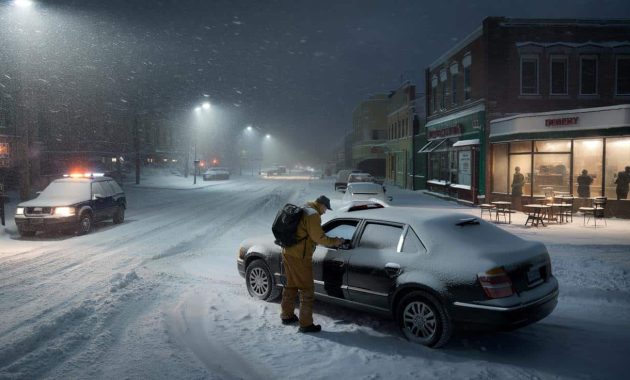
Just after sunset, the town started to sound different. The usual hum of cars on the main road dulled into a muffled hiss as fat, wet flakes began to tap against windshields and storefront windows. At the grocery store, people pushed overfilled carts, glancing up at the sky like they were on a countdown. A clerk taped a handwritten sign to the door: “Expect delays tomorrow.” Across the street, a barista flipped the “Open” sign to “See you in the morning,” even though it was barely 7 p.m.
On local radio, the forecast shifted tone from breezy chatter to a slow, careful warning. Heavy snow, dropping temperatures, whiteout conditions. Stay home if you can, officials said.
The emails from employers said something very different.
Snowstorm warnings clash with business-as-usual emails
By 9 p.m., the group chats all looked the same: screenshots of the weather alert next to the “We plan to operate normally” message from bosses and HR. On one side, authorities urging people not to drive unless absolutely necessary. On the other, a polite but firm nudge to appear at your usual desk, at the usual time, as if 10 inches of snow were just a minor inconvenience. That tension is hanging in the air tonight, as heavily as the clouds above the highway.
Parents are checking school district websites, refreshing pages that still say “no closures yet.” Delivery drivers are plotting routes on their phones, zooming in on roads that might not be plowed by dawn. Everyone knows the snow is coming. The real question is who has the power to actually stay home.
On the west side of town, 32-year-old warehouse worker Jason sat at his kitchen table, staring at his phone. The county alert told him not to be on the road after midnight. His 5 a.m. shift text told him he’d be marked absent if he didn’t swipe in. That’s not a theoretical conflict when your rent is due in two weeks. He looked out the window at a parking lot that was already turning white around the edges and quietly packed his lunch anyway.
Downtown, the owner of a small café debated what to post on Instagram. She depended on every weekday morning to cover payroll. Her staff, some of whom walked in, begged her to close for their safety. She finally wrote, “We’ll open late, weather permitting,” and hit share, fully aware that “permitting” was doing a lot of heavy lifting.
This is the quiet drama of a winter storm in a working town: safety advice written in clear, firm language from public officials colliding with economic reality. Local leaders plead for empty roads so plows and ambulances can move freely. Employers worry that a single closed day tips them into the red. *That friction makes the forecast more than just numbers on a radar map; it becomes a test of whose risk really counts.*
The plain truth is that weather warnings don’t fall equally. People with laptops and flexible bosses can pivot to a home office without thinking twice. Nurses, warehouse pickers, line cooks, bus drivers, and retail clerks don’t get that luxury. As the city braces for the storm, the gap between “stay home” and “be here on time” becomes painfully obvious.
How to navigate when safety and work demands pull in opposite directions
If you’re staring at conflicting messages tonight, start with one simple step: get specific. The phrase “heavy snow” can mean wildly different things depending on where you live and what time you have to be on the road. Check not just the total snowfall, but the hourly timeline. A 6 a.m. start during peak snowfall is a very different risk level than driving in at 10 a.m. when plows have already cleared the first pass.
➡️ Dental hygiene key to predicting mortality, Japanese researchers find
➡️ After six years of trials, Iceland’s four?day week now appeals to 90% of workers
➡️ Why you should boil a sprig of rosemary at home and what it’s really for
➡️ Meteorologists warn early February could signal a critical moment for Arctic stability
Once you have that timeline, take a hard look at your route. Are you relying on side streets that are usually the last to be plowed? Does your commute involve hills, bridges, or a rural stretch that turns into a skating rink every winter? One honest map check is worth ten vague reassurances from someone who doesn’t drive your road.
Then, as uncomfortable as it may be, talk to your boss before the storm hits its worst point. A short, clear message that lays out the forecast, your commute, and a suggested plan often goes further than you expect. You might offer to start later, switch to remote for a day, or trade shifts with someone who lives closer. Not every manager will be flexible, but some simply haven’t connected the dots between the storm alert and your 40-minute drive on unlit roads.
We’ve all been there, that moment when you feel silly for even asking for a weather adjustment, because everyone around you seems to be just “making it work.” Let’s be honest: nobody really follows every safety recommendation every single time. That doesn’t mean you have to pretend a blizzard is just a light dusting. Naming your real constraints out loud — kids at home, an old car, no winter tires — is not a weakness; it’s a survival skill.
Sometimes, what you need most is someone else putting it into words. One local paramedic told me:
“We say ‘stay off the roads’ because we’ve already seen the wreckage. People think they’ll be the exception, the good driver, the careful one. But once visibility drops and ice forms, there are no good drivers. There are just lucky ones and unlucky ones.”
That bluntness can help cut through the pressure to perform normalcy while the world outside your window turns white.
If you’re trying to prepare tonight, focus on simple, concrete actions:
- Lay out a backup plan with a coworker or neighbor for rides, shift swaps, or childcare.
- Charge your phone and keep an old-fashioned paper list of key numbers, in case networks falter.
- Pack a small car kit: blanket, water, snack, charger, scraper, and a bright cloth or flashlight.
- Decide your personal red line now — the visibility, snowfall, or ice level where you will not drive.
- Communicate that line early so it’s not a last-minute surprise to anyone counting on you.
Even if business pressures keep humming along like nothing’s happening, you’re allowed to quietly build your own margin of safety.
When the snow falls, the choices we make say what we value
By the time most alarms go off tomorrow morning, plows will have carved their first paths through the silent streets. Some driveways will stay untouched, cars buried up to their wheel wells, their owners heeding the warnings and logging on from kitchen tables. Other cars will already be warming up in the dark, drivers brushing off thick layers of snow while mentally calculating the risk of black ice against a half-day’s wages.
There’s no simple rule that fits every worker, every boss, every town. Some businesses really do need to stay open for people’s basic needs. Some commutes genuinely can’t be done safely in a storm like this. Between those poles lives a messy space of negotiation, quiet resentment, and small acts of courage, like the manager who says “stay home, we’ll figure it out” or the worker who finally tells the truth about a dangerous road.
As the snow piles up, tonight’s forecasts will turn into tomorrow’s stories. The near-miss on the highway. The boss who surprised everyone by shutting down for the day. The nurse who slept at the hospital to avoid a second brutal drive. These stories travel faster than the storm clouds and linger longer than any weather alert. They shape what people feel they can ask for next time.
You might find yourself remembering this storm weeks from now, not because of the exact inches of snow, but because of how your workplace responded, how your town prioritized safety, and what choices you carved out for yourself in the middle of it all. Those quiet decisions, made in dim kitchens and icy parking lots, are where public warnings and private realities finally meet.
| Key point | Detail | Value for the reader |
|---|---|---|
| Storm warnings vs. work demands | Authorities urge people to stay home while many employers insist on normal operations | Helps you recognize the conflicting pressures you’re feeling as legitimate, not imagined |
| Prepare with specifics, not vague worry | Check timing, route, and realistic risks for your exact commute before deciding | Gives you a clearer basis to push for adjustments or decide when not to drive |
| Communicate early and set a personal red line | Talk to your boss ahead of the storm and define conditions under which you won’t travel | Protects your safety while reducing last-minute conflict and guilt |
FAQ:
- What does “avoid nonessential travel” actually mean for workers?It usually signals that roads may become too dangerous for routine trips, but it doesn’t have legal force over your job. It’s a public safety recommendation that you can use as a reference point when talking with your employer about risk.
- Can my boss force me to drive in a severe snowstorm?Your employer can set attendance expectations, but they can’t physically force you onto the road. Depending on your contract and local laws, staying home might risk lost pay or disciplinary action, which is why early, honest communication is so crucial.
- How do I talk to my manager if they downplay the weather?Keep it concrete: share screenshots of local alerts, describe your exact route, and propose alternatives like a delayed start or remote work. Framing it as a safety concern, not a preference, often shifts the tone of the conversation.
- What if my job is essential and I can’t stay home?Focus on reducing your exposure to risk: arrange carpooling with someone who has a safer vehicle, ask about temporary lodging closer to work, and prepare your car and supplies so the drive is as safe as it can be.
- Is it overreacting to skip driving for one storm?Snow crashes happen fast and often involve people who thought they were being careful. Choosing not to drive in truly hazardous conditions isn’t overreacting; it’s weighing one day’s obligations against long-term health and safety.