Beijing sent a new craft into an unusual orbit and framed it as a tool for science and disaster response. The flight raised eyebrows because the hardware, the altitude, and the timing sit outside China’s usual playbook.
What launched, when, and from where
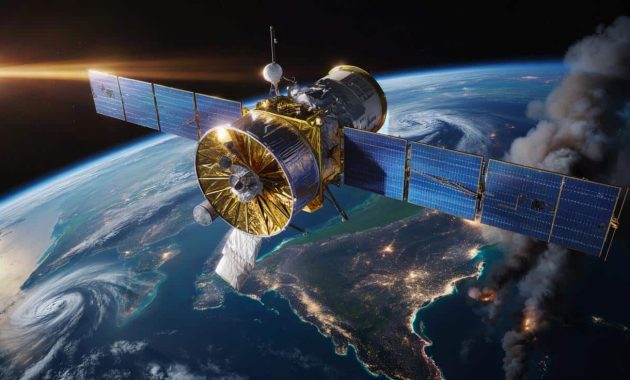
On 9 September 2025, a Long March 7A lifted off from Wenchang on Hainan island. It carried a single spacecraft named Yaogan-45, built by the Shanghai Academy of Spaceflight Technology under CASC. China described the mission as focused on scientific experiments, resource surveys, and disaster prevention.
Yaogan-45 went to medium Earth orbit, an altitude band between roughly 2,000 and 35,786 kilometers, a first for the Long March 7A.
China also announced a payload performance bump for the rocket, from 7,000 to 8,000 kilograms. That change suggests new mission profiles and heavier buses.
- Launch vehicle: Long March 7A
- Launch site: Wenchang, Hainan
- Date: 9 September 2025
- Spacecraft: Yaogan-45 (SAST, under CASC)
- Declared aims: science, resource monitoring, disaster response
- Orbit regime: medium Earth orbit (MEO)
- Rocket capability: payload uplift to about 8,000 kg
Why this orbit raises eyebrows
MEO is not where China usually sends Yaogan spacecraft. Many earlier Yaogan missions fly in low Earth, often sun-synchronous, where optical or radar imagers grab sharp pictures and revisit targets daily. Moving higher changes that trade.
Higher altitude delivers wider coverage and longer dwell times over a region, but it gives up raw image resolution unless the sensor gets larger and more powerful.
The Long March 7A typically inserts satellites toward geostationary transfer orbit. Communications and weather spacecraft go that route. Using this launcher for MEO reconnaissance-like duties marks a shift. It signals that mission planners wanted a specific orbital niche rather than standard low-Earth passes.
A departure from typical Yaogan patterns
Open-source tracking on earlier Yaogan missions points to constellations that stitch together radar, optical, and signals intelligence from lower orbits. Yaogan-41 already pushed higher in 2023. Yaogan-45 now continues that path and brings a heavy rocket into the mix. Analysts read that as a drive to increase footprint, persistence, and resilience of coverage.
Those choices align with dual-use goals. A satellite that surveys large swaths aids flood mapping and wildfire monitoring. The very same coverage helps maritime domain awareness, strategic watch, and cueing for other assets.
➡️ A tomb that upends history: the first gold jewellery of humanity was here
➡️ This simple habit helps avoid conversational overload
➡️ Over 65? This is why sudden noises feel more overwhelming
What a MEO satellite could actually do
MEO hosts navigation constellations, some space environment sensors, and a few communications and surveillance testbeds. An imaging satellite can work there with a large telescope or a radar with plenty of power. Signals intelligence also benefits from the view: a high perch lets a receiver listen across broad regions and triangulate emissions with fewer satellites.
| Orbit | Typical altitude | Strengths | Common uses | Relevance to Yaogan-45 |
|---|---|---|---|---|
| Low Earth (LEO) | 160–2,000 km | High resolution, short latency, frequent revisits | Imaging, radar, Earth science | Where most Yaogan craft operate today |
| Medium Earth (MEO) | 2,000–35,786 km | Wide coverage, longer dwell time, fewer satellites needed | Navigation, some surveillance, space environment | Yaogan-45’s new lane, likely favoring reach over sharpness |
| Geostationary (GEO) | 35,786 km | Fixed view, persistent presence | Comms, weather, early warning | Launcher usually targets this via transfer orbit |
Given these factors, several mission profiles fit:
- Wide-area disaster surveillance with moderate-resolution imaging to spot floods, fires, or storms quickly.
- Maritime tracking and mapping of large ship formations across open oceans.
- Signals detection to geolocate radars and communications over a continent-scale footprint.
- Relay or calibration roles that support lower-orbit satellites with timing and data links.
China calls the satellite civil and scientific, while many Western analysts see it as dual-use—neither purely civilian nor purely military.
Another launch just hours earlier
Hours before Yaogan-45, a Jielong-3 (Smart Dragon-3) took off from Shandong. It deployed 11 Geesatcom satellites for automaker Geely. One satellite carries a navigation experiment designed to test centimeter-level precision for assisted driving.
That second mission underscores China’s fast-growing commercial space sector. Auto firms now fund space-based positioning to complement Beidou. The mix of LEO and MEO nodes can sharpen location services in cities and along highways where multipath degrades accuracy.
The transparency gap and why it matters
China is not alone in flying dual-use satellites. The United States and Europe operate military spacecraft and reconnaissance constellations. The key concern lies in disclosure. Sparse details fuel misinterpretation and can spark tit-for-tat deployments.
When orbits change without explanation, risk grows for misreads during close approaches. Misunderstandings lead to poor decisions and crisis alerts that operators must later unwind. Clearer mission outlines help national space commands calibrate responses.
Reading the signals behind the signals
Hardware upgrades on the Long March 7A hint at heavier payloads or more propellant for complex orbital maneuvers. MEO injects operational flexibility, including long dwell over mid-latitudes and easier coordination with GEO or LEO partners. If the spacecraft carries a large antenna or radar, it can favor listening and cueing over exquisite imaging.
The pattern also fits a broader Chinese effort to diversify orbits. More layers make the network harder to disrupt and more useful during disasters. A single pass can feed flood models, while later passes refine damage assessments for logistics and relief corridors.
What to watch next
Independent trackers will pin down the exact altitude, inclination, and period. Those numbers narrow down likely sensor types. Brightness changes can hint at large apertures or deployed antennas. Maneuvers will show whether the satellite aims for specific ground tracks or station-keeping in a chosen plane.
If additional Yaogan craft appear in similar orbits, expect a small cluster built for persistence. A triad spaced around the same plane can cover most mid-latitude regions with short gaps. That setup would favor maritime watch and broad-area monitoring.
Extra context that helps decode the mission
Medium Earth orbit: This is the lane used by GPS, Galileo, and Beidou navigation satellites. It offers a strong balance between coverage and latency. A surveillance payload here needs either a large telescope, a powerful radar, or sensitive receivers. Smaller imagers still produce useful scene-level data for environmental alerts.
Geostationary transfer orbit: The Long March 7A often places satellites into this elliptical path toward GEO. Using it for a direct MEO insertion or for a plane-change sequence suggests mission-specific needs. Engineers may have traded propellant for mass or for a higher-power payload.
Risk and benefit: A dual-use satellite supports disaster response and resource management while also strengthening strategic awareness. The same capability can unsettle neighbors if they read it as covert targeting. Straightforward notifications, even at a high level, reduce those risks and keep space traffic calmer.