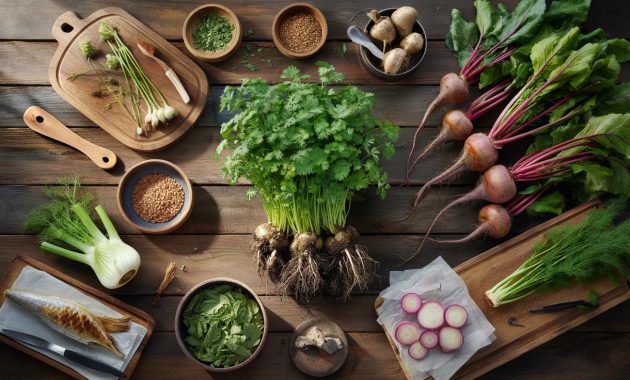
The woman in front of me at the market hesitated, one hand hovering over a pale green cabbage, the other over a bunch of deep purple kale. The vendor watched her with a tiny smile, clearly used to this quiet little drama. “They’re completely different, right?” she asked him, almost apologizing as she weighed her options. He shrugged. “Same family, cousin vibes,” he replied, bagging her kale. She frowned, unconvinced, as if he’d just said a cat and a tiger share a Netflix account.
We do this all the time. We rank vegetables like we rank people: this one noble and healthy, that one boring and cheap, that one too bitter to bother with. We rarely stop to ask what they have in common.
And sometimes, what we call “different” is literally the same plant wearing another outfit.
One plant, several personalities on your plate
Walk through any supermarket and look at the vegetable aisle as if it were a casting call. Carrots, celery, spinach, turnips, coriander, fennel, beets… You see separate stars, each with their own role in your recipes. You probably never think: this root and this leafy bunch might be the same creature, just harvested at a different time or body part.
Yet that’s exactly what’s going on with quite a few of the things we cook. One species, multiple “products.” Leaves marketed as a herb. Stems sold as a crunchy side. Roots praised as a superfood.
Take coriander, for a start. In many English-speaking countries, people swear they “hate cilantro” in salsa, then happily eat “coriander seeds” in curry as if they were a different thing. The leaves, the stems, the seeds, even the roots in some Asian kitchens: all from the same plant, Coriandrum sativum. The name change just tricks our brain.
Celery does a similar magic trick. You have the pale stems in your crudité platter, the dark green leaves you probably throw away, and the huge, knobbly celery root (celeriac) that shows up in fancy restaurant purées. Three products. One plant. Many of us only meet one version and think we know the whole story.
Botanically, the logic is simple. Plants have roots, stems, leaves, flowers, seeds. Agriculture has learned to spotlight one part, then another, then another, sometimes on the exact same species. Marketing and tradition finish the job by giving each part a different name and destiny. You end up believing fennel “herb” for fish and fennel “bulb” for roasting are two separate things, when they’re just different expressions of Foeniculum vulgare.
Our kitchens are full of aliases, and the labels quietly keep the secret.
From seed to stem to seed again: using the whole plant
Once you notice the trick, you can use it. The next time you buy a vegetable with multiple “personalities,” pause for a second and think in layers. With coriander, don’t just chop the leaves and ditch the rest. Use the stems for a punchy base in soups or stir-fries, almost like a second herb. Save the roots, scrubbed clean, to toss into broths for that deep, restaurant-style aroma you never quite manage at home.
➡️ They Thought They Were Hacking Starlink: The Ukrainian Scam That Trapped The Russian Army
➡️ Why office friendships are ruining productivity and saving your sanity at the same time
➡️ Exercise: a treatment as effective as antidepressants for depression
➡️ Sleep apnoea may promote the onset of Alzheimer’s, warns new study
➡️ Not boiled, not dry: an 11?star chef’s trick for fast, ultra?crispy baked potatoes
The same instinct applies to beets. Roast the bulbs, yes, but also sauté the beet greens like spinach with garlic and oil. You’ve doubled the dish without buying anything extra.
The big mistake we fall into is treating the supermarket label as gospel. “Parsley” must mean the leaves, so the tough stems go in the trash. “Leeks” are just the white part, so the dark green tops stay behind on the cutting board. We’ve all been there, that moment when you scrape yet another pile of perfectly edible green into the bin and feel a tiny stab of guilt.
Let’s be honest: nobody really weighs every leftover stem and leaf every single day. Still, once you know that many of these “leftovers” are simply another face of the same plant you paid for, throwing them away starts to feel like tearing out chapters of a book you own.
“When people realize that coriander leaf, coriander stem, coriander seed, and coriander root are just stages of one life, something clicks,” a small urban farmer in Lisbon told me. “They stop seeing ‘waste’ and start seeing potential.”
Now imagine your kitchen as a kind of low-key laboratory where one plant gives you an entire palette. With a single fennel plant, for instance, you can:
- Use the feathery fronds as a soft anise-flavored herb on fish or salads
- Slice the bulb thin for crunchy slaws or slow-roast it until sweet
- Toast the seeds from its flowers to season bread, sausages, or tea
Each layer is different, yet *it’s all the same living being you pulled from the soil*.
The quiet pleasure of recognizing what’s on your plate
Once you start connecting these dots, it changes the way you walk through a market. You stop seeing aisles of anonymous produce and start recognizing families, relationships, stories. Kale and cabbage are no longer rivals but close relatives from the same Brassica clan, bred by humans to bulk up leaves here, compact a head there, stretch out a flowering stalk somewhere else.
That recognition doesn’t stay theoretical. It slowly shifts your cooking, your shopping, even the way you taste bitterness or sweetness, because you know where it comes from.
| Key point | Detail | Value for the reader |
|---|---|---|
| One plant, many “products” | Leaves, stems, roots, seeds often come from the same species with different names | Helps you read labels differently and feel less intimidated by “new” vegetables |
| Use the whole plant | Coriander, beet, fennel, celery, leek and others offer multiple edible parts | Reduces waste and stretches your food budget without extra effort |
| See families, not fragments | Recognizing plant relatives like kale, cabbage, and broccoli | Makes it easier to improvise recipes and swap ingredients confidently |
FAQ:
- Question 1Are coriander and cilantro really the same plant?Yes. “Cilantro” usually refers to the fresh leaves and stems, while “coriander” often means the dried seeds, but they all come from the same plant species.
- Question 2Can I eat the green tops of beets and carrots?Beet greens are fully edible and great sautéed or in soups. Young carrot tops can be used in pesto or stocks, as long as they’re fresh and well washed.
- Question 3Is celeriac the same as normal celery?Celeriac is a variety of celery grown to develop a large, flavorful root. It’s the same species family, just selected for a different part of the plant.
- Question 4Are fennel herb and fennel bulb different plants?No. They’re two forms of the same species, Foeniculum vulgare. Some types are bred for fuller bulbs, others for leafy tops and seeds, but they’re closely related.
- Question 5How can this help if I’m on a budget?Knowing that one plant has several edible parts lets you turn a single purchase into multiple dishes, which stretches money and cuts down on what you throw away.