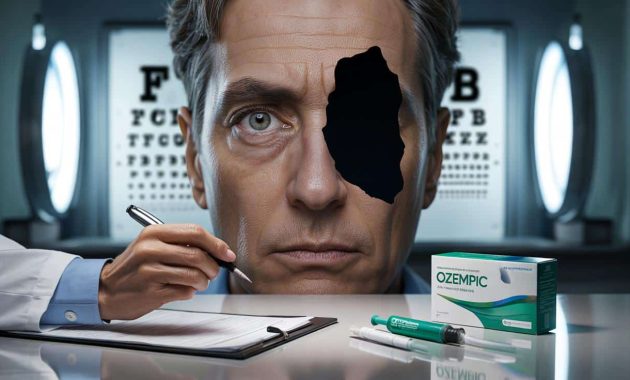
As weekly weight-loss injections move from specialist clinics to dinner-table chatter, doctors now sift through fresh data hinting at a potential — and unsettling — effect on eyesight.
From diabetes breakthrough to lifestyle trend
Semaglutide started out as a treatment for type 2 diabetes. Drugmakers later repackaged it for obesity, and it quickly became a cultural phenomenon. Sold as Ozempic and Rybelsus for diabetes, and Wegovy for weight management, the drug mimics a gut hormone called GLP‑1. That hormone helps regulate blood sugar, slows stomach emptying and boosts feelings of fullness.
For many patients with obesity or difficult-to-control diabetes, the results look impressive. People often lose a substantial amount of weight, see their blood sugar fall, and lower their risk of heart problems. Celebrity buzz and social media testimonials then pushed demand far beyond the original medical targets.
As prescriptions soared, so did reports of nausea, vomiting and other known side effects. Now, two large ophthalmology studies raise a more specific concern: a rare but serious condition that can steal vision in a matter of hours.
Semaglutide and similar GLP‑1 drugs may slightly raise the risk of a sudden optic nerve injury that can cause permanent vision loss.
What is the eye condition under scrutiny?
The focus falls on a disorder called non‑arteritic anterior ischemic optic neuropathy, or NAION. Some eye doctors call it a “stroke of the optic nerve”. The condition occurs when blood flow to the front part of the optic nerve suddenly drops. Nerve fibres then die, and vision in that eye can deteriorate quickly.
NAION typically strikes without pain. People may wake up with a shadow or dark patch in part of their visual field. Sometimes the change appears over a few hours. In many cases, the damage stays permanent because the optic nerve does not regenerate.
This event remains rare, with only a few cases per 100,000 people each year. Still, the potential severity worries regulators. In mid‑2025, the European Medicines Agency added NAION to the list of “very rare” side effects for semaglutide, advising patients and doctors to stop the drug if sudden visual symptoms occur.
Regulators now ask patients on semaglutide to treat any rapid change in vision as an emergency and suspend the injection until an eye specialist reviews them.
➡️ Scientists Just Mapped 80 Million Galaxies
➡️ France loses a €3.2 billion Rafale deal after a last-minute reversal
What the new studies actually found
A US study that rang the alarm bell
The first big signal came from Massachusetts Eye and Ear, a major eye hospital in Boston. Researchers followed more than 16,000 people with either diabetes or obesity between 2017 and 2023. They compared those taking semaglutide with similar patients on other therapies.
The numbers suggested a meaningful difference. Among people with diabetes, those on semaglutide showed about four times more cases of NAION than those who never used the drug. In the obesity group, the relative risk climbed even higher, to more than seven times.
This type of observational study cannot prove that semaglutide directly injures the optic nerve. Patients on GLP‑1 drugs might differ in ways that the analysis did not fully capture. Still, the size of the cohort and the consistency of the pattern pushed the findings into top-tier medical journals and onto the desks of regulators.
A Swedish–Australian team measured absolute risk
A separate project run by researchers at Sweden’s Karolinska Institutet and the University of Melbourne asked a different question: how often does NAION actually appear in people taking GLP‑1 drugs, compared with similar people who never touch them?
They tracked tens of thousands of patients and found that NAION remained rare in both groups. Roughly 0.04% of those on semaglutide developed the condition during follow‑up — a slightly higher rate than in matched controls, but still affecting a tiny fraction of users.
The team stressed a key complication: diabetes itself already raises NAION risk. An older meta‑analysis of earlier research, published in 2013 in PLOS ONE, suggested that people with diabetes face around a 64% higher chance of NAION than those without the disease. That background risk muddies the picture when assessing new diabetes drugs.
Patients with diabetes already walk into the doctor’s office with a higher baseline risk of optic nerve damage than the general population, before any injection is given.
Why could a weight-loss drug affect the eye?
Researchers do not yet agree on the mechanism. Several theories sit on the table, and more than one may apply.
- Rapid metabolic change: Fast shifts in blood sugar and blood pressure could stress fragile microvessels that feed the optic nerve.
- Vascular effects of GLP‑1: GLP‑1 receptors appear in blood vessels throughout the body. Some scientists suspect subtle changes in vessel tone or blood flow at the back of the eye.
- Sleep and blood pressure patterns: People on weight‑loss drugs sometimes alter their sleep patterns, diet and other medications. Night‑time dips in blood pressure already link to NAION risk.
- Structural vulnerability: Certain optic discs, described as “crowded” or small and crowded with nerve fibres, seem more prone to ischaemic damage.
Current evidence does not show inflammatory damage or direct toxicity to retinal cells. The working hypothesis points toward disturbed circulation in a nerve already living on the edge, especially in older adults with diabetes, sleep apnoea or vascular disease.
Who might face a higher risk?
Doctors now look more closely at specific risk profiles when starting or continuing semaglutide. Early discussions among eye and endocrine specialists highlight a few groups that deserve closer attention:
| Risk factor | Why it matters for NAION |
|---|---|
| Obstructive sleep apnoea | Night-time oxygen drops and blood pressure swings can reduce blood flow to the optic nerve. |
| Long-standing hypertension | Damaged small vessels may fail to cope with sudden pressure changes. |
| Previous NAION in one eye | The other eye already faces higher risk, regardless of medication choice. |
| Crowded optic disc anatomy | Less room for swelling or compromised blood supply around the nerve head. |
| Heavy smoking or vascular disease | Narrowed arteries and reduced microcirculation compound other risks. |
For these patients, some endocrinologists now suggest an eye exam before starting GLP‑1 therapy, followed by regular checks. That approach mirrors how cardiologists monitor heart function when prescribing certain cancer drugs.
Balancing vision risk against life-saving benefits
Semaglutide does more than cut waistlines. Multiple trials show fewer heart attacks, strokes and diabetes complications in patients using GLP‑1 drugs. Weight loss alone can improve sleep apnoea, reduce joint pain and lower the chances of needing future surgery.
So doctors now face a very nuanced calculation. For a person with severe obesity, uncontrolled diabetes and a family history of heart disease, the benefits of semaglutide may far exceed the small chance of NAION. For someone mildly overweight, taking the drug purely for cosmetic reasons, that trade‑off looks very different.
The same injection that dramatically cuts cardiovascular risk in one patient may be hard to justify as a “summer body” shortcut in another.
Specialists encourage shared decision‑making. That means discussing not just average trial results, but also personal risk factors, work demands, driving needs and access to eye care in case something goes wrong.
What patients on Ozempic and similar drugs can do now
Warning signs that need urgent care
People already on Ozempic, Wegovy or Rybelsus do not need to panic or automatically stop treatment. Most will never face NAION. Still, they should know the red flags:
- A sudden dark patch, shadow or curtain over part of vision in one eye.
- Noticing that straight lines look dimmer or distorted in one eye.
- Waking up with worse sight in one eye compared with the night before.
- Loss of contrast or washed‑out colours on one side.
These symptoms warrant immediate assessment by an eye specialist or urgent-care service, even if they fade within hours. Stopping the injection until review is a cautious and reasonable step.
Questions to ask your doctor before starting
Anyone considering a GLP‑1 weight‑loss injection can have a more grounded conversation by asking a few targeted questions:
- Do I have conditions like sleep apnoea, long-standing diabetes or high blood pressure that already put my eyes at risk?
- Should I see an ophthalmologist before starting the drug?
- What is my approximate absolute risk of NAION, based on current data?
- Are there alternative weight‑loss strategies or medications suitable for my profile?
- How quickly do you plan for me to lose weight, and can a slower pace reduce vascular stress?
Why eye health will stay central in the GLP‑1 era
GLP‑1 drugs now move into combinations with other hormone mimics, and companies test higher doses and longer‑acting versions. That trend suggests far more people will use these injections in the next decade, including younger adults with fewer traditional risk factors.
Ophthalmologists therefore push for dedicated long-term studies. One ongoing project is tracking around 1,500 patients for five years, with detailed imaging of their retina and optic nerve. Such trials aim to untangle how much risk comes from the drugs themselves, how much from rapid metabolic change, and how much from the underlying conditions that first led to the prescription.
The debate over semaglutide and sudden vision loss also sheds light on NAION in general. Many people have never heard of the condition until a headline links it to a fashionable drug. For researchers, that spotlight brings a chance to better understand who develops NAION, how to spot it early, and whether any treatment can limit the damage once it appears.
For now, people using Ozempic and similar injections sit at the intersection of two stories: the rise of powerful new metabolic drugs, and a long-standing mystery surrounding blood flow to the eye. How regulators, clinicians and patients navigate that intersection will shape both obesity treatment and vision care for years to come.