It will never feed a grid, yet expectations soar.
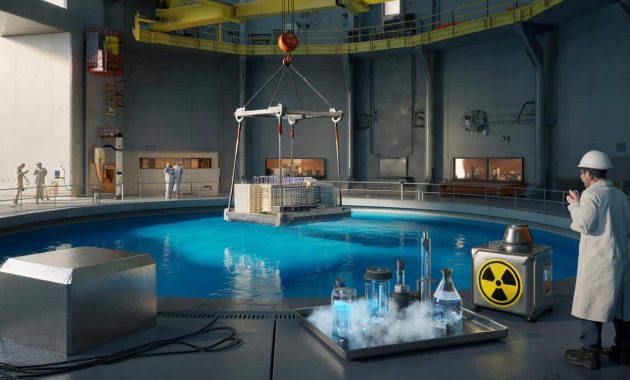
Inside Cadarache, engineers are assembling the Jules Horowitz Reactor, or RJH, a high-flux test machine designed to stress metals, validate fuels, and secure medical isotopes for hospitals. It is a research reactor with industrial stakes, not a power plant.
Why a reactor that makes no electricity matters
The RJH exists to compress time. Its core will unleash an intense neutron flux that bombards samples until they behave as they would after years inside a power reactor. That means faster answers on safety margins, lifetime extensions, and new designs. You learn in weeks what usually takes decades of operation.
Pressure vessel steels harden under irradiation. Fuel cladding swells and cracks. Welds creep, seals fatigue, alloys subtly change phases. Those are not textbook issues; they are real-life limits on gigawatts across Europe. RJH gives researchers a way to push materials to failure, capture data, and iterate quickly.
What 20 years of wear do to metals, RJH can replicate in a few weeks under controlled, instrumented conditions.
Built as a modern materials testing reactor of about 100 MW thermal, RJH supports loops that mimic operating plants. Engineers can test components at power-reactor temperatures and pressures, then move them to hot cells for immediate examination. Results feed directly into design codes, maintenance strategies, and licensing files.
| Use case | Real world | Typical RJH campaign |
|---|---|---|
| Pressure vessel embrittlement | 15–30 years of neutron exposure | 8–12 weeks at equivalent dose |
| Fuel cladding behavior | Multiple cycles in-core | Targeted weeks with in-situ gauges |
| Accident scenario tests | Rare, unplanned events | Scripted sequences with full diagnostics |
Inside the test hall
RJH’s design centers on flexibility. Dedicated loops can reproduce pressurized water reactor conditions at high temperature and pressure. Removable rigs let teams insert novel alloys, advanced claddings, and experimental fuels. The neutron flux in the core—orders of magnitude above most power reactors—drives rapid irradiation campaigns. Hot cells, located next to the pool, allow post-irradiation microscopy and mechanical testing without delay.
The payoff is practical. Grid operators get better forecasts of component aging. Vendors can qualify new materials faster. Regulators receive richer data for life-extension decisions. Universities and labs gain a European platform to train the next generation of nuclear engineers.
Medicine gets a backup it badly needs
RJH has a second job: supplying radioisotopes for diagnostics and therapy. Hospitals depend on a fragile chain that turns molybdenum‑99 into technetium‑99m, the tracer behind most nuclear medicine scans. Tc‑99m’s six-hour half-life leaves no slack. When an aging reactor goes offline, scans get postponed and patient pathways stall.
When it comes online, RJH can cover about a quarter of the European Union’s annual technetium‑99m needs—and ramp higher in a crisis.
➡️ I tested the new Citroën C5 Aircross and it really is a cloud on wheels
➡️ A simple way to make old sweaters soft again without fabric softener or dry cleaning and feel new
➡️ Say goodbye to the dish rack in the sink as a sleek space-saving trend transforms modern kitchens
➡️ People who feel uneasy when others are relaxed often expect emotional shifts
➡️ This small change helps restore control without restriction
Today’s supply leans on reactors built in the 1960s and 1970s. Several are near end-of-life or face long maintenance outages. RJH adds capacity inside the EU and reduces dependence on far‑flung sources. That resilience matters to radiopharmacies and to patients who need timely scans for cardiac disease, cancer staging, and bone assessments.
- Technetium‑99m: the workhorse for gamma imaging across cardiology, oncology, and neurology.
- Iodine‑131: thyroid diagnostics and treatment.
- Lutetium‑177 and other beta emitters: targeted therapies now scaling fast.
By coupling isotope production with robust logistics—cold-chain transport, coordinated scheduling, backup targets—RJH helps smooth the weekly cadence that hospitals rely on. In shortages, its capacity can shift toward critical tracers to stabilize the network.
Safety by design, not by slogans
RJH sits in seismic Provence, so its builders designed for harsh scenarios and tight oversight. The French nuclear regulator requires multiple independent barriers and proven mitigation systems. The facility follows that model with redundant power, diverse cooling paths, and control room redundancy.
- Reinforced confinement that can withstand a severe earthquake.
- Independent emergency diesel generators to power safety systems.
- Air-based decay heat removal available for safe shutdown conditions.
- A second, separate control room ready to take over if the main one is compromised.
These choices add cost. They also cut risk during outage windows and maintenance shifts. For a shared research asset, availability and repeatability matter as much as peak performance.
An international lab bench for Europe’s next reactors
RJH is funded and used by a broad consortium. Industrial players and public research bodies co-invest and receive priority access to beam time and hot-cell capacity. That shared model spreads costs and aligns the work with Europe’s actual fleet needs.
Who is around the table
- Industry: EDF, Framatome, TechnicAtome.
- Public agencies and institutes: SCK CEN (Belgium), CIEMAT (Spain), UJV (Czech Republic), VTT (Finland), DAE (India), IAEC (Israel), NNL (United Kingdom), Studsvik (Sweden), plus the European Commission.
These partners will send materials, fuels, and instrumentation for campaigns that answer applied questions. How does a silicon-enriched steel delay embrittlement? Can advanced claddings raise allowable burnup without penalty? What failure modes appear under fast transients, and how do engineered barriers respond?
From small modular reactors to Gen‑IV
SMR developers need banks of data to support licensing. Gen‑IV programs require irradiation of exotic alloys, advanced fuels, and new coolants. Waste management teams test matrices and containers under dose to validate long-term stability. RJH becomes the place where that evidence gets generated and scrutinized.
A shared neutron super‑lab cuts risk for new designs and strengthens life extension cases for the current fleet.
A rare build in a graying research fleet
Europe has not commissioned many new research reactors in recent decades. Osiris, built in 1966 near Paris, shut down in 2015. Several isotope workhorses are past mid‑life. RJH reverses that trend with a modern platform targeted to start between 2032 and 2034. The budget stands near €1.6 billion, reflecting both scope and the high bar for safety.
Other projects, like PALLAS in the Netherlands and MYRRHA in Belgium, are moving forward on different timelines. Together, they will decide whether the continent can keep its medical isotope supply onshore and sustain a credible pipeline of nuclear innovations.
What it means for grids, bills, and hospitals
Data from RJH will underpin decisions to run safe reactors longer, often the cheapest clean kilowatt-hour available. Better materials unlock higher availability, fewer unplanned outages, and optimized maintenance. Vendors can qualify components faster, which helps keep megaproject risks contained. Regulators get direct, high-quality evidence instead of extrapolations.
On the medical side, added isotope capacity lowers the chance of cancelled scans. That supports early diagnosis and shortens treatment pathways. For national health systems, predictability translates into fewer emergency purchases and less waste caused by last‑minute shortages.
Useful context if you follow the nuclear space
How the time compression works: neutron damage is often expressed in “displacements per atom” (dpa). RJH can deliver target dpa levels quickly by tuning flux and spectrum. Engineers then correlate dpa with changes in hardness, fracture toughness, corrosion, and stress corrosion cracking. That mapping ties directly to inspection intervals and safety factors.
How Tc‑99m reaches a hospital: reactors irradiate targets to make Mo‑99; processors extract and purify it; generators in pharmacies decay Mo‑99 into Tc‑99m on site; technologists prepare doses and inject them for same‑day imaging. Any break in that chain delays care. RJH strengthens the first link inside Europe.
Risks to watch: schedule pressure on civil works, supply chain bottlenecks for specialized equipment, and the challenge of staffing hot-cell operations at scale. Benefits to watch: faster qualification of accident-tolerant fuels, better models for embrittlement in long‑life reactors, and more resilient isotope logistics during unexpected outages.