You know that tiny shiver you feel when the heating kicks on, even though you just turned the thermostat up two minutes ago? That’s the sound of your energy bill quietly laughing at you.
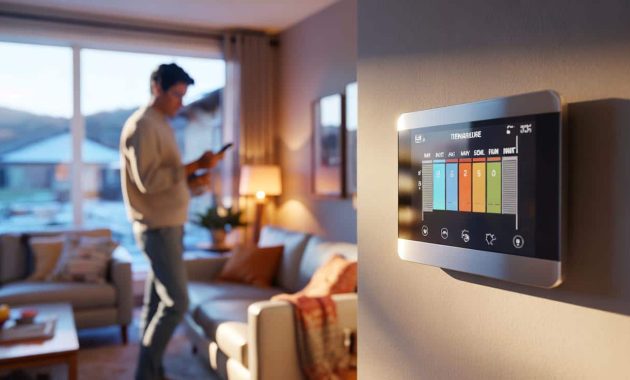
I spent an evening with an HVAC engineer in a very ordinary suburban living room, watching him scroll through a smart thermostat app like a surgeon reading an X-ray. The room looked comfy enough, but he just shook his head at the default schedule.
“Great for comfort,” he said. “Terrible for your wallet.”
The thing is, most of us don’t have a strategy. We tap the arrows when we’re cold, poke the screen when we’re hot, and hope the utility bill won’t be too brutal.
Yet there is a schedule pattern more and more HVAC pros are quietly recommending.
And once you see it, you can’t unsee it.
The thermostat schedule HVAC engineers wish you’d actually use
HVAC engineers don’t think about your home in days or weeks.
They think in cycles: wake, leave, return, sleep. Four small blocks of time that decide whether you waste money or save it. The schedule they recommend isn’t magical or techy. It’s almost boring in its regularity.
What matters most isn’t the absolute temperature you choose.
It’s when, and for how long, your system has to work hard to reach it.
Picture a pretty standard weekday.
You wake up around 6:30 a.m., leave by 8, come back around 5:30 p.m., head to bed near 11. Most thermostats are set to hold one temperature the whole day, maybe with a slight dip at night. That’s what the engineer saw on that suburban thermostat: 72°F all day, 70°F at night.
Comfortable? Yes. Efficient? Not really.
He pulled it up on his phone and drew a new pattern: gentle ramps in the morning and evening, deeper setbacks when the house was empty, and a cooler night.
The logic is simple. Your HVAC system uses the most energy when it’s fighting against a big temperature difference and doing it over long stretches.
By timing modest setbacks to match when you’re asleep or away, you cut those long, wasteful battles. The U.S. Department of Energy notes that turning your thermostat back 7–10°F for 8 hours a day can save around 10% a year on heating and cooling.
HVAC engineers take that principle and refine it: smaller, smarter shifts, matched to your real life.
Not heroic suffering. Just better rhythm.
The “4-block” pro schedule for maximum savings
Here’s the schedule pattern many HVAC engineers end up recommending, with slight tweaks for each home.
Think of it as the “4-block” rule: Wake, Away, Return, Sleep.
For heating, a typical pro-style setup looks like this:
Block 1 – Wake (about 6 a.m. to 8 a.m.):
Set your house to around **68–70°F**. Program the thermostat to start warming up about 30–45 minutes before you actually get out of bed. That way you’re not cranking it in a rush with a cold nose and a bad mood.
Block 2 – Away (about 8 a.m. to 5 p.m.):
Drop the temp to **60–64°F**, depending on your insulation and comfort threshold. The house coasts while you’re gone, and your furnace breathes easier.
Block 3 – Return (about 5 p.m. to 10 or 11 p.m.):
Start warming the house again about 30–60 minutes before you usually get home. Aim for **68–70°F** in the evening. This is when you’re active, cooking, moving, and more tolerant of minor shifts anyway.
Block 4 – Sleep (10 or 11 p.m. to 6 a.m.):
Set a night setback to **62–66°F**. Most pros agree your body sleeps better slightly cooler, and your system runs less. You’re under blankets, not pacing around the kitchen.
For cooling season, you flip the logic: a higher setpoint when you’re away or at night, slightly lower when you’re home and awake.
This schedule works because it respects the thermal inertia of your home.
Walls, furniture, and air don’t snap to a new temperature instantly. They glide. Engineers play on that glide. They know a home kept just a bit cooler in winter or warmer in summer over several hours will cut run time dramatically.
Let’s be honest: nobody really does this every single day manually.
That’s where programmable and smart thermostats earn their keep: you set the 4 blocks once, let them repeat, and adjust only when life genuinely changes, not every time you walk past the hallway.
Common mistakes (and the tiny tweaks that save real money)
The first mistake HVAC engineers see? Huge swings.
People will drop the heat from 72°F down to 55°F when they leave, then wonder why the furnace screams for an hour when they get back. That big jump forces your system to run longer at full effort, and certain homes actually lose the supposed savings through extra recovery time.
Professionals usually suggest moderate setbacks: around 5–8°F, not 15–20°F, for most houses.
The second mistake is constant fiddling.
You feel a draft, you tap the thermostat up a degree. Ten minutes later, you’re warm, so you knock it down. This yo-yo behavior confuses your system and sometimes triggers more cycles than needed. *Think of your thermostat more like cruise control, less like a gas pedal.*
The third mistake is using the “hold” button all winter or all summer, cancelling the schedule completely.
We’ve all been there, that moment when someone’s cold, someone else is hot, and you just slam on a permanent hold to end the argument.
➡️ The one thing to ask your broadband provider to get a discount
➡️ 9 things every senior did as a child that we no longer teach our grandchildren
➡️ This baked fish recipe uses breadcrumbs and butter for a light but satisfying crust
➡️ How Many Cubic Metres Of Firewood Do You Really Need For A Worry-free Winter?
HVAC engineers also wish more people knew how their fan setting affects comfort.
“Auto” lets the fan run only when heating or cooling is on, which is fine for savings. “On” runs it constantly, evening out temperatures between rooms but using more electricity. Some pros recommend using “On” during peak comfort hours in older homes with hot or cold spots, not 24/7.
One engineer I spoke to put it bluntly:
“Your thermostat shouldn’t behave like a light switch. When it’s always on or always off, you lose the whole point of having controls.”
To keep things simple, they boiled their advice down to:
- Pick a 4-block schedule and stick to it for at least two weeks.
- Use setbacks of 5–8°F for most homes, not extreme drops.
- Let the thermostat pre-heat or pre-cool before you wake or get home.
- Resist constant manual tweaks unless you’re truly uncomfortable.
- Review your energy bill after a month and adjust one block at a time.
When the “ideal” schedule meets your real life
Of course, no engineer lives in your house, with your drafty windows, your night-shift job, or your toddler who refuses blankets.
The “perfect” thermostat schedule only works if it bends around the way you actually live. If someone’s working from home, that Away block might shrink to two hours. If you host late dinners, your Sleep block might start at midnight.
The trick is not to copy a chart from the internet.
It’s to borrow the 4-block mindset and redraw it to fit your rhythm.
Some people discover their home barely changes temperature over an eight-hour setback, so they can push the difference a bit more and still feel fine. Others live in leaky older houses where a big setback means frozen-toes chaos at 6 a.m.
What HVAC engineers really want is for you to experiment like a curious scientist, not suffer like a martyr.
Try one new schedule for a month, then compare your bill and your comfort level.
Adjust just one block at a time: maybe raise the night temp slightly, or extend the evening comfort window on weekends. A quiet, steady pattern usually beats dramatic changes and loud promises of “40% savings overnight.”
At some point, you realize the thermostat isn’t just a plastic box on the wall.
It’s a conversation between your habits, your home’s insulation, and the machines in your basement or on your roof. That conversation can be tense, full of last‑minute demands and emergency spikes, or it can be a calm routine where everyone knows what’s coming.
The schedule HVAC engineers recommend is really a form of respect: for your wallet, for the hardware you paid for, and for the way temperature quietly shapes your day.
Once you find your version of that 4-block rhythm, your house stops arguing with you.
And your energy bill finally feels like it got the memo.
| Key point | Detail | Value for the reader |
|---|---|---|
| Use a 4-block schedule | Divide your day into Wake, Away, Return, Sleep with preset temperatures | Creates predictable comfort and cuts unnecessary runtime |
| Moderate setbacks only | Adjust 5–8°F rather than extreme jumps of 15–20°F | Reduces energy use without long, uncomfortable recovery periods |
| Let the thermostat work for you | Program pre-heat and pre-cool, avoid constant manual changes | Stabilizes indoor climate and improves long-term savings |
FAQ:
- What’s the best thermostat setting for winter savings?Most HVAC engineers point to around 68°F when you’re home and awake, and 60–66°F while you’re asleep or away, adjusted for your comfort and home insulation.
- Does turning the heat off completely save more money?Switching it off for long periods can cause big temperature swings and long recovery times, which may eat into savings and stress your system. Moderate setbacks are usually more efficient.
- Is a smart thermostat really worth it?For many households, yes. The savings come less from “AI” and more from consistent scheduling, auto setbacks, and usage reports that nudge you toward better habits.
- Should I leave my fan on Auto or On?Auto saves fan energy, while On can even out hot and cold spots. Many engineers suggest Auto most of the time, with On used selectively during comfort hours in uneven homes.
- How quickly will I notice savings from a new schedule?You’ll usually see the difference on your next full billing cycle. Track one or two months with your new 4-block schedule and compare to the same season last year for a realistic view.