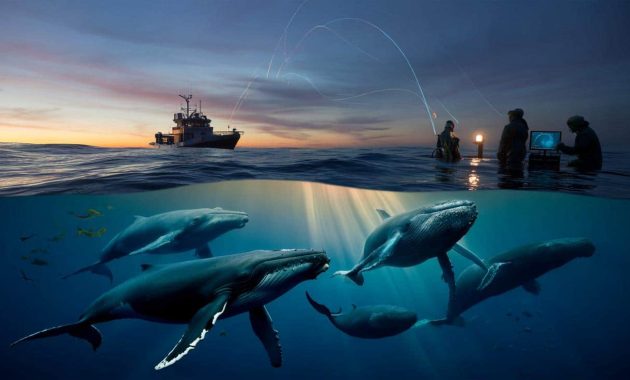
The stakes are immediate: altered feeding stops, surprise ship encounters, and protected zones that suddenly sit beside the action instead of on it.
The deck lights threw a thin halo across the swell as the hydrophones hummed and a pod of humpbacks surfaced where nobody expected them. Radios crackled, a laptop blinked with satellite pings, and a tired scientist mouthed the shape of a question we could all read: why here, why now. We’ve all had that moment when the map in your head stops matching the world under your feet. Something had moved.
Whales are redrawing their invisible maps
Across two hemispheres, satellite tags and shipboard sightings converge on the same picture: whales are nudging their migration lanes to match a magnetic landscape that isn’t where it used to be. The change isn’t dramatic like a cliff; it’s a patient drift, kilometer by kilometer, season by season. What looks like wandering is, in fact, recalibration.
In the North Atlantic, humpbacks that once tracked a neat corridor west of the Azores spent the last two seasons 60 to 120 kilometers farther east, clustering along lines where the magnetic inclination now sits closer to their historical “sweet spot.” In the Southern Hemisphere, right whales on the Patagonian swing took a wider arc offshore, shaving days off a leg that used to hug the shelf. A review of tag tracks shows a repeatable shift in roughly one in five paths, with the largest detours following years of big geomagnetic wiggles.
The logic, once you see it, feels plain. Many marine animals key off a “magnetic map” built from intensity and inclination angles, like a subtle grid stamped into seawater. As the planet’s field drifts and lurches, that grid slides, too. So the whales slide with it, locking onto new contours that lead them toward prey and breeding grounds with fewer wrong turns. Solar storms and regional anomalies can throw static into that map, which is when you see odd landfalls or strandings. The long arc, though, points to adaptation rather than confusion.
How scientists pieced it together at sea
On paper, the method reads clean: take years of satellite tag tracks, overlay them on global geomagnetic models, and watch the lines line up. In the lab, teams matched route centerlines with shifting isoclines, looking for lag times and thresholds. On boats, the work was simpler and messier: listen, log, compare, and circle back when the data whispered the same story twice.
If you run a whale-watching boat, work the deck of a freighter, or plan protected areas, the takeaway is practical. Update your mental heat map by season, not just by tradition. After a major geomagnetic blip or a solar storm, expect animals to skirt surprising edges for a week or two. Don’t lean only on last year’s sightings; scan for bait balls and bird lines where the magnetic contours tug the current. Let’s be honest: nobody does that every day.
“We are watching the map redraw itself in slow motion, and the whales are reading it better than we are.”
Here’s what to watch in the next migration window:
- North Atlantic: a gentle eastward bow between the Grand Banks and the Azores, with stopovers shifting toward cooler eddies earlier in the season.
- Eastern Pacific: gray whales hugging a slightly deeper contour off California during late spring, especially in years with elevated geomagnetic activity.
- Southwest Pacific: humpbacks off New Zealand tracing a wider offshore lane when intensity lines bunch tight near the shelf edge.
- High-latitude gateways: timing arriving a few days earlier where inclination gradients are steepest, which can reshuffle peak viewing weeks.
What this means for people who share the water
The headline isn’t doom. It’s adjustment. Shipping lanes, speed limits, and seasonal closures were drawn for a magnetic picture that’s a little out of date, so small edits now can head off bigger problems later. Move some protections by tens of kilometers, not hundreds, and you catch a lot of life on the first try. The same goes for fishers and tour operators: flexible routes are money in the bank.
➡️ Say goodbye to the dish rack in the sink as a sleek space-saving trend transforms modern kitchens
➡️ The financial shift that helped me stop reacting emotionally to expenses
There’s another layer that doesn’t fit neatly on a chart. Ocean sound is rising, prey is shifting with heat, and storms are skewing migration timing. Magnetic cues don’t act alone; they negotiate with hunger, noise, and memory. *The compass we thought was fixed is moving, but it’s not the only voice in a whale’s ear.* The smartest plans treat the field as one dial on a noisy board and leave room for wildcard years.
Ask researchers how whales sense the field and you’ll hear two main threads: iron-rich magnetite particles acting like microscopic compass needles, and light-sensitive proteins that change with magnetic inclination. Both can coexist, and both point to a built-in, body-level navigator that updates as the planet does. The mystery isn’t whether whales use the field; it’s how elegantly they fold it into a thousand other decisions. That’s the humbling part.
It’s hard not to picture the patience in all this. An animal longer than a bus making mid-ocean course tweaks smaller than a city block. A team onboard nursing lukewarm coffee, watching a line march across a screen one satellite ping at a time. The ocean, almost amused, reminding us that a map is never final ink. Share this with the person who loves a good sea story, and with the one who loves a good dataset. The conversation that follows might be the real work.
| Point clé | Détail | Intérêt pour le lecteur |
|---|---|---|
| Whales are shifting routes | Tag data shows migration lanes moving in step with geomagnetic drift | Explains why sightings and hotspots change year to year |
| Magnetic map, not guesswork | Animals track intensity and inclination lines that have drifted | Makes new patterns predictable, not random |
| Actionable adjustments | Tweak lanes, seasons, and protected zones by tens of kilometers | Reduces collisions, improves viewing, supports conservation |
FAQ :
- Are whales really using Earth’s magnetic field to navigate?Multiple lines of evidence say yes. Tracks align with magnetic contours, and shifts in the field match shifts in routes.
- What changed in the magnetic field?Secular drift moved intensity and inclination lines, while occasional solar storms add short-term “static.”
- Does this mean more strandings?Not automatically. Temporary disturbances can raise risk locally, though long-term route tweaks look like adaptation.
- Will whale-watching spots move?Some will. Expect peak weeks and corridors to slide by tens of kilometers or by a few days, especially after active geomagnetic periods.
- What can boaters do right now?Check recent sightings, slow down in emerging corridors, and treat post-storm weeks as higher-alert windows.