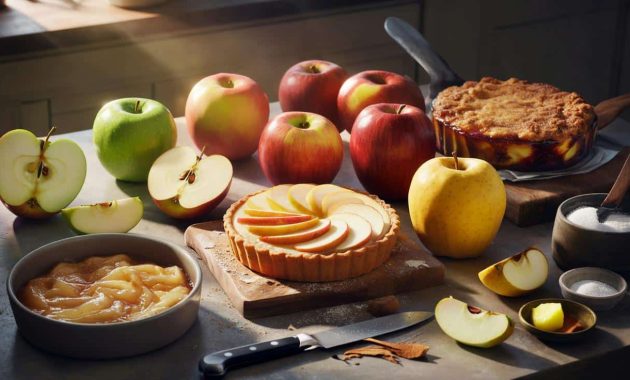
The other night, facing a half-empty fruit bowl, I had that tiny moment of panic. Three wrinkling apples, a dinner to finish on a “wow”, and zero desire to jog to the supermarket. I peeled one, sliced it, threw it in a hot pan with butter and sugar… and watched it slowly melt into a sad, beige puree.
The taste was fine. The texture? A small disaster.
That’s when my partner walked in, sniffed the air and said, half amused, half disappointed: “Wrong apple for the job.”
He was right. One apple isn’t interchangeable with another.
Once you see that, you never look at the fruit aisle the same way again.
Why some apples bake like a dream… and others collapse
Stand in front of the apple shelves at any supermarket and you’ll see it: a wall of reds, greens and yellows that all claim to be “crisp”, “juicy”, “sweet”. On the label, they look almost identical. In a hot oven, they behave like totally different species.
Some slices hold their shape, catching the light under a glossy glaze. Others collapse into compote in under twenty minutes.
The secret lies in their flesh. And in what you’re trying to cook.
Take Granny Smith. Sharply acidic, super firm, bright green. Drop those slices into a tart and they keep their structure, edges still visible after baking, offering that tiny resistance under the fork.
Now compare that with a very ripe Golden Delicious. The same tart, same timing, but the result is almost like an applesauce pie. The slices blur into each other, the bottom soaks, the whole thing feels heavier.
➡️ Why people who set micro-goals feel less overwhelmed
➡️ “I became a regulatory documentation lead, and my income reflects the expertise”
➡️ Innovation: a US warship destroys drones with a simple laser beam
➡️ New US Navy missile to support hypersonic strike, air defense roles
➡️ For the first time in 40 years, Panama’s deep waters failed to rise to the surface
➡️ If your mornings feel heavy, this first action makes a difference
Neither is “wrong” in absolute terms. They’re just playing different roles in the same movie.
What actually happens comes down to pectin, cell walls and sugar. Firm apples like Granny Smith, Pink Lady or Braeburn have stronger cell structures that don’t burst as quickly with heat. They stay defined, even as they soften.
Softer, mealier apples have looser cells that release water and break down fast. Great for compotes and butters. Less great for a tart you’d like to slice cleanly.
Once you connect this texture logic to your dessert, choosing the right variety stops being guesswork and starts feeling almost… intuitive.
The right apple for the right dessert: a practical field guide
Here’s a simple way to think about it:
If the apple needs to hold its shape and show up on the plate, go firm and slightly tart. If it’s meant to melt, perfume and thicken, go soft and aromatic.
For classic French-style tarts, Tarte Tatin or any elegant sliced tart, reach for **Granny Smith**, **Pink Lady**, Braeburn or Jazz. Their sharpness cuts through sugar and butter, and their slices stay neat.
For crumbles, cakes and muffins, you can mix: one firm apple, one sweeter, softer one. The first brings texture, the second brings that lush, almost jammy heart.
A common scene: someone proudly pulls out a loaf pan, saying, “I used the sweetest apples I could find!” Then the slices float in a kind of sugary swamp at the bottom of the cake. Tasty, yes. Satisfying to cut? Not really.
We’ve all been there, that moment when the recipe “worked” but the bite didn’t match the picture in your head.
The quiet trick most seasoned home bakers use is blending varieties. A tart Granny with a Gala. A Braeburn with a Golden. One for backbone, one for comfort. It looks fussy from the outside, but once you’ve tried it once, you don’t go back.
“Think of apples like spices,” says a pastry chef friend of mine. “You’d never season every dish with just salt, so why would you bake every dessert with just one apple?”
- For tarts and pies: Granny Smith, Pink Lady, Braeburn, Jazz, Honeycrisp
- For crumbles and cobblers: Mix firm (Granny Smith) + sweet (Gala, Golden, Fuji)
- For compote and apple butter: Golden Delicious, McIntosh, Cortland, Jonagold
- For pancakes and fritters: Any aromatic, slightly firm apple like Gala or Honeycrisp
- For raw desserts and salads: Pink Lady, Honeycrisp, Fuji for crunch and juice
Small choices, big difference: tasting your way to the “right” apple
Once you start paying attention, you’ll realise something almost funny: your mouth already knows what your tart needs. Bite a slice of raw apple before you cook. Feel the crunch, listen to the sound, let the sweetness hit.
If the apple is super sweet and low in acid, imagine adding lemon to wake it up. If it’s very tart and crunchy, imagine surrounding it with caramel or custard. Suddenly, you’re no longer following a strict rule. You’re adjusting the dessert around the fruit in your hand.
*This is when baking stops being stressful and starts feeling like a conversation with your ingredients.*
| Key point | Detail | Value for the reader |
|---|---|---|
| Match texture to dessert | Firm apples for structure, softer ones for melting fillings | Fewer “why did my tart collapse?” moments |
| Blend apple varieties | Combine tart + sweet apples in the same recipe | More complex flavour and better balance of sugar and acidity |
| Taste before you bake | Adjust sugar, lemon, spices based on the apple’s profile | Recipes that adapt to real-life fruit, not idealised labels |
FAQ:
- Question 1Can I use the same apple variety for every dessert?
- Answer 1Technically yes, but you’ll get average results. One all-purpose apple like Gala or Golden can “do the job”, yet you’ll miss that perfect match of texture and flavour. Let’s be honest: nobody really does this every single day, but when you have a choice, switching varieties really pays off.
- Question 2What’s the best apple for an apple pie that slices cleanly?
- Answer 2Go for firm, slightly tart apples: Granny Smith, Braeburn, Pink Lady or Honeycrisp. They hold their shape and don’t flood the crust with juice. You can add one sweeter apple to the mix if you like a rounder flavour.
- Question 3Which apples are best for apple sauce or compote?
- Answer 3Softer varieties that break down easily: Golden Delicious, McIntosh, Cortland, Jonagold. They cook quickly, don’t need much effort, and give that smooth, comforting texture both kids and adults love.
- Question 4How do I avoid a watery apple crumble?
- Answer 4Use at least half firm, tart apples to limit juice, slice them not too thin, and don’t skip a spoonful of flour or cornstarch mixed into the fruit. It catches the liquid and turns it into a nice syrup instead of a puddle.
- Question 5Are supermarket “mysterious red apples” worth using?
- Answer 5If the variety isn’t clear, treat them like a mild, sweet apple. Taste one, then adjust: add lemon if it’s too sweet, mix with a firmer apple if it’s very soft. You don’t need perfect knowledge of every name to bake something truly good.