m., a rude crack in the quiet that yanked me out of sleep. In the kitchen, a blur darted under the fridge, leaving a peppering of husks and a faint, sour musk you only notice once you’ve smelled it once. I stood in the half‑light, barefoot, realizing the house I thought I ran had been quietly sublet to something small and stubborn. A neighbor swore there was a way to make them leave on their own. No traps. No poison. Just a smell they can’t stand. One ingredient. And it lives in most cupboards or a quick grocery aisle away. Curious?
The scent that makes rats pack their bags
There’s a reason your grandmother dabbed mint oil on doorframes when the weather turned. Rats navigate the world nose‑first, mapping safety and food with scent. Hit them with a powerful, sharp aroma and their map breaks. That ingredient is **peppermint oil**. Not candy, not mint tea—the concentrated essential oil. To us it’s fresh and minty. To a rat it’s an aggressive wall of smell that shouts “danger” from across the room. The house feels different the minute it’s in the air.
In a cramped London terrace, a young couple tried it after weeks of scratching in the walls. They soaked cotton pads with peppermint oil and tucked them behind the washer, under the sink, and along a thin gap by the back door. The next night, the scuffling slowed. Day three, silence. A week later, a camera trap caught nothing but dust. One change, one smell, and the house exhaled. It smells like a clean start.
Why does it work? Peppermint oil is heavy in menthol and menthone—volatile compounds that vaporize and flood confined spaces. A rat’s sensory world is calibrated to faint trails of fat, grain, and dander. The **menthol blast** overwhelms those weaker trails, masking food cues and confusing navigation. It’s not pain. It’s disruption. When survival depends on smell, an environment that suddenly “goes loud” feels unsafe. Most rats will seek a quieter corridor quickly. Keep the signal strong and they keep moving.
How to use peppermint oil so rats actually leave
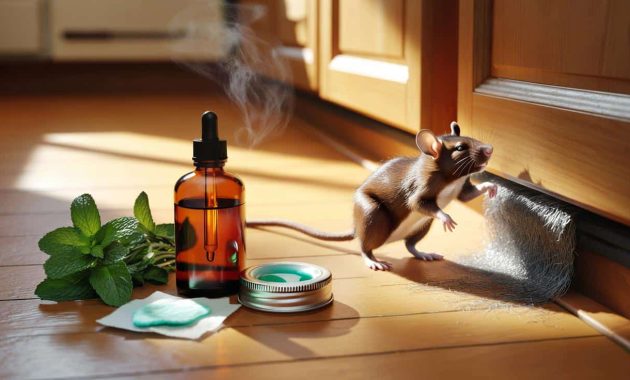
Start simple. Grab pure peppermint essential oil, cotton balls or makeup pads, and small jars or bottle caps to hold them. Add 20–30 drops per pad, enough to saturate without dripping. Place them at entry points: behind appliances, inside cabinet corners, along baseboard gaps, boiler closets, and where pipes pierce walls. Refresh every 3–5 days at first, then weekly as the smell fades. For open areas, mix a spray—15 drops oil in 1 cup water with a teaspoon of vodka or dish soap to disperse—and mist along runs. Short, sharp bursts. Think “scent fence,” not perfume.
Don’t stop at scent. Clear food cues the same day. Crumbs, bird seed, pet bowls, even that bag of rice you forgot—it all talks to rats. Wipe surfaces, store grains in sealed tubs, take out the trash at night. Then close the exits and entrances they use with steel wool and hardware cloth. Let’s be honest: nobody actually does that every day. Do it this week, though, and the peppermint works twice as fast. You’ll hear the quiet again.
“Scent gets them moving. Sealing keeps them gone,” a veteran pest tech told me on a damp Tuesday, tapping a thumb against a roll of steel mesh. “People nail the smell and forget the holes.”
- Use real essential oil, not fragrance oil. The chemistry matters.
- Test a small spot first; oils can stain paint and wood.
- Keep pads away from pets and little hands; strong oils can irritate.
- Rotate pads to fresh spots weekly so the signal feels new.
- Pair scent with repairs. **Seal first, scent second** for lasting results.
Beyond the smell: make your home a no‑rat zone
We’ve all had that moment when a faint rustle turns into a story your brain won’t stop telling. Here’s the shift: treat peppermint oil as the megaphone, not the plan. Walk your rooms like a curious rodent. Light, low, quiet. Look for quarter‑inch gaps, chew marks, rub trails like greasy pencil lines, and droppings behind warm machines. Bring bright tape and mark every spot that looks “rat‑sensible.” Patch small gaps with steel wool stuffed tight, then cover with caulk. For wider holes, screw on hardware cloth. A house becomes calm when the routes get boring.
If you’re tempted to go nuclear with bleach, ammonia, or cayenne cocktails, take a breath. Strong chemical smells can push rats deeper into walls or irritate pets and lungs. Peppermint is potent without being harsh, and it won’t stain your winter coat if you drip a little. Some folks switch to vinegar if they run out; it helps a bit but fades fast. Keep the peppermint pads fresh, and consider baited camera traps for proof of absence. Data beats guessing at 1 a.m.
There’s a rhythm that works. Scent the hot spots. Clean the food signals. Close the holes. Then watch and adjust. If you’ve got a big, stubborn colony, mix in humane snap traps along walls—parallel to their paths, not across them—or call a licensed pro to map the building. You’re not waging war. You’re changing incentives. The rodents pick the easier house next door, and yours returns to ordinary life. When breakfast is quiet again, you’ll notice the sun hits your counter differently.
➡️ Poor people’s fish is the embarrassing truth the food industry doesn’t want you to know
➡️ Place this object near your orchid : blooming starts in just a few days
➡️ Not 65 or 75: France officially confirms the real age limit to keep your driving licence
➡️ A piece of apple in the sugar jar the kitchen secret no chef talks about
This fix doesn’t feel dramatic. It feels like routine. The sort of routine that nudges tiny decisions in your favor until the problem leaves town. Peppermint oil buys you space and time, turning your kitchen into a place that no longer smells like opportunity. Share it with the neighbor who swears by sonic gadgets and the cousin who swears by folklore. They’ll try it, and then they’ll text you at midnight with an all‑caps “DUDE.” And you’ll smile in the dark, because you knew the house just needed a new rule: what it smells like to live here.
| Point clé | Détail | Intérêt pour le lecteur |
|---|---|---|
| The ingredient | Peppermint essential oil (pure, not fragrance) | Gives a clear, accessible starting point you can try today |
| Why it works | Menthol overwhelms rodent scent maps and masks food trails | Explains the “why” so you can apply it strategically, not randomly |
| How to make it last | Place saturated pads at entry points, refresh weekly, seal gaps with steel wool and hardware cloth | Turns a quick hack into a lasting fix that keeps rats from returning |
FAQ :
- What’s the exact recipe for a peppermint spray?Mix 1 cup water with 15–20 drops peppermint essential oil and 1 teaspoon vodka or mild dish soap to help it disperse. Shake before each use and mist baseboards, under‑sink areas, and around pipe entries.
- Is peppermint oil safe around kids and pets?Used sensibly, yes. Keep saturated pads out of reach, don’t apply to surfaces pets lick or sleep on, and ventilate after heavy use. Cats can be sensitive to essential oils; if yours seems bothered, switch to pads in lidded jars with holes punched in the lid.
- How often should I refresh the pads?Every 3–5 days at first, then weekly once activity drops. Heat and airflow fade scent faster, so tight spaces hold it longer than open kitchens. If you can’t smell it, they probably can’t either.
- Will peppermint oil kill rats?No. It repels and disrupts, it doesn’t poison. That’s the point—you’re making your home unappealing so they leave. For entrenched infestations, pair scent with repairs and, if needed, humane trapping or a professional.
- What if I still hear scratching after a week?Increase coverage at proven runs, rotate pad locations, and check for new gaps. Food management matters—store grains tight, wipe nightly, lift pet bowls after dark. If droppings persist or you see rats in daylight, call a pro to inspect wall voids and exterior entry points.