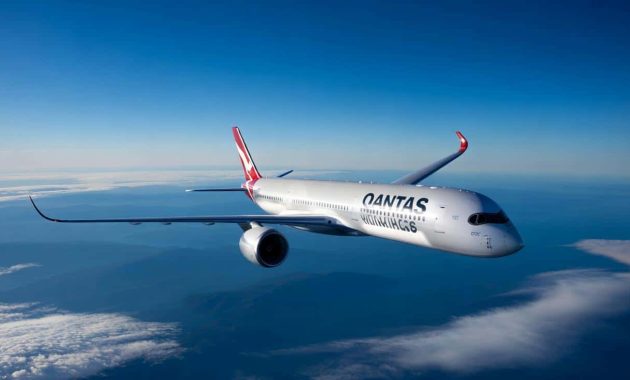
Now Airbus and Qantas are preparing an aircraft designed to ignore the map’s usual constraints, flying for almost a full day without landing and challenging what “long‑haul” actually means for both passengers and airlines.
A new kind of ultra‑long flight takes shape
At the centre of this shift is the Airbus A350‑1000ULR, a stretched and re‑engineered version of Airbus’s flagship long‑haul jet. The letters “ULR” stand for “ultra long range”, and that is not marketing fluff. The aircraft is being configured to stay in the air for up to 22 hours, a figure that would have sounded fanciful just a few years ago.
Airbus has already begun assembling the first airframes in Toulouse, ahead of flight tests scheduled from 2026. These test campaigns will be crucial, not only to validate performance figures, but to check how the aircraft behaves structurally and operationally when pushed close to its range limits on a regular basis.
The A350‑1000ULR is being built to link cities such as Sydney and London in a single, continuous hop of nearly 17,000 kilometres.
The key is not a radical new shape. Airbus has not gone for flying‑wing concepts or hydrogen demonstrators here. Instead, engineers have taken the familiar A350‑1000 outline and reworked it with a series of targeted modifications. The fuel capacity is being increased by about 20,000 litres with an additional tank in the rear fuselage, extending range without physically stretching the airframe further.
Efficiency, not brute force
Alongside the extra fuel, Airbus is squeezing more performance out of the structure and engines. The A350 family already uses a high proportion of carbon‑fibre composites, which saves weight compared with traditional aluminium. For the ULR version, weight reduction has been pushed further through lighter interior fittings and optimised systems.
On the wings, refinements to the aerodynamics help shave off drag over vast distances. Under those wings sit Rolls‑Royce Trent XWB engines, among the most efficient large turbofans in service. For flights nudging 20 hours, small percentage gains in efficiency translate into large reserves of extra range.
Importantly, this is all being done within the existing regulatory framework for twin‑engine jets crossing oceans. Extended‑range rules have gradually expanded over the past two decades, and Airbus is betting that regulators and airlines are now ready to accept ultra‑long sectors as routine, not experimental one‑offs.
Cabin design shifts from “long haul” to “very long haul”
The technical story is only half of it. Qantas, launch customer for the A350‑1000ULR, has pushed for a fundamentally different cabin strategy tailored to flights that last close to a full day.
➡️ The French energy breakthrough that could reshuffle global power
➡️ Lionel Richie reveals nickname for Michael Jackson due to poor hygiene
➡️ The hidden meaning behind repetitive habits during stressful periods
➡️ If you want a happier life after 60 admit you are the problem and quit these 6 habits
While a standard A350‑1000 can seat more than 300 passengers, the ULR aircraft for Qantas will carry just 238. That is a striking change in an industry normally obsessed with squeezing in extra rows.
Fewer seats free up space for larger pitches, wider beds and, notably, a dedicated well‑being zone where passengers can stretch, move and reset their body clocks.
Qantas has worked with sleep scientists and ergonomics specialists to develop seat layouts, lighting plans and meal schedules that aim to reduce the worst effects of jet lag. Every cabin class is being tweaked: from premium suites designed for proper sleep to economy seats with extra legroom and rethought cushioning for long‑term comfort.
What the cabin could look like in practice
- A central “well‑being” area with standing room, stretching bars and hydrating snacks.
- Dynamic LED lighting that shifts gradually to match the destination time zone.
- Meal timings aligned with circadian rhythm research rather than the departure clock.
- More storage space per passenger to minimise clutter around seats during a 20‑hour stay.
Qantas has already trialled elements of this approach with experimental flights between Australia, Europe and the US. Volunteers on board were monitored with wearable sensors and given adjusted menus and light cycles. Those tests are shaping the final design of the A350‑1000ULR experience.
A business model built on time, not miles
For Qantas, project “Sunrise”, as its ultra‑long‑haul strategy is branded, is about selling time saved rather than distance flown. A direct Sydney–London leg could shave around four hours off typical itineraries with a stop in Asia or the Middle East. The reduction is similar for Sydney–New York.
The airline is betting that executives, frequent flyers and wealthy leisure travellers will pay a premium for those hours. Early indications suggest ticket prices could average around 20% above comparable one‑stop options on the same city pairs.
Qantas is turning the ability to fly an entire hemisphere in one go into a status product as much as a transport service.
The limited number of seats creates scarcity, which in turn supports higher fares. Routes will be few, long, and heavily marketed as flagship services rather than everyday workhorses. That fits with a broader industry trend where top‑tier long‑haul products are seen as brand statements, showcasing national carriers on the global stage.
Geopolitics at cruising altitude
There is also a strategic dimension. Australia’s distance from major economic centres has long been both a logistical challenge and a psychological barrier. Being able to link Sydney directly with London or New York on a daily basis changes how the country is perceived in business and diplomacy.
With 12 aircraft on order, Qantas is positioning itself to operate some of the longest commercial flights on the planet, overtaking current record holders such as Singapore Airlines’ Singapore–New York service. Holding that record is not just a bragging right; it helps frame Australia as closer, in practical terms, to financial and political hubs in Europe and North America.
What this means for ordinary travellers
For most people, 20 hours in one seat sounds daunting. Yet the alternative is usually two flights of 10–13 hours, separated by a layover in an airport where sleep is patchy and body clocks get confused again. The new model tries to trade one long, controlled environment for multiple disjointed segments.
The question is how much people value simplicity. No sprinting through foreign terminals. No missed connections due to delays. Bags checked once and forgotten. For travellers with tight schedules, those benefits may outweigh the psychological hurdle of such a long continuous flight.
There are also health considerations. Sitting still for that long increases the need for movement and hydration. Qantas and Airbus are planning more explicit guidance, from in‑seat exercise videos to structured lighting and cabin announcements encouraging walks to the well‑being zone. The design of the aircraft assumes that getting up is part of the plan, not a disruption to service.
Environmental and operational trade‑offs
Ultra‑long flights raise obvious climate questions. An aircraft carrying extra fuel for such distances is heavier at take‑off, which raises fuel burn early in the flight. Some analysts argue that two medium‑length flights with a stop can be more efficient than a single ultra‑long sector.
Airlines counter that modern engines and careful route planning cut some of that penalty, and that direct flights avoid emissions from operating large hub airports and running extra take‑off and climb cycles. Qantas has indicated that it plans to pair Sunrise flights with higher shares of sustainable aviation fuel over time, although supplies remain constrained globally.
Operationally, these flights will demand careful crew rostering and rest facilities. Regulations require pilots and cabin crew to have designated rest bunks and rotation plans on very long sectors. The A350‑1000ULR airframes will include extended crew rest areas hidden above the cabin ceiling, allowing teams to work in shifts while maintaining alertness.
Keys terms and scenarios for future travel
The phrase “circadian rhythm” will appear often alongside this project. It refers to the natural 24‑hour cycle of sleep, hormones and body temperature that makes people feel awake in daylight and sleepy at night. On an ultra‑long flight crossing many time zones, the goal is to gradually nudge that internal clock toward the destination schedule instead of shocking it with abrupt changes.
Lighting, meal content, caffeine timing and screen use all play a role. For instance, a Sydney–London flight leaving in the evening could keep cabin lights dim at first, then slowly ramp them up at times that match London morning, even while the aircraft is still over Asia or the Middle East. Passengers following the airline’s suggested routine may arrive less disoriented than they would with a middle‑of‑the‑night layover.
If Airbus and Qantas prove the model is commercially viable, others are likely to follow. Non‑stop links such as São Paulo–Tokyo or Johannesburg–Chicago move from speculative to plausible. That reshapes competitive maps, giving airlines based far from traditional hubs new tools to bypass intermediate stop‑over cities and court high‑yield passengers directly.