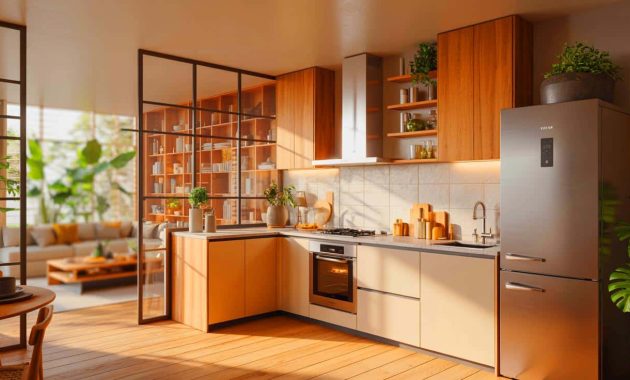
As homeowners’ needs and tastes evolve, a new trend is emerging, shaping how people think about and utilize the most communal space in their homes.
The shift in kitchen design preferences
Recent data and design studies suggest that the once-coveted open kitchen layout is being reconsidered. Homeowners are increasingly opting for spaces that offer more privacy and multifunctionality. The reasons for this shift are manifold, encompassing changes in social behavior, cooking habits, and a growing desire for a more organized living space.
Why privacy is becoming a priority
In the past, the open kitchen was celebrated for fostering social interaction by blending cooking spaces with living areas. However, as Sarah Milton, a homeowner from Seattle, explains, the appeal of open spaces has waned. “During the pandemic, our open kitchen felt too exposed, especially with both of us working from home and the kids attending online school. We needed more separation to manage daily life efficiently,” she shares.
The rise of the ‘closed’ kitchen
Contrary to open kitchens, closed kitchens are defined by walls or partitions that separate the cooking area from the rest of the home. This layout not only helps contain cooking messes and odors but also minimizes noise traveling across the home. For families like Sarah’s, this means the ability to multitask in a more controlled environment, where activities in the kitchen do not disrupt those occurring in living or working spaces.
What homeowners are looking for now
With a shift towards closed kitchens, the focus is now on maximizing the efficiency and aesthetics of these more private spaces. Homeowners are looking for state-of-the-art appliances, sustainable materials, and smart technology to enhance their cooking and dining experience.
Smart kitchens on the rise
Integrated technology is a significant trend in modern kitchen designs. From smart refrigerators that can help manage grocery lists to ovens that can be controlled remotely, technology is making kitchens more efficient and user-friendly. “The ability to preheat my oven from my phone while I’m finishing a work call has changed how I manage my time at home,” says Sarah.
Sustainability as a priority
Another key aspect of the new kitchen design trend is sustainability. Homeowners are increasingly choosing eco-friendly materials and energy-efficient appliances. This shift not only supports environmental concerns but also offers long-term cost savings on energy bills.
Broader implications of changing kitchen trends
The move away from open kitchens reflects broader changes in home design, where the emphasis is on creating spaces that are adaptable, personalized, and aligned with the homeowner’s lifestyle. This trend is likely to continue as more people look for homes that can adapt to changing family dynamics and work needs.
As the concept of home continues to evolve, so too does the heart of it—the kitchen. The transition towards closed kitchens with high-tech and sustainable features seems to be more than a fleeting trend; it’s a reflection of a deeper change in how we live our lives today. Home designs now seem to prioritize functionality and personalization over the once popular one-size-fits-all solutions like the open kitchen.
In conclusion, the kitchen continues to be a vital space in the home, but its form and function are undergoing significant transformations. As homeowners invest in kitchens that cater to their specific needs, the results are spaces that are not only about cooking but also about living comfortably and efficiently.
➡️ Scratches on glass-ceramic cooktops: removal in four simple steps
➡️ Country in turmoil as government plans to tax parents for adult children still living at home
➡️ The unnoticed benefit of predictable daily patterns
➡️ I learned it at 61 : few people know the difference between white eggs and brown eggs