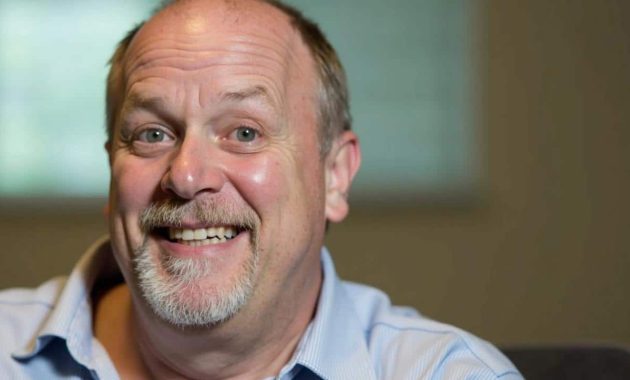
On a gray Tuesday morning in Zurich, a 44‑year‑old man named Marc* woke up and realized something strange: the crushing weight he’d carried since childhood… wasn’t there.
He noticed the light first. The way it was sliding across his bedroom wall felt almost violent in its brightness, yet oddly welcome. He sat on the edge of the bed and waited for the usual lead blanket of dread to drop over him. It didn’t.
Down in the kitchen, the smell of coffee surprised him. For three decades, scents had been muted, tastes flattened, colors dialed down. That day, the world had its volume back.
Thirty‑one years of treatment‑resistant depression, countless medications, hospital stays, therapies that promised hope and delivered side effects. Then, one radical procedure and a quiet, almost shy sensation: joy.
Marc found himself laughing at the steam curling from his mug.
He realized he wanted to be alive.
A lifetime of fog, one moment of rupture
Treatment‑resistant depression is a phrase that sounds technical until you’re the one living inside it.
For Marc, it meant starting antidepressants at 13, then watching them fail one by one. It meant therapists changing, doses tweaking, combinations adjusting, and the same blank, gray horizon every morning.
Friends moved on, built careers, had kids. He learned to perform a version of “fine” at work and then collapse into bed the second the door closed behind him. The world saw a reliable colleague. His body carried a constant emergency, silent and invisible.
By 40, he had tried at least 20 medication regimens, electroconvulsive therapy, transcranial magnetic stimulation, even experimental ketamine sessions.
Nothing stuck.
His doctors used words like “refractory” and “severe”. He just felt lost.
The turning point came not with magic, but with meticulous science.
Marc’s case was selected for a cutting‑edge trial on personalized deep brain stimulation (DBS) for depression, led by a European research consortium inspired by work from teams in the US and Canada. Unlike older, “one‑size‑fits‑all” implants, this new generation of DBS maps each patient’s unique brain circuits before anything is switched on.
For weeks, he underwent MRI scans, functional imaging, and interviews that felt almost forensic. Where did despair light up in his brain? Which networks fired when he felt a flicker of relief? The team wasn’t just asking how depressed he felt. They were trying to see sadness physically, to trace it like a constellation.
Then they proposed something that scared him as much as it gave him hope:
Brain surgery as a last attempt at life.
The idea sounds like science fiction, yet the logic behind it is brutally clear.
Classic antidepressants act like watering a garden with a fire hose: they bathe the brain in chemicals, hoping the right plants grow. For many, that works. For millions, it never really does. Treatment‑resistant depression is like a stubborn short circuit in the brain’s emotional wiring.
DBS, in this new personalized form, tries to fix that circuit directly. Electrodes are placed in very specific regions identified for that individual, then fine‑tuned in real time. The device can even detect patterns that predict a depressive crash and respond with gentle electrical pulses.
Marc didn’t feel “shocked”. He didn’t become a robot.
He describes it more like someone finally adjusting the contrast knob on a screen that had been dimmed his whole life.
Not a rush of euphoria.
Just the astonishing absence of permanent dread.
The quiet science behind a loud breakthrough
The day of the procedure was strangely calm.
No miracle music, no dramatic countdown. Just bright lights, steady voices, a team who had spent years in labs for this exact moment. Surgeons implanted ultra‑thin electrodes into brain areas tied to mood regulation and self‑criticism, guided by Marc’s own scans.
Hours later, he was in recovery, groggy, with a small device programmed under his skin near his collarbone, like a pacemaker for emotions. They didn’t crank it up immediately. Settings were adjusted slowly over the next weeks, based on his reactions, sleep patterns, and self‑reported feelings.
The first sign came one afternoon when he was walking home.
He saw a tree, bare and skeletal against a winter sky, and thought, “That’s beautiful.”
He stopped.
Because he couldn’t remember the last time his brain had used that word spontaneously.
Stories like this are starting to surface from trial centers in the US, Europe, and Asia.
In one widely publicized case, a 36‑year‑old woman with decades of suicidal depression experienced near‑instant relief after a similar closed‑loop DBS implant. Her device detected neural activity linked with spiraling thoughts and responded with targeted stimulation, often before she consciously noticed the downward slide.
Early studies show that a significant slice of patients with the most stubborn forms of depression can achieve dramatic, sustained improvement using these personalized brain maps. Not a vague “feeling better”, but measurable gains: sleeping through the night, returning to work, reconnecting with people they had emotionally lost years before.
These aren’t miracle cures and they still involve risk, cost, and heavy ethics debates.
Yet compared to the quiet, catastrophic toll of untreated severe depression, they look like doors cracking open where walls used to be.
What makes this new wave of DBS different is not raw technology but precision.
For years, psychiatrists have relied on trial and error: try an SSRI, then an SNRI, add therapy, adjust lifestyle, hope something sticks. When it doesn’t, people are often told they “just haven’t found the right combo yet”. Let’s be honest: nobody really does this every single day with full faith.
With circuit‑based psychiatry, doctors are shifting from guessing to mapping. They’re looking at depression as a network disorder, not a vague cloud of sadness. Specific loops in the brain get stuck on self‑attack, rumination, or numbness. DBS aims at those loops, not the entire organ.
This doesn’t erase talk therapy or medication.
It reframes them as parts of a larger toolbox, especially for those whose brains simply don’t respond to traditional approaches. For people like Marc, it’s not a “better pill”.
It’s a new language for their suffering.
What this means for people living in the dark
So what do you do if you read Marc’s story and recognize yourself in the exhausted, treatment‑weary part?
First step is not about surgery; it’s about precision. Ask your psychiatrist or GP for a thorough review of your journey so far: which classes of antidepressants have you tried, for how long, at what doses? Was there any combination with even a tiny, temporary lift?
Depression care often gets fragmented over the years, with different doctors, lost notes, half‑remembered trials. Pulling that history together on paper can be quietly powerful. It helps your current team see whether you’re “difficult to treat” or truly “treatment‑resistant” in the strict medical sense.
From there, you can talk about referrals to specialist centers running trials in ketamine, neuromodulation, or, for a small minority, DBS research programs.
Not every hospital offers this.
Yet asking sharper questions changes the conversation.
There’s a common, painful mistake many people with long‑term depression fall into: thinking failure of treatments equals personal failure.
You miss therapy sessions, you stop a pill because the side effects were brutal, you lie about how bad it is because you feel like a burden. Then the shame piles up on top of the illness itself. The story in your head becomes, “I’m not trying hard enough,” instead of, “This illness is stubborn and needs different tools.”
An empathetic clinician won’t punish you for past “non‑compliance”. They’ll help you explore what actually felt bearable, what crashed your energy, what you’re secretly terrified of trying again.
We’ve all been there, that moment when you’re nodding in a doctor’s office, saying you’ll meditate or exercise more, knowing deep down that getting out of bed is already Olympic level.
You deserve care that understands that gap, not lectures that widen it.
“People think DBS filled me with happiness,” Marc told me during a video call months after his surgery. “That’s not it. It just got rid of the constant storm so I could actually feel the small, normal joys that were probably always there.”
➡️ After 50 years of travel, Voyager 1 changes distance scale
➡️ Bauchfett verlieren: Tipps zum Abnehmen
➡️ This baked recipe is perfect when you want something steady
- Ask your doctor about new options
Research fields to mention: **deep brain stimulation**, ketamine/esketamine, transcranial magnetic stimulation. - Document your treatment history
Write down past meds, durations, side effects. This gives specialists a precise, usable map. - Seek specialized centers
Look for university hospitals or research clinics offering trials in advanced depression treatments. - Bring one supporter
A friend or relative in appointments can help you remember details and advocate when your energy is low. - Keep one small daily anchor
A short walk, a shower, one text to a safe person. *Not healing by itself, but a thin thread that keeps you tied to the world while the science catches up.*
A new story of hope, without erasing the struggle
Marc is not “cured”. He still has bad days. He still sees his therapist, still takes medication, still watches for familiar shadows at the edge of his thoughts. The difference is that those shadows are no longer the entire sky.
He describes his life now in small, ordinary scenes: buying fresh bread and actually tasting the crust, texting a friend first instead of ghosting them, planning a holiday more than three days in advance. That quiet domesticity is the real revolution. Not fireworks. Continuity.
This scientific breakthrough doesn’t mean everyone with depression should head for the operating room. It does something subtler and maybe more radical: it proves that even the most entrenched, decades‑long despair is not a fixed destiny. Brains can be rewired, even after 31 years of fog.
For readers still in that fog, the message is not “DBS will save you.”
It’s that the story of what’s possible for severe depression is changing fast, and you are allowed to ask for care that matches that new reality.
| Key point | Detail | Value for the reader |
|---|---|---|
| Personalized brain mapping | New DBS approaches target each patient’s unique mood circuits instead of generic brain regions | Offers concrete hope to those told they had “no options left” |
| Redefining treatment‑resistant depression | Viewing it as a network disorder, not a character flaw or lack of willpower | Reduces shame and opens the door to more precise, respectful care |
| Active role in care | Documenting history, asking about advanced treatments, seeking specialist centers | Gives readers practical steps to move from passive suffering to informed advocacy |
FAQ:
- Question 1What exactly is treatment‑resistant depression?
- Answer 1Doctors usually use this term when someone has tried at least two different antidepressants, at adequate doses and durations, plus appropriate psychotherapy, without significant or lasting improvement.
- Question 2Is deep brain stimulation available for everyone with severe depression?
- Answer 2No. For now, DBS for depression is mainly offered within clinical trials or in a few highly specialized centers for the most extreme, long‑standing cases after many other treatments have failed.
- Question 3Does DBS change your personality?
- Answer 3Current research suggests that when done carefully and individually mapped, DBS tends to reduce symptoms like hopelessness and emotional numbness without erasing core personality traits or memories.
- Question 4Are there serious risks with this type of surgery?
- Answer 4Yes, as with any brain surgery there are risks such as infection, bleeding, device issues, mood swings or unwanted side effects, which is why strict selection and close follow‑up are essential.
- Question 5What can I do today if I feel like nothing has helped my depression?
- Answer 5Gather your full treatment history, talk to a trusted doctor about whether you might meet criteria for treatment‑resistant depression, and ask about referrals to centers that offer advanced therapies or clinical trials in your region.