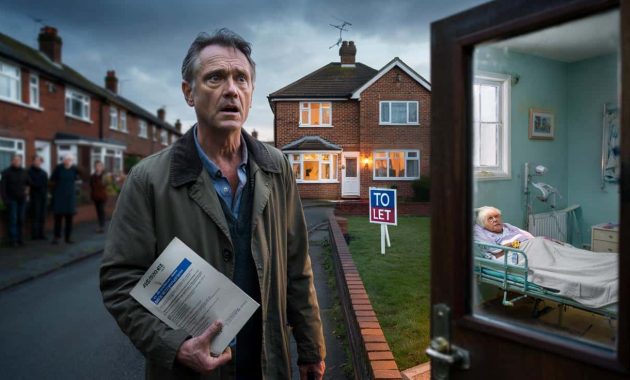
The letter arrived on a Tuesday, folded with that strange, official neatness that always makes your stomach tighten. Mark had just come back from visiting his mum at the care home, still carrying the faint smell of disinfectant and overcooked peas on his coat, when he ripped the envelope open over the kitchen sink. The words jumped out before he could even sit down: “reassessment,” “additional tax due,” “property activity.” By the third line, his hands were shaking. The home he’d lived in for 40 years, the red-brick semi he’d rented out to fund his mother’s care, had been reclassified. Not as a family asset. As a speculative business. A “portfolio activity.”
The tax bill? Retroactive. Eye-watering. Life-derailing. Mark stared at the numbers while the kettle screamed itself dry, realising that the same state that once encouraged “responsible planning” was now punishing him for it. He hadn’t flipped properties, he hadn’t evicted anyone, he wasn’t a landlord mogul with 20 doors. He was a son paying for his mother’s bed. And now, overnight, bureaucracy had banished him into a different class of citizen: the **property speculator**. The line he thought was solid turned out to be chalk.
When your family home becomes a “tax event” overnight
Mark’s story is unsettling precisely because it feels so ordinary. A modest, fully paid-off house. A mother needing round-the-clock care. A painfully simple equation: rent out the old family home, use the income to cover nursing costs, keep everyone afloat without begging the bank. For years, it worked. The rent paid the care, the tenants were stable, the neighbours waved to them on bin day. Nothing about it felt like “investment strategy” or “asset optimisation”. It was just survival with a spreadsheet.
Then came the rule change. Or the reinterpretation. Or the “clarification”, as the letter called it. The kind of policy tweak that never makes the evening news, but rewires people’s lives in silence. Mark discovered that because he hadn’t lived in the house while renting it out, and because the market had gone up, that normal, boring little arrangement could now be treated as a taxable gain. Not small change, either. The retroactive bill swallowed almost every pound he had saved by doing what he’d always been told was the responsible thing: owning, not relying, planning ahead.
The logic runs like this: if you own a property and someone else lives in it and pays you money, you’re in business. If the value goes up, you’ve benefited from a speculative asset. From that angle, Mark looks less like a dutiful son and more like a mini-tycoon. On a spreadsheet, maybe that’s clean. In real life, it feels like being pushed from one moral category into another with a single bureaucratic shrug. The state still talks about “hardworking homeowners”. Yet people like Mark are discovering they’ve slipped into another box entirely, one usually reserved for faceless funds and luxury developers. No warning. No vote. Just a new label slapped on their life story.
How everyday families are dragged into the landlord-versus-tenant battlefield
On Mark’s street, the reaction has been painfully split. Some neighbours see him as collateral damage in a broken system. Others quietly mutter that “at least he had a house to rent out”. That’s the deeper fracture under all this: who deserves to keep what they’ve worked for, when the housing crisis is shredding patience on all sides. If you’re a tenant, paying half your income to live in someone else’s pension plan, sympathy can run thin for a man who still technically owns two bricks-and-mortar assets, even with a tax bill hanging over his head.
Take Ellie, two doors down. She’s been renting for ten years, moving every couple of years as landlords sell up or hike the rent. When she hears about Mark’s situation, she winces, but then she thinks of the years she’s spent paying off someone else’s mortgage with nothing to show at the end. Her brother, meanwhile, lives in a shared house at 38, priced out of even the smallest deposit. *When politics fails, people start drawing their own moral lines.* In many cities now, just owning a home can feel like a privilege; renting one out, even reluctantly, starts to look like a power play.
That’s why stories like Mark’s travel so fast online. They tap into a raw, unresolved anger about housing that’s been building for more than a decade. Ordinary owners who rent out a single inherited or family home feel unfairly lumped in with corporate landlords and high-frequency flippers. Tenants, facing endless insecurity, see anyone receiving rent as part of a rigged game. Policymakers, under pressure to “do something”, keep turning dials and drawing new lines, and people like Mark get caught in the crossfire. The tax code becomes a moral code by stealth, deciding who is “deserving” without ever using the word.
Staying human in a system that treats homes like spreadsheet cells
There is one quietly radical thing people in Mark’s position can do before they’re blindsided: treat every housing decision like it might be reclassified later. That means keeping a simple paper trail, even when it feels fussy. Date-stamped notes on why you rented out the home. Copies of care home invoices or medical reports that explain the financial pressure. Tenancy agreements fully written down, not just “we shook hands and they seemed nice”. These aren’t just documents for accountants. They are your story, in a format a system can actually read.
Then there’s the human side: talking early, and clearly, with family. The conversation everyone avoids is the one that can save the most heartbreak. Who owns what. What happens if one of you needs care. Whether selling up is on the table, or whether renting feels less like “giving up” and more like a bridge. Let’s be honest: nobody really does this every single day. Most people wait until crisis hits, then scramble. But the families who sit around a real table before the letters arrive, who speak out loud what they’re afraid of, often react with less panic when the rules move under their feet.
➡️ Abdominal fat after 60 : the easiest, most effective exercise you’re not doing
The other piece is solidarity, a word that sounds grand until you shrink it down to three simple acts: sharing information, sharing stories, sharing contacts. When Mark finally wheeled his shame into the open and told a friend at the pub, he discovered three other people had received similar tax demands. One had appealed and won. One had negotiated a payment plan. One had just paid in silence, thinking they were alone.
“The worst part wasn’t the bill,” Mark told me. “It was feeling like I’d somehow done something dirty by renting out the house I grew up in. Like I’d crossed into a camp I never signed up for.”
- Talk before you act – a one-hour chat with a real human adviser can save years of regret.
- Document your reasons – not just what you did, but why you did it, in plain language.
- Ask who else this is happening to – neighbours, online groups, local forums often hold the missing piece.
- Don’t accept the first answer as final – appeal windows are short, but they exist for a reason.
- Separate shame from paperwork – a tax status is not a moral verdict, even when it feels like one.
The quiet question underneath every housing fight
Beneath the tax codes and legal definitions lies something you can’t really measure: what a home means, and who gets to feel safe in one. When states start quietly reclassifying ordinary lives as “property activity”, they’re not just raising revenue. They’re nudging people into tribes. Owner versus renter. Boomer versus millennial. “Got on the ladder” versus “left behind”. A bill like Mark’s doesn’t just empty a savings account; it sends a message about who the system sees as fair game.
That’s why this story resonates far beyond one man and his semi-detached house. Maybe you’re a renter watching landlords sell up under tax pressure, shrinking your options. Maybe you’re caring for a parent, wondering if the house you grew up in is a lifeline or a trap. Maybe you’ve inherited a place that feels less like a blessing and more like a loaded question. As policies tighten and labels harden, the old promise that “if you work hard and plan, you’ll be safe” starts to sound thinner. What we’re left with are real people, in real streets, trying to decide what they dare to hold onto – and what they can bear to lose.
| Key point | Detail | Value for the reader |
|---|---|---|
| Retroactive reclassification | Ordinary homeowners renting out a family property can be recast as “property speculators” after rule changes or new interpretations. | Helps you see how fast your status can shift, and why staying informed matters before signing any tenancy. |
| Paper trail as protection | Simple, dated records of your reasons and arrangements can strongly support appeals or negotiations with tax authorities. | Gives a concrete, doable step to reduce the shock if your situation is ever questioned. |
| Community and advice | Sharing stories, joining local groups and seeking early professional guidance can change both the financial and emotional impact. | Shows you’re not alone, and offers practical routes instead of silent panic. |
FAQ:
- Question 1Can renting out my old family home really turn me into a “property speculator” in the eyes of the tax office?
- Question 2What kind of documents should I keep if I rent out a home to pay for a parent’s care?
- Question 3Is there anything I can do if I receive a big retroactive housing tax bill?
- Question 4Does owning just one extra property put me in the same category as professional landlords?
- Question 5How can families talk about these housing choices without tearing each other apart?