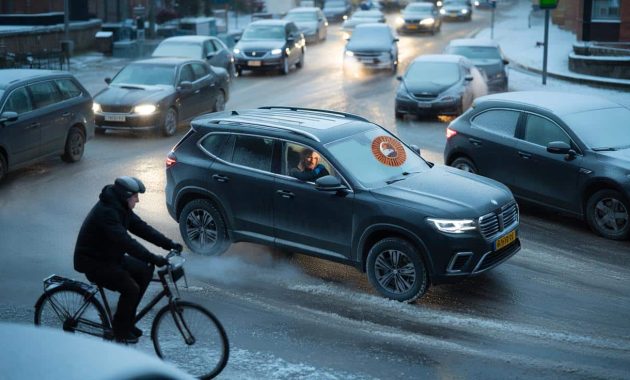
Headlights glowed in the dark like a slow river of worry, everyone running late, everyone pretending not to be. In the queue at the junction, breath hung in the air, heaters hummed, and windscreen wipers smeared thin ice into milky streaks. A driver in a black SUV rubbed a small circle clear with his hand and pulled away, peering through a letterbox of vision as if that was enough to keep him safe.
Two minutes later he stamped on the brakes, tyres skidding on a patch of frozen sheen he hadn’t seen coming. The car stopped in time, just. The cyclist he nearly clipped didn’t even look back, as if near-misses were part of the commute now. The SUV driver sat still for a second, heart racing, then did what most of us do. He blamed the road, not the habit.
The everyday shortcut that quietly raises your winter risk
The habit is simple, almost boring: driving before your car is properly ready. Half‑defrosted windows, misted mirrors, a rushed scrape of the screen with a bank card. We treat winter like a nuisance to push through, not a different season that needs different behaviour. And that’s where the risk seeps in, silently.
On dry summer tarmac, this shortcut rarely bites back. On a greasy, half‑frozen road, it does. You drive with less visibility, poorer grip, and a brain still waking up, while the car’s electronics guess at what the tyres are doing. The danger isn’t a single dramatic mistake. It’s a tiny reduction in safety, repeated every frosty morning, multiplied by thousands of drivers at once.
Look at any cold snap and the pattern repeats. The AA and RAC report spike after spike in early‑morning collisions when the temperature drops below zero. Insurers talk about claims jumping 20–30% on icy days in some regions. The reasons are rarely spectacular. A car slid into the back of another at a roundabout. A driver misjudged a gap turning out of a side road. A pedestrian stepped off a kerb masked by fogged glass and low winter sun.
Talk to traffic officers and they’ll tell you the same story in different uniforms. Partly cleared windscreens. Frozen side windows. Rear windows still opaque with frost because “I was only going a short distance”. The everyday habit of “that’ll do” becomes an invisible factor in almost every minor winter bump. It doesn’t make a headline. It just fills the repair yards.
Strip it back and it’s basic physics and basic human nature. Cold makes rubber tyres stiffer, which means less contact patch and less grip. Moisture on the road freezes into microscopic ridges that your eye doesn’t pick up until too late. Add in a windscreen that gives you 60–70% of your normal field of view and your brain has to work harder to read the road.
Humans are bad at that kind of hidden risk. We’re wired to react to obvious threats – a blizzard, a sheet of visible ice – not the quiet danger of “nearly clear” glass and temperatures hovering just below zero. So the habit survives the near‑misses. We get away with it nine mornings out of ten and call that proof. Really it’s just luck, slowly running out.
How to change one small habit and slash your winter driving risk
The fix isn’t glamorous: add five to seven deliberate minutes to your winter start‑up. Start the engine, set the blowers to the windscreen, fan on medium, temperature warm rather than roasting. Hit the rear demister early. While the system wakes up, step out with a proper ice scraper and clear every window, including the tiny quarterlights that hide behind door pillars.
Work in a pattern so your body remembers it: front screen, driver’s side, rear, passenger side, lights. Brush snow off the roof, bonnet and number plates so it doesn’t slide down or fly into someone else’s face. Only when every pane is genuinely clear and the wipers move freely do you roll. It feels slow the first few times. Then it becomes automatic, like fastening a seat belt.
➡️ A forgotten tweak in pellet stove airflow reduces noise dramatically and restores peaceful evenings
➡️ The real gardeners’ trick for repelling mosquitoes without spray or candles
On a bitter morning, this is where the human excuses creep in. You’re late already. The kids are whining in the back. Your fingers hurt. You just want the car warm and moving. On a dark street, scraping ice while your neighbour’s engine idles smugly can feel faintly ridiculous. On a busy main road, the pressure of the car behind you builds while you wait for the fog to clear from that last corner of glass.
That’s the moment the old habit whispers: “It’s fine, you can see enough.” We’ve all had that inner negotiation, and we usually give in. So the trick isn’t willpower, it’s planning. Park nose‑out the night before. Keep a decent scraper and a can of de‑icer in the house, not buried somewhere in the boot. Let your morning alarm ring five minutes earlier once the forecast shows frost. Soyons honnêtes : nobody does a full winter checklist at 7am every single day. But shifting the default from “rush and hope” to “pause and prep” changes the odds in your favour.
One driving instructor from Manchester put it this way:
“Most winter crashes aren’t caused by ‘bad drivers’. They’re caused by normal people shaving five minutes off the boring bits.”
*That’s the uncomfortable part: good, careful drivers still get this wrong when life is noisy and cold.* So make it easier on your future self. Keep a cheap microfibre cloth in the door pocket just for wiping inside fog. Learn where your car’s air‑recirculation button is and leave it off in winter so you’re not just steaming your own breath around the cabin.
And if you need a mental checklist while your hands work, here’s a quick one to keep in your head:
- Can I see clearly out of every window, not just the front?
- Are my mirrors and lights fully clear of ice, snow and condensation?
- Is there loose snow that could slide onto my windscreen when I brake?
- Have my wipers freed from the glass, or are they still stuck?
- Is my seat position and speed matching a winter road, not a summer mood?
Winter roads don’t forgive habits, they expose them
Once you start watching other drivers on cold mornings, you can’t unsee the patterns. The saloon car with just a porthole of glass cleared in front of the driver. The SUV with a snow cap ready to avalanche onto the windscreen at the first roundabout. The delivery van with mirrors still fogged, hunting for house numbers through a blurred world.
On a sunny afternoon, those shortcuts might only mean a slightly annoying journey. On a day when the gritters haven’t quite caught up, that same “shortcut” can be the link in a chain of tiny errors that ends in bent metal and phone calls. We like to think winter crashes are about black ice and bad luck. Often they’re about Tuesday mornings and routine.
On a gut level, everyone knows this. On a practical level, our lives push us to gamble. Your boss doesn’t reschedule the 9am meeting because the car park is frozen. School gates don’t open later because your street is sheeted in frost. On a busy winter week, safety feels negotiable, punctuality doesn’t. That mismatch is where risk thrives.
Changing one habit – not driving off until visibility is genuinely clear and the car has “woken up” – won’t magic away the ice. It won’t fix the driver tailgating you or the cyclist in dark clothing. What it does is give you back seconds and metres when something unexpected happens. Enough space to brake earlier. Enough vision to spot the shimmer on a shaded bend. Enough calm to steer rather than snatch.
We’ve all lived that moment when you realise you braked a fraction too late and the car keeps sliding, heart hammering while the world moves in slow motion. Those seconds feel long, but they’re usually decided before you even left your driveway. Habits are made in the warm kitchen, not on the cold road.
Talking about winter driving isn’t about fear, it’s about realism. Roads will freeze. People will rush. Tech will fail, or at least fall short. *The only bit fully under your control is how prepared you are when you turn the key.* And that’s strangely liberating. Because changing one small everyday habit is a lot easier than changing the weather.
| Point clé | Détail | Intérêt pour le lecteur |
|---|---|---|
| Winter “shortcut” habit | Driving off with partly cleared windows and an unprepared car | Helps you spot the invisible risk in a routine you probably already have |
| Five‑minute prep routine | Systematic de‑icing, full visibility check, gentle warm‑up | Gives you a concrete, realistic way to cut risk without needing new gadgets |
| Mindset shift | Treating winter as a different season, not an annoying version of autumn | Encourages you to rethink speed, timing and expectations on cold days |
FAQ :
- What’s the single worst winter habit drivers have?Pulling away with only a small patch of the windscreen cleared, ignoring side and rear windows and mirrors.
- Is it actually illegal to drive with frost on my windows?In the UK, you’re required to have a clear view of the road; driving with obscured glass can get you fined and your insurance may take a dim view after a crash.
- How early should I set off in icy conditions?Plan to leave at least 10–15 minutes earlier than usual so you can prep the car and drive more slowly without stress.
- Does using hot water on the windscreen really damage it?Yes, sudden temperature changes can crack the glass, especially if there are existing chips; use lukewarm water or proper de‑icer instead.
- Are winter tyres worth it for everyday drivers?In colder regions or rural areas they offer a clear grip advantage below 7°C, but even with them, visibility and speed choices matter just as much.