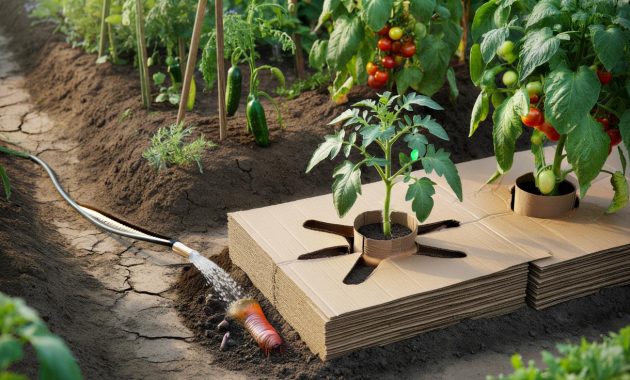
A thin, humble sheet of cardboard is slipping into smart gardens. It keeps soil cool, shields tender stems, and strangles weeds without chemicals. The surprise isn’t that it works — it’s how much it lifts harvests when the weather turns mean.
The cardboard drinks from the hose and darkens. Earthworms wriggle up as if someone just rang a dinner bell. By noon, the soil is shaded, the bed looks tidy, and the weeding bucket stays empty.
It looks almost too simple.
The secret is lighter than you think.
Why lightweight cardboard keeps crops safer — and busier — than you expect
Walk any community garden in late July and you’ll spot two kinds of beds. The ones gasping, cracked, threaded with grass. And the ones tucked under a neat, tan patchwork that feels like cool shade on your fingers. That tan is lightweight cardboard, laid flat as a “sheet mulch.” It blocks light for weeds, buffers the soil from whiplash heat, and slows water loss after every watering or storm.
Plants respond like they’ve been granted a quiet room. Leaves stay turgid longer. Fruit sets don’t drop after a hot wind. One grower I met counted nearly half the usual weeds within two weeks of laying boxes. Another stretched irrigation from every other day to every fourth day during a sizzler of a week. The vibe around those beds is calm. You see it. You breathe it.
There’s real biology under that calm. Cardboard is cellulose, the same stuff plants are made of, and it breaks down gently as fungi and bacteria go to work. Earthworms pull shreds down, opening channels that sip rain instead of shedding it. That overlay also softens pounding raindrops, so your soil structure isn’t smashed flat. Think of it as a breathable armor — a **weed-suppression** skin that invites life rather than smothering it.
How to use cardboard like a pro (without spending a dime)
Start with plain brown boxes. Peel off tape, labels, and staples. Lay sheets over bare soil or between established rows, overlapping edges by a hand width so light can’t sneak in. Soak the sheets to make them hug the ground. Top with 2–3 inches of compost, leaves, or wood chips to keep the cardboard dark and neat. Plant through X-shaped slits. Slide a thin cardboard collar around each seedling’s stem to block cutworms and sunscald.
We’ve all had that moment when the sun hits hard and the hose feels too short. Cardboard buys back time. Keep sheets in a single layer so roots can breathe. Skip glossy or colored prints. Don’t bury stems; leave a donut of space. If you worry about nitrogen tie-up at the surface, dust a thin layer of compost under the cardboard where you’ll plant. Let’s be honest: nobody does that every day. But a scoop or two around seedlings keeps growth steady.
“Cardboard changed our July,” said a market grower who lined peppers and tomatoes last season. “We watered less, harvested more, and the crew complained less about heat. That’s a win in my book.”
➡️ Abdominal fat after 60 : the easiest, most effective exercise you’re not doing
- Use plain, uncoated, brown cardboard only.
- Overlap seams by 10–15 cm to starve weeds of light.
- Add a compost or leaf layer on top for a clean look.
- Cut X-slits to plant; tuck back the flaps like petals.
- Cardboard collars stop cutworms and shield stems.
The bigger harvest — and the small surprises along the way
There’s a moment, two weeks in, when you notice your bed has shifted gears. The soil is cool at lunch. The weeds sulk under the sheets. Tomatoes gain a nervous little shine, that “we’re happy” look. Cucumbers stay balanced between crisp mornings and hot afternoons. Mulched beds ride out heat spikes without that dramatic midday flop. Small change up top, big changes below.
One small city plot ran a casual A/B test last summer. Two identical tomato rows, same starts, same compost. One row got lightweight cardboard plus collars. The other stayed bare with straw. By late August, the cardboard row yielded about 22% more usable fruit. Fewer splits after storms. Less blossom end rot. Fewer hours lost to weeding. It’s not a lab trial. It’s one gardener’s ledger. Yet it mirrors what many quietly report.
Why the bump? Moisture stays in the sweet zone, so plants don’t swing between feast and famine. Roots spread wider in cooler soil, chasing pockets of air and nutrients. Fewer weeds means less silent competition for potassium and phosphorus. And those cheap collars around brassicas and tomatoes block cutworms and sunscald right when seedlings are most vulnerable. Call it a three-part lift: **water savings**, **weed control**, and a **slug-and-cutworm shield** you can cut with kitchen scissors.
Cardboard isn’t magic. It’s a friendly hack that turns a stubborn bed into a cooperative partner. The lightness is the point. A thin skin that lets the ground breathe while quieting the chaos above. The first rain after you lay it will sound different, softer, like a patter on a tent. That sound usually signals the same thing by September: a basket that’s heavier than you predicted, and a gardener who’s not quite as tired.
| Point clé | Détail | Intérêt pour le lecteur |
|---|---|---|
| Weed suppression | Light-blocking sheet mulch starves weeds without herbicides | Less weeding time, cleaner beds, easier harvests |
| Moisture stability | Cooler soil and slower evaporation between waterings | Fewer stress spikes, steadier growth, reduced watering |
| Seedling protection | Cardboard collars deter cutworms and shield tender stems | Higher survival, stronger starts, earlier harvest momentum |
FAQ :
- Is cardboard safe for my soil?Use plain brown cardboard with minimal printing. Most box inks are soy- or water-based, but skip glossy or heavily colored material. Remove tape, labels, and staples so you aren’t scattering microplastics. Cardboard breaks down into organic matter that soil life can use.
- How long will a cardboard mulch last?Expect 3–6 months in warm, wet climates and up to a year in cooler, drier zones. Thickness matters: a single layer softens by midseason, while double layers persist longer. It fades into the soil with help from worms, fungi, and foot traffic.
- Will cardboard attract slugs or rodents?It can create cozy edges if you leave gaps. Keep seams tight and top with a coarse mulch like chips or straw to reduce slug highways. Hand-pick at dusk, use beer traps if you must, and keep the area tidy. Rodents prefer clutter; clean borders help.
- Does cardboard steal nitrogen from my plants?At the surface, nitrogen drawdown is mild and localized. Add a thin compost layer under or over the sheets in planting zones to buffer seedlings. Avoid tilling cardboard into soil during the growing season; let it break down on top where biology is most active.
- Can I use it in raised beds or around trees?Yes. Lay sheets on paths and bed surfaces in raised beds, then cover with mulch. Around trees, keep cardboard and mulch several inches away from the trunk flare to prevent rot. For cutworms and sunscald, slip a small collar around young stems, not tight, just snug.