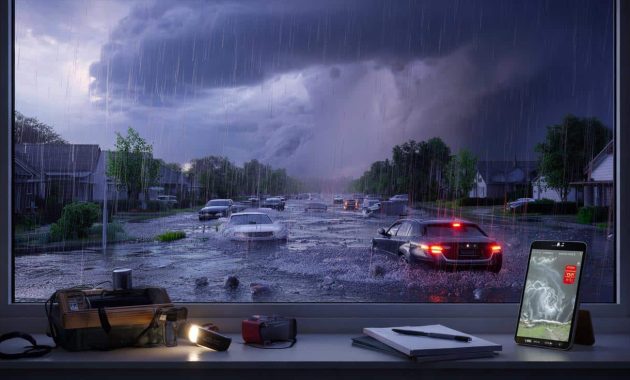
The sky broke in the middle of a Wednesday video call. One second, pale winter light on the wall. The next, a bruised purple darkness sliding over the neighborhood like someone had thrown a blanket over the sun. The rain didn’t start gently. It slammed. A wall of water, rattling windows, swallowing the sound of traffic, setting off a car alarm down the street.
My phone lit up with those familiar notifications: “Severe thunderstorm warning.” A friend sent a photo from across town, streets turning to rivers in minutes. Another shared a clip of hail bouncing like marbles off a supermarket parking lot. We all half‑joked in the group chat: “Guess it’s the apocalypse again.”
Then a meteorologist tweeted: “This isn’t just a storm. This is a pattern.”
When “bad weather” stops being random
We’ve always lived with storms. The summer downpour that floods the gutter for half an hour, the winter wind that rattles a loose tile, the quick flash of lightning that sends you counting seconds under the covers. Those things felt normal. Predictable. Part of the background noise of a year.
What’s different now is the way these events are stacking up. Shorter gaps. Bigger extremes. Longer heat waves, heavier rain, sharper cold snaps on the edges. It’s like the dial on the atmosphere has been quietly turned up one more notch.
Meteorologists have a name for this shift: **a changing climate pattern**, not just “crazy weather.”
Look at the last two years. In Europe, what used to be a “once in 100 years” flood hit multiple times in a single summer. In the United States, storm systems parked over the same regions for days, dropping so much rain in such a short time that drainage systems essentially gave up. Entire highways disappeared under water.
In Pakistan, 2022 monsoon rains were estimated to be about 75% heavier than average. Scientists later calculated that climate change made those floods “at least three times more likely.” That’s not a bad roll of the dice. That’s loaded dice.
The pattern shows up in the data: wetter wets, drier dries, longer fire seasons, hotter nights. Every new record that falls makes the next “unthinkable” event a little easier to imagine.
Here’s what’s going on behind that stormy window. Our planet’s atmosphere is warmer than it used to be. Warmer air holds more moisture. More moisture means more fuel for heavy downpours and intense storms. The oceans are warmer too, feeding stronger hurricanes and typhoons with extra energy, like throwing petrol on a barbecue.
➡️ Psychology shows why emotional processing speed varies greatly between individuals
➡️ 55 million years ago, five‑metre Australian crocodiles could climb trees
➡️ Tesla cancels 4,000-cake order without paying as Elon Musk steps in to help bakery
➡️ Which colours make us look older according to psychology?
➡️ ChatGPT-induced psychosis: when AI becomes a danger to mental health
➡️ “One chance in 200 million”: fisherman hauls up electric-blue lobster with astonishing colour
Jet streams, those high‑altitude rivers of air that steer weather systems, are behaving differently as the Arctic warms faster than the rest of the planet. They can wobble, slow down, get stuck. When they stall, weather lingers. So that rainstorm doesn’t move on. That heat dome doesn’t budge. That drought doesn’t break.
This is why so many scientists repeat a simple, uncomfortable sentence: **this isn’t just a storm, it’s the climate speaking out loud.**
How to live with a sky that’s changing
So what do you actually do when the forecast starts reading like a disaster movie script? You don’t need a bunker. You need a plan anchored in your real life. One that you can actually follow on a tired Tuesday evening.
Start small and local. Look at your home as if you were the storm. Where would water go if heavy rain fell for hours? Down the basement steps? Under the garage door? Around a low garden wall? One simple habit: after every “near miss” storm, walk around the block and notice where the puddles linger and the drains clog.
Write down three things you’d grab if you had ten minutes to leave: documents, meds, hard drives. Put them in the same place. That’s not paranoia. That’s basic weather literacy in a new era.
We’ve all been there, that moment when the alert buzzes on your phone and you kind of shrug. “They always exaggerate.” Or you tap the radar app, watch the colored blobs slide across the map, think, “It’ll go north of us.” Most days, you’re right. Then there’s the day you’re not.
Forecast fatigue is real. After a while, the constant stream of warnings starts to feel like background noise. Let’s be honest: nobody really checks their emergency kit every single day. You don’t have to. What you can do is move from vague anxiety to a handful of clear, boring routines.
Charge your power bank before a stormy week. Fill up the car when big rainfall is expected, not after. Keep one shelf high and dry for valuables if your place is prone to water creeping in. Tiny actions, taken early, are what separate “stressful” from “dangerous.”
Climate scientist Lisa Schipper put it bluntly in a recent panel: “We’re not looking at freak events anymore. We’re looking at the new baseline. Adaptation isn’t a luxury, it’s day‑to‑day survival strategy.”
Here’s a simple, human‑sized checklist experts keep coming back to:
- Know your risk: flood zone, wildfire line, heat island neighborhood.
- Sign up for local alerts: SMS, app, or radio, not just social media.
- Have a 3‑day kit: water, meds, chargers, basic food, pet needs.
- Talk through one plan: who you call, where you meet, who you check on.
- Adjust your home: clear gutters, secure loose items, know how to cut power.
*None of this is glamorous. All of it is easier than rebuilding your life from scratch.*
Reading the forecast like a grown‑up
This new weather pattern isn’t only about fear. It’s also about attention. The quiet, adult kind of attention that learns to read between the lines of the forecast and the sky. You start noticing how the air feels just before the rain, how the wind shifts when a front moves in, how the same street floods in the same spot every single time.
You might find yourself paying more attention to the words scientists use. “Once in a century” doesn’t land the way it used to. You start asking: century of what climate? The old one, or the one we’re hurtling into? That tiny question is the seed of action.
Because when you see pattern, you stop calling it bad luck. You start calling it reality. And reality, even a harsh one, is something you can prepare for, talk about, push back against in your own way.
| Key point | Detail | Value for the reader |
|---|---|---|
| Weather vs. pattern | Single storms are now part of a larger, climate‑driven shift toward more extremes | Helps you stop dismissing events as “random” and see real trends |
| Practical adaptation | Small, realistic routines like checking drainage, stocking essentials, and planning communication | Gives you concrete steps that reduce risk without overhauling your life |
| Mindset shift | Moving from forecast fatigue to active, calm attention to local risks | Turns anxiety into informed decisions and day‑to‑day resilience |
FAQ:
- Question 1How do I know if the storm heading my way is “just weather” or part of a bigger pattern?
Scientists look at long‑term data, not single events. For you, the key sign is repetition: if your area is seeing more frequent heavy rain, longer heat waves, or record‑breaking storms, that’s the pattern showing up in your daily life.- Question 2Are weather apps still reliable with all these changes?
Short‑term forecasts (1–3 days) are generally quite good, sometimes excellent. The challenge is that storms can intensify faster in a warmer atmosphere, so conditions can “flip” more quickly. That’s why nowcasting and live radar matter more than a 10‑day outlook.- Question 3What’s the one thing I should do before the next big storm season?
Find out your specific local risks from your city or national weather service: flood maps, fire danger, heat alerts. Once you know your main risk, set up alerts and prepare a basic kit tailored to that scenario instead of copying a generic checklist.- Question 4I don’t own a house. Does any of this still apply to me?
Yes. Renters can still move valuables to higher spots, learn exit routes, talk with neighbors, and save landlord and emergency numbers. You can also choose where you live within a city with risk in mind, like avoiding basements in flood‑prone areas if you have that option.- Question 5Is there any point in preparing if storms are getting stronger anyway?
Preparation doesn’t stop the storm, but it changes the outcome. Being ready can turn a potential disaster into a serious inconvenience instead. It buys you time, protects your health, and often saves money and stress in the long run.