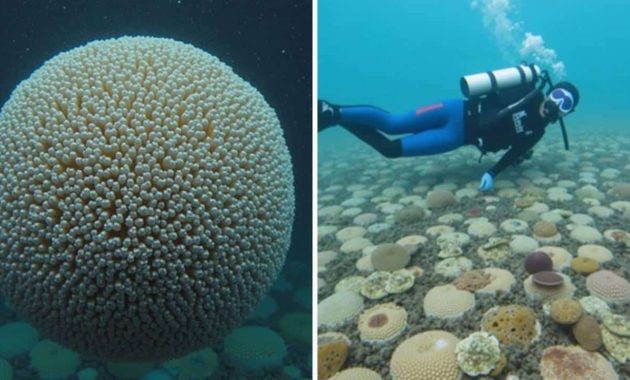
Around her, rows of coral fragments sway on thin ropes like laundry hung out in a gentle underwater breeze. A parrotfish crunches in the background, a turtle glides past, and for a second it feels less like a damaged reef and more like a nursery ward in a hospital. Life everywhere, but still fragile. She clips one fragment free with a careful twist and swims toward a bare, grey patch of dead reef. This is the job now: planting hope, piece by piece, on bones of limestone. A few years ago, this spot was a graveyard. Today, it’s starting to look crowded again. The big question is simple and massive at the same time.
Underwater nurseries where reefs are quietly reborn
In the shallows off Curaçao, the first thing you notice isn’t the fish or the coral. It’s the noise. The reef crackles like static from a detuned radio, shrimp snapping and fish nibbling, a soundtrack of things trying to live. Among that chaos hang tree-like frames of PVC pipes, every branch carrying dozens of coral fragments, each one tagged and monitored like a patient file. To a casual swimmer it looks almost homemade, a DIY garden project lost at sea. To marine scientists, it’s a factory of second chances. Millions of fragile splinters, growing faster here than they would on the reef itself, are quietly preparing to move out.
On Florida’s battered reefs, these nurseries have shifted the storyline from obituary to recovery log. At one site run by the non-profit Coral Restoration Foundation, more than 200,000 corals have already been outplanted onto degraded reef structures. In the Maldives, projects report survival rates of 70–80 % for nursery-grown corals, even in waters that have seen brutal heatwaves. What sounds like a drop in the ocean starts to add up when you scale it: networks of nurseries across the Caribbean, Indian Ocean and Pacific now talk in the language of millions of fragments, not thousands. Each one no bigger than a finger at the start. Each one with a very real chance of becoming a boulder, a habitat, a shelter.
The logic behind these coral farms is strangely simple. Corals grown in mid-water nurseries face fewer predators and less smothering sediment, so they can focus their energy on growth. Some species that would crawl along the reef at a few millimetres a year can double in size several times annually when suspended on “coral trees” or attached to floating lines. Once they hit a certain size, divers transplant them to damaged areas using marine epoxy, nails or clever clips. Over years, those planted patches fuse into solid structures that slow waves, trap sand and carve out nooks for fish to hide and breed. What starts as a science experiment quickly turns into architecture.
How millions of coral fragments are giving the ocean a second chance
The work on the ground – or rather, on the seabed – looks almost disarmingly hands-on. Teams of local divers and volunteers gear up at sunrise, load boats with buckets of small coral fragments and toolkits, then spend hours in slow motion. One diver cleans algae from nursery trees with a soft touch, another trims fragments that are ready to “graduate”, cutting them into several pieces to multiply the stock. A third swims along the reef, searching for stable, hard surfaces where a new coral can grip and start a life. It’s gritty, repetitive, strangely intimate work, more like gardening than glamorous ocean exploration. Each fragment has to be handled as if it matters, because it does.
Reef by reef, you start to see the payoff. Off the coast of Indonesia, fishermen who had watched their reef collapse after dynamite fishing are now working with scientists to regrow branching corals on metal frames. Within three years, surveys in some restored patches recorded fish biomass doubling, with butterflyfish, groupers and tiny damselfish crowding the new coral thickets. In Belize, one project reported that returning corals attracted back herbivorous fish within months, which then helped keep algae in check. That feedback loop – coral comes back, fish come back, balance returns – sounds almost like a fairy tale. It’s not perfect, it’s not everywhere, but down there in the blue, it’s already happening.
There’s a hard truth beneath the hopeful footage. Coral nurseries are not magic wands that fix overheated oceans or erase pollution. They’re more like emergency rooms for a patient in the middle of a global health crisis. Corals still face rising temperatures, acidifying water and local stress from sewage and overfishing. So the strategy has shifted. Projects now actively select fragments from corals that survived marine heatwaves or turbid water, banking on their genetics. They mix different strains, test who copes best with stress, then scale up those winners. It’s selective breeding with a very clear goal: reefs that don’t crumble at the first sign of a hot summer. That shift from “just planting anything” to “planting the toughest survivors” is quietly rewriting the future of reef restoration.
What actually works when you try to rebuild a reef
On paper, coral gardening sounds straightforward: break, grow, plant. In the real ocean, the details make or break a project. Successful teams obsess over site selection. They place nurseries in naturally sheltered areas with good water flow, away from boat traffic and anchor chains, positioned at depths where light is generous but heat extremes are a bit softer. Fragment sizes matter too: pieces too small struggle, too large and the parent colony suffers. So they aim for that sweet spot, often thumb-sized cuts that heal fast and grow aggressively. Then comes the constant, almost boring routine: cleaning structures, scrubbing away sponges and algae, checking tags, logging growth. *It’s glamorous only on Instagram; in real life it’s closer to maintenance work on a living building site.*
Groups that have been at this for a decade share the same confessions. Early on, they planted corals wherever there was empty rock, assuming anything was better than nothing. Many of those first patches failed because they were in zones with strong sediment plumes or recurring disease outbreaks. Now, the smarter projects run small pilot plots before going big. They test a few square metres with different coral species, watch what survives over a year or two, then expand only where the odds look decent. Soyons honnêtes : personne ne fait vraiment ça tous les jours à la perfection, surtout quand les budgets sont serrés and storms keep rearranging the seabed. But the mindset has shifted from heroic planting days to slower, data-driven patience.
The people driving this shift talk less like saviours and more like long-term caretakers.
➡️ “I work as a compliance assistant, and this job offers surprising financial stability”
➡️ Olive oil too expensive: the healthy, affordable alternative to adopt without sacrificing flavor
➡️ Why Willpower Isn’t Always Enough For Lasting Weight Loss
“We’re not putting reefs back the way they were in 1970,” says a marine biologist in Barbados. “We’re trying to build reefs that can survive 2050.”
That realism also shapes how they explain the stakes to coastal communities who rely on reefs for food and tourism.
- Reefs as storm shields – Healthy coral structures can reduce wave energy by up to 97 %, softening the blow of hurricanes for coastal villages.
- Fish nurseries – Restored reefs boost juvenile fish survival, which feeds local fisheries a few years down the line.
- Tourism magnet – A colourful reef draws divers, snorkelers and income far more reliably than a grey rubble field.
- Cultural memory – Older fishers get to show their grandchildren the kind of underwater world they grew up with.
- Testing ground – Every nursery doubles as a live lab to learn what coral strains can cope with hotter, wilder oceans.
What these rebuilt reefs really mean for the rest of us
Standing on a pier after a long day of planting, the sea just looks flat and anonymous again. You can’t see the 500 new coral fragments epoxied onto bare rock. You don’t see the baby fish already nosing around, testing the new neighbourhood. You only feel the sticky salt on your skin and a slight ache in your shoulders. That gap – between what’s visible from shore and what’s changing below – is where our relationship with the ocean often breaks. On a screen, reefs are either lost or saved. Underwater, they’re something in between: patchy, uneven, stubbornly alive. That messy middle is where the story of coral nurseries actually lives, and it’s where our choices on land quietly tip the balance.
| Point clé | Détail | Intérêt pour le lecteur |
|---|---|---|
| Underwater nurseries scale fast | Millions of coral fragments are now grown and outplanted across global reef hotspots | Gives a realistic sense that local projects can snowball into global impact |
| Restored reefs protect coasts | Rebuilt structures reduce wave energy and support fish populations crucial for food security | Shows how coral work connects directly to safety, jobs and prices on the plate |
| Success depends on smarter choices | Using heat-tolerant corals, better locations and patient monitoring boosts survival rates | Demystifies the science and highlights where support, funding or tourism choices matter |
FAQ :
- Are coral nurseries really big enough to save reefs?They can’t fix climate change, but they can prevent local extinctions, protect key reef areas and buy crucial time while emissions are (hopefully) reduced.
- How long does it take for a planted coral to become a real reef?Branching species can create noticeable habitat in three to five years; massive boulder corals may take decades to reach full size.
- Can anyone volunteer in a coral nursery?Many projects welcome trained divers for maintenance or monitoring, and some offer beginner programmes paired with dive certification.
- Do nursery-grown corals look different from wild ones?Once established on the reef, most are indistinguishable, although their growth patterns reflect the species and local conditions.
- What’s the most useful thing I can do from home?Supporting organisations working on reef protection, cutting your own carbon footprint and choosing reef-safe tourism options all feed into the same recovery story.