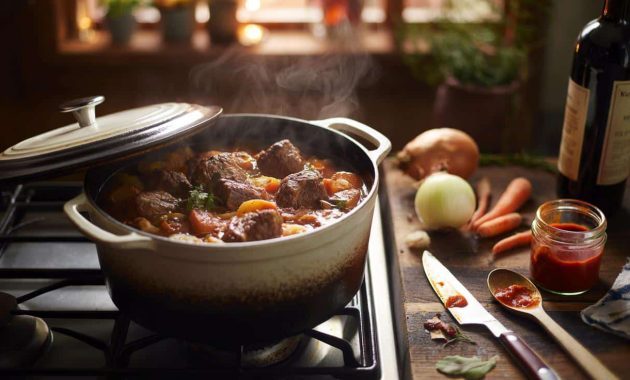
The other night, I came home in that gray zone between hungry and exhausted. The kind of tired where you open the fridge, close it, then open it again, hoping something will magically cook itself. On the shelf: a lonely onion, a bag of carrots, a pack of cheap meat, half a bottle of red wine. Not exactly glamour.
So I did what I always do on those days when I want dinner to gently take care of itself. I pulled out my heavy pot, chopped without overthinking, and started a slow-simmered stew that more or less cooks its own soul while I get on with life.
There’s a calm that arrives when you know the flavors will develop on their own.
The slow-simmered pot that quietly changes the whole evening
There’s a moment, usually about an hour in, when the kitchen flips. At first, it smells like raw onions, a bit harsh and sharp. Then the heat has its say, and suddenly the whole room softens. The meat gives off that deep, roasted perfume. The carrots melt into sweetness. The garlic loses its bite and becomes something rounder, almost buttery.
You walk past the stove, lift the lid, and a small cloud of scented steam hits your face. It smells like you tried very hard, even if you barely did anything at all.
One winter, I had friends over on a Tuesday night, which is an objectively terrible night to host. I threw some beef cubes, onions, carrots, celery, tomato paste, a splash of red wine, and stock into a pot at lunchtime, then left it on the lowest heat while I worked from home.
By the time they arrived, the meat was so tender it didn’t even need a knife. Someone walked in, dropped their bag, and said, “Wow, what is that smell?” The truth was: it was just time and a low flame. The pot had worked quietly all afternoon while I answered emails.
There’s something almost unfair about these slow recipes. You get disproportionate credit for very little active labor. Ten minutes of chopping, five minutes of browning, maybe two stirs during the afternoon. Then the heat and time build layers of flavor you simply cannot rush.
This is the secret logic behind slow-simmered dishes: they move flavor from the separate to the united. Meat, vegetables, spices, wine, broth — at the beginning, they all shout over each other. After a few hours, they’re in harmony, each note blending into something that doesn’t taste like “beef plus carrot plus thyme” anymore, but like a single, dark, comforting idea.
The exact way I cook this when I want flavors to do their own work
My go-to base looks like this: I start with a heavy pot and a generous glug of oil over medium heat. In goes the meat, patted dry and salted, left alone long enough to really brown, not just turn gray. That crust on the bottom? That’s flavor insurance.
Then I toss in sliced onions, maybe a shallot if I have one, and let them catch the caramelized bits. A spoon of tomato paste, toasted until it darkens. A crushed garlic clove or three. At this point, the kitchen starts to smell like a promise.
➡️ Psychology explains that chronic tension in the body mirrors unresolved emotional arousal
➡️ “I feel tense when there’s nothing to worry about”: what psychology says about this reaction
➡️ MDA picks over 1,000 initial winners for Golden Dome contracting vehicle
➡️ Why some people still go to work despite the cold
The next move feels almost ceremonial. I pour in red wine or stock, something with character, and listen as the pot hisses and sighs. I scrape the bottom with a wooden spoon, freeing up all the browned treasures. Then I add the carrots, maybe a bay leaf, a small piece of rosemary or thyme, and just enough liquid to barely cover everything.
Lid on. Heat down low. And then I walk away. Not entirely, of course — I peek once in a while, give it a lazy stir. But I resist the urge to fuss. Let’s be honest: nobody really does this every single day. That’s why it feels special when we actually do.
There are two main mistakes that tend to sabotage this kind of recipe. The first is rushing the browning step. Pale meat, pale flavor. The second is boiling instead of gently simmering. A rolling boil turns meat tough and breaks the sauce, while a quiet, barely-bubbling surface slowly coaxes everything into tenderness.
I’ve learned to read the pot like a mood ring. Too aggressive? Turn it down. Too still? Nudge the heat. *Once you find that sweet spot, the dish practically finishes itself.*
Sometimes I think slow cooking isn’t about the food at all, but about learning to tolerate waiting. About trusting that something good is happening, even when you can’t see it changing minute by minute.
- Brown the base well — That’s where the deep, roasted notes are born.
- Keep the simmer gentle — Tiny lazy bubbles, not a wild boil.
- Add acids at the end — A splash of vinegar or lemon wakes everything up.
- Rest before serving — Ten minutes off the heat lets the flavors settle.
- Cook more than you need — Tomorrow’s leftovers taste even richer.
Why this kind of recipe feels like a small act of resistance
There’s something quietly rebellious about putting a pot on the stove and letting it take its time in a world where everything is supposed to be “ready in 15 minutes.” You’re basically whispering, “No, not tonight. Tonight we cook like the clock doesn’t own us.”
The truth is, slow-simmered food isn’t just about taste. It’s about the background comfort of knowing something good is building in the next room while you’re answering messages, folding laundry, or talking to someone you love.
That’s why I cook this recipe when I want flavors that develop on their own — and, maybe, when I want to develop something on my own too. Patience. Quiet. A bit of space to breathe while the stew slowly thickens and the aromas sneak under the doors.
You don’t need fancy ingredients. You don’t need a perfect kitchen. You just need a heavy pot, low heat, and a little trust in the process. The rest happens while you’re busy being human, which might be the best kind of cooking there is.
| Key point | Detail | Value for the reader |
|---|---|---|
| Low, slow simmer | Gentle heat over several hours, with just occasional stirring | Deeper flavor and tender meat without constant effort |
| Browning first | Thoroughly searing meat and toasting tomato paste | Builds complexity that no quick recipe can imitate |
| Letting time work | Setting the pot, then stepping away to live your life | Comforting, low-stress cooking that still feels special |
FAQ:
- Question 1Can I make this kind of slow-simmered dish in a slow cooker instead of on the stove?Yes. Brown the meat and aromatics in a pan first for flavor, then transfer everything to the slow cooker and cook on low for 6–8 hours.
- Question 2What cuts of meat work best for this recipe style?Tougher cuts like chuck, shoulder, or shank are ideal; they have enough fat and connective tissue to become meltingly tender over time.
- Question 3Can I do a vegetarian version that still has depth?Absolutely. Use mushrooms, beans, and root vegetables, plus tomato paste, soy sauce, and maybe a bit of miso to bring umami.
- Question 4How do I stop the stew from drying out during a long simmer?Keep the heat very low, lid on, and check once in a while; if it looks too thick, add a splash of water, stock, or wine.
- Question 5Is it safe to leave a pot simmering while I’m out of the house?For safety, it’s better to stay home while something is on the stove; if you need to leave, a modern slow cooker is the safer option.