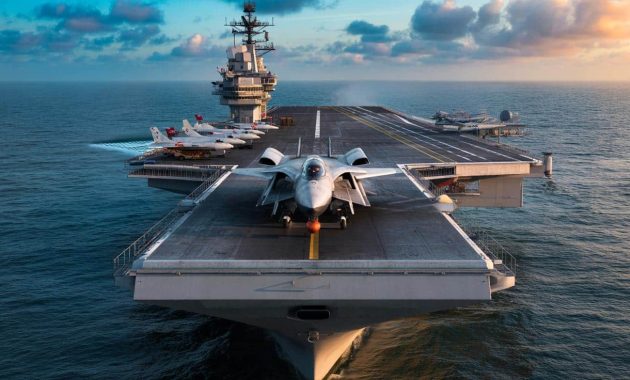
The ceremony looked like just another tightly scripted naval event, yet behind the flags and speeches lay a clear message: China’s navy is stepping into a new league of carrier warfare, one far closer to the capabilities long dominated by the United States.
The Fujian’s debut and why it matters
On 5 November, China officially commissioned its third aircraft carrier, the Fujian, into the People’s Liberation Army Navy (PLAN) during a ceremony at the Sanya naval base on Hainan Island.
President Xi Jinping attended the event, underlining the political weight attached to this ship. For Beijing, the Fujian is not just another hull; it symbolises a shift from learning to leading in carrier design.
The Fujian is China’s first fully home-designed aircraft carrier using catapults, marking a technological leap rather than a simple incremental upgrade.
China already operates two carriers, Liaoning and Shandong, both derived from older Soviet concepts and featuring ski-jump ramps. Those ships allowed the PLAN to practice carrier operations and build up pilots and crews. The Fujian, though, pushes China into a category that until now only the US Navy truly occupied: large, catapult-equipped carriers capable of launching heavier, more capable aircraft.
From ski-jump to catapults: a genuine break with the past
The biggest change with the Fujian is the switch from STOBAR to CATOBAR operations. The two acronyms describe radically different ways of running a carrier air wing.
- STOBAR (Short Take-Off But Arrested Recovery): uses a ski-jump ramp, limits aircraft weight and fuel, restricts heavier support planes.
- CATOBAR (Catapult Assisted Take-Off But Arrested Recovery): uses catapults, enables heavier aircraft, including airborne early warning and fully fuelled strike jets.
Liaoning and Shandong are STOBAR ships, with a pronounced upward-curving bow ramp. Jets throttle up and “leap” off the ramp, but must trade payload or fuel for the ability to take off on a short deck.
The Fujian ditches the ski-jump and instead features three long catapult tracks on its flat deck: two along the bow, and a third along the port side of the angled flight deck. That layout is broadly comparable to US carriers, which use four catapults.
By adopting CATOBAR, China can launch heavier fighter loads, longer-range missions and specialised support aircraft that radically extend the carrier’s combat reach.
➡️ The subtle habit that makes some conversations feel easier even with strangers
➡️ This is what happens when you clean without a clear end point
➡️ “I thought I knew every cocktail”: the pineapple–melon mix that stunned my guests
➡️ Snow for every corner of the UK? 2.8 inches an hour, 10 days out: will your street be hit
➡️ Psychology reveals why your mood shifts after certain interactions without obvious reasons
➡️ This rich chocolate cake recipe stays incredibly moist for days, even without any frosting
Electromagnetic catapults and the race with the US Navy
In a notable choice, the Fujian uses electromagnetic catapults rather than traditional steam systems. This technology, known in US terminology as EMALS, is also installed on America’s newest carrier class, the USS Gerald R. Ford.
Electromagnetic catapults rely on electric power and advanced control systems instead of boiling water and complex steam plumbing. That allows more precise acceleration, which in theory reduces stress on aircraft and widens the range of planes that can be launched, including lighter drones.
The US has wrestled with reliability issues on its early EMALS deployments, and some American politicians openly questioned the technology. Beijing, meanwhile, appears to have pressed ahead, claiming successful trials on the Fujian during sea tests in 2024.
Independent verification of Chinese catapult performance is limited, but imagery from recent trials shows repeated launches and recoveries, hinting that the system has at least reached an operational level.
What flies from the Fujian?
The Fujian is expected to operate a mix of existing and new aircraft, giving the PLAN a more rounded air wing than it has ever fielded.
| Aircraft type | Role | Notable feature |
|---|---|---|
| J-15 | Carrier-based fighter | Derived from Russian Sukhoi design |
| J-35 | New-generation stealth fighter | Twin-engine, low-observable design, seen as a rival to the US F-35C |
| KJ-600 | Airborne early warning aircraft | Radar-equipped turboprop, similar concept to US E-2 Hawkeye |
The J-15 has been the workhorse on China’s first two carriers, based on a Russian Su-33-style airframe. On ski-jump carriers, those jets often face payload limits; catapults on the Fujian should allow them to carry more fuel and weapons.
The more eye-catching addition is the J-35, a stealthy twin-engine jet that Chinese media present as a carrier-based counterpart to Western fifth-generation fighters. Footage from September trials showed J-35s landing on the Fujian, suggesting the aircraft is already deep into integration testing.
Equally transformative is the KJ-600 early warning aircraft. Its function mirrors that of the US E-2 Hawkeye: orbiting high above the fleet to detect incoming threats and manage fighter traffic. Ski-jump carriers struggle to operate such planes effectively due to their weight and wing configuration. Catapults remove that constraint.
For the first time, China can assemble a carrier air wing with onboard stealth fighters, long-range eyes in the sky and better control of the battlespace.
Size, propulsion and raw capacity
The Fujian is physically imposing, though still slightly smaller than the largest American supercarriers.
- Length: around 316 metres
- Maximum deck width: about 76 metres
- Displacement: more than 80,000 tonnes fully loaded
- Air wing: more than 50 aircraft, including around 40 combat jets
That makes it the largest warship currently afloat outside the US Navy. Yet in one key area, it remains more traditional than its American counterparts: propulsion.
The Fujian uses a conventional power plant, with eight boilers feeding steam turbines that drive four shafts. This arrangement is powerful enough for high speeds, but it does not offer the virtually unlimited endurance of a nuclear-powered carrier.
Conventional propulsion also narrows the margin for electrical power, a non-trivial issue for a ship running several electromagnetic catapults plus future high-demand systems such as directed-energy weapons or advanced radar arrays.
China’s shipbuilding machine keeps turning
Beyond the Fujian itself, the ship reflects the tempo of China’s wider naval construction. The time between its launch and commissioning, just over two years, sits within the ambitious pace already seen in Chinese shipyards for destroyers, frigates and amphibious ships.
That speed is not just about churning out hulls. It shows a maturing industrial base that can handle complex integration of electronics, flight deck systems and aviation fuel installations on a scale previously dominated by the US.
Beijing is already looking at the next step. A follow-on “Type 004” carrier is widely reported to be on the drawing board, with a projected displacement of around 100,000 tonnes and a strong possibility of nuclear propulsion.
If the Type 004 uses nuclear reactors, China would join the US and France as the only countries operating nuclear-powered CATOBAR carriers.
What this means in practical terms
For regional navies in the Indo-Pacific, the Fujian changes planning assumptions. A CATOBAR carrier with stealth fighters and airborne early warning aircraft can operate farther from China’s shores and still pose a credible threat.
In a Taiwan crisis scenario, for instance, a Fujian-led carrier group could provide long-range air cover, extend anti-ship missile envelopes and complicate US and allied air operations. Its J-35s, backed by KJ-600 radar coverage, would be harder to track and target than older, non-stealth fighters flying from land.
Beyond conflict scenarios, the Fujian allows China to show flag much like the US has done for decades. Carrier visits to the Indian Ocean, the Middle East or even the Mediterranean would signal that China sees itself as a global naval power, not just a regional one.
Key concepts and risks worth understanding
Why airborne early warning aircraft matter
Airborne early warning planes such as the KJ-600 act as flying radar stations. From high altitude, they can see much farther than ship-based sensors limited by the curvature of the Earth.
That extra reach allows carrier groups to:
- Spot enemy aircraft and missiles sooner, buying extra reaction time.
- Coordinate fighter interceptions more efficiently.
- Manage the traffic of dozens of aircraft operating from the carrier.
Without such aircraft, carriers rely heavily on land-based radar and satellites, both of which can be disrupted in a high-intensity conflict.
Operational challenges China still faces
Owning a modern carrier is only the starting point. Running it safely and effectively is a demanding craft learned over years.
China must train large numbers of pilots to operate from catapult carriers, a skill that remains among the most unforgiving in aviation. It also needs deck crews, maintenance teams and battle planners who can sustain high-tempo flight operations in all weather conditions, day and night.
There are also technical risks. Electromagnetic catapults, complex arresting gear and dense electronic systems are prone to teething problems. Anything that slows launch and recovery cycles reduces the carrier’s value during combat.
For the US and its allies, the Fujian becomes a new planning factor. Carrier-killer missiles and submarine tactics that were designed around older, ski-jump carriers must now account for a more capable, more resilient flagship at the centre of China’s blue-water ambitions.