Craftspeople are quietly reaching back 3,000 years for a finish that breathes, smells like a grove after rain, and keeps boards and benches alive. The surprise isn’t the romance of pharaohs. It’s that the recipe still works better than many synthetics for everyday use.
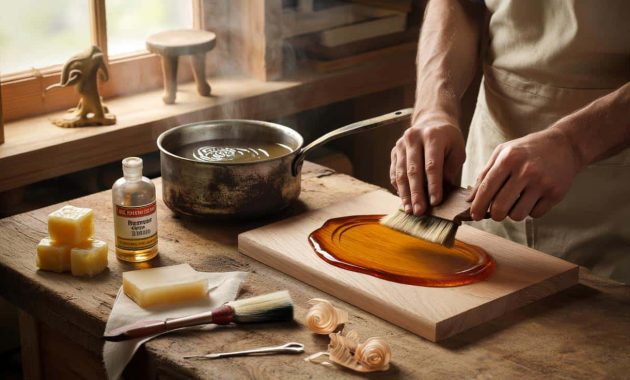
I watched a young maker stand over a dented saucepan in a tiny workshop, the kind with curled shavings gathered like straw nests along the floor. The pot held beeswax and resin warming in linseed oil, the mix turning from cloudy to amber as a low flame licked the base. *It smelled like a museum and a bakery.* He dipped a cloth, wiped the syrup across ash wood, and the board drank it in, grain darkening like wet river stones. He waited a beat, then burnished with a horsehair brush until the surface glowed—not glossy, just awake. The room felt older by centuries. The recipe is three ingredients and time.
Why an Egyptian wood finish is back on the bench
Ancient Egyptian carpenters had to guard wood like treasure. Trees were scarce along the Nile, so furniture, coffins, and boats needed a shield against heat, sand, and ritual use. Their answer was a blend of plant oil, beeswax, and tree resins that soaked deep, sealed pores, and left a silky, breathable skin. Today’s makers want that same balance: protection without plastic, shine without a shell.
You can see it on museum pieces that feel oddly modern. Tutankhamun’s chairs were coated with oils and resins that still hold a soft sheen. Funerary boats showed traces of bitumen and conifer resin along seam lines. In a Brooklyn co-op, a cabinetmaker rubbed a similar mix into a maple tabletop for a café that wanted “natural, not fragile.” He wasn’t copying a tomb. He was copying a philosophy: let wood be wood, just better at surviving daily life.
The chemistry is deceptively simple. Linseed oil oxidizes and polymerizes, forming a flexible network inside the fibers. Beeswax fills surface pores and slows moisture swings. Tree resins—pistacia in antiquity, pine rosin or damar for moderns—add hardness and tack, then crystallize into a thin armor. Together they repel splashes, resist fingerprints, and soften small scratches with a quick rebuff. The finish is permeable enough to avoid trapped moisture yet tough enough to take a coffee cup. The wood looks finished without seeming sealed off from the world.
How to mix and apply the oil–wax–resin, the Egyptian way
Start with a simple ratio: 2 parts raw, cold-pressed linseed oil, 1 part beeswax pellets, 1 part pine rosin or damar resin. Warm gently in a double boiler until the solids dissolve, stirring with a wooden stick. Off heat, add a few drops of cedarwood or myrrh oil if you want a whisper of the Nile. While the blend is still warm but not hot, wipe a thin coat onto bare wood, wait 20–30 minutes, then buff hard with a lint-free cloth. Let it cure at least a day between coats.
Go thin and patient. Thick coats stay gummy and collect dust. Heat low and steady—scorched wax loses adhesion. Work in a ventilated space, and lay oily rags flat to dry on metal, never balled up. **Rags can self-ignite.** A light pass with 320-grit between coats knocks down nibs and helps the next layer bite. Food-contact boards do well with raw linseed oil and beeswax alone if you’re sensitive to rosin. Let’s be honest: nobody does this every day. Plan a slow afternoon, then enjoy the long payoff.
This isn’t precious work, it’s careful work. **The blend is simple**, but the rhythm matters—wipe, wait, buff, breathe. A veteran restorer told me it’s less like painting and more like polishing a thought.
“What the Egyptians understood is that wood behaves like a living material. You don’t trap it. You coach it.”
- Warm the wood slightly with a heat gun on low for deeper absorption.
- Test the color on an offcut: oil will amber pale species like ash and pine.
- For a harder topcoat, add 10–15% extra resin to the final batch only.
- Maintain with a quick buff and a fingertip of paste every few months.
The slower finish that changes how we see things
We’ve all had that moment when a beloved table looks tired, rings and scratches telling a story we don’t want to end. The Egyptian finish doesn’t erase the story. It mends it. After the first coat, you see grain sharpen like a photograph finally in focus. After the second, the surface has that whisper of depth you can’t fake.
➡️ February feeders place this cheap treat to ensure birds return every morning
➡️ Why this divisive glass in bathroom hack is turning neighbors against each other
➡️ Psychology explains that chronic tension in the body mirrors unresolved emotional arousal
➡️ I found a simple way to keep gardening all winter (without using a greenhouse)
➡️ This deadly invasive fish species in the Mediterranean is alarming experts
➡️ Bad news for balcony bird lovers: this “harmless” winter habit may be slowly killing songbirds
There’s a small act of timekeeping embedded in the method. Oil cures on its own schedule, wax buffs only when the tug on the cloth feels right, resin hardens while you’re sleeping. **Work in thin coats**, the old hands say, and let oxygen do its work. The pause is part of the pleasure. The reward is a surface that invites touch rather than resists it.
This finish also travels well across use cases. Chopping boards, handrails, turned bowls, guitar necks, school desks that need to look clean without looking corporate. It isn’t bulletproof like a bar-top epoxy. It’s something else: repairable, renewable, and quietly luxurious. And when it finally needs love, the fix is a cloth and a pot on a gentle flame, not a respirator and sanders roaring at midnight.
The method stretches backward to boat builders sealing planks against the Nile and forward to anyone who wants their home to feel less like a showroom and more like a place with pulse. Share it with a neighbor, pass a jar to a friend setting up a first apartment, teach a teen to buff a cutting board until light skates on the surface. A small ritual that slows the room down in all the right ways.
| Point clé | Détail | Intérêt pour le lecteur |
|---|---|---|
| Egyptian blend basics | 2 parts linseed oil, 1 part beeswax, 1 part pine rosin/damar | Clear, repeatable recipe you can mix at home |
| Application rhythm | Wipe thin, wait 20–30 min, buff hard, cure 24–72 h | Professional results without special tools |
| Safety and upkeep | Low heat, flat-dry rags, quick seasonal refresh | Long-lasting finish with minimal risk and fuss |
FAQ :
- Is the oil–wax–resin finish food-safe?Use raw, food-grade linseed oil and pure beeswax for boards and utensils; skip added solvents. Pine rosin is widely used in food wraps but can trigger allergies in some people.
- How long does this finish last?On indoor furniture, expect 1–3 years before a simple refresh. High-wear items like cutting boards benefit from a quick rub every few months.
- Can I use it outdoors?Yes, with expectations. It sheds water and sun fairly well but needs more frequent maintenance. Consider adding extra resin for hardness and recoat seasonally.
- Will it darken the wood?Linseed oil ambers pale woods and deepens color on darker species. Test on an offcut to preview the tone you’ll get after curing.
- Where do I find the ingredients?Raw linseed oil and beeswax are common at art or hardware stores. Pine rosin (colophony) and damar crystals are sold by art suppliers and luthier shops.