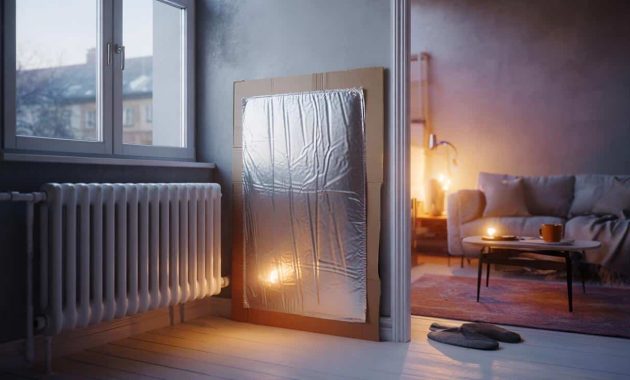
You spot it the second you step through the door.
That heavy, slightly damp chill that no scented candle can hide. The radiators are buzzing, you’ve nudged the thermostat a little higher “just for tonight”, and still your feet feel like they’re on a stone floor in a church. You touch the radiator: scorching. You walk two steps into the room: lukewarm air at best.
Somewhere, you’re paying for heat that never really reaches you.
And then a neighbor, a colleague, or a TikTok stranger drops this weird sentence: “Have you tried aluminum foil behind your radiators?”
It sounds almost too cheap to be real.
The strange gap between hot radiators and cold rooms
Winter exposes the flaws in every home.
You notice the draft under the door, the icy stairwell, that one window that seems to leak cold like an open fridge. But the most frustrating detail is this: your radiators are blazing, and yet the room refuses to feel cozy. You push the thermostat again, knowing your next energy bill is silently smirking at you.
It doesn’t feel like bad insulation.
It feels like the heat is just… disappearing.
Picture an old apartment building on a gray January afternoon. The kind with thick walls, high ceilings, and radiators lined up obediently under the windows. The tenant, Léa, works from home, wrapped in two sweaters and fingerless gloves. She checks the radiator: it’s almost too hot to touch. She checks her breath: you can nearly see it.
Later, she learns that up to 35% of the heat from a radiator stuck to an uninsulated exterior wall can be lost straight through that wall. No drama, no noise, just money sliding into the void.
The room isn’t cold because the radiator is weak.
It’s cold because the wall is stealing the warmth faster than she can pay for it.
Once you see it, it’s obvious. Radiators don’t radiate just into the room. They also radiate backward, into the wall that often faces the street, the courtyard, or the neighbor’s freezing stairwell. That wall absorbs the heat like a sponge, and your heating system dutifully keeps feeding it.
The aluminum foil trick is nothing mystical.
It’s just about bouncing that lost heat back into the room instead of quietly donating it to the bricks. *You’re not generating more heat — you’re finally using the one you’re already paying for.*
➡️ France and Rafale Lose €2.9 Billion Fighter Program Amid Corruption Allegations Probe
➡️ The plant that perfumes the home and repels mosquitoes : here’s why everyone wants it in spring
How the aluminum foil trick actually works
The method is painfully simple: you create a reflective panel and slip it between your radiator and the wall. That’s it. No drilling, no electrician, no €300 gadget off Instagram. You take a sheet of cardboard or a thin rigid board, cover one side completely with aluminum foil (shiny side facing out), and place this makeshift mirror behind the radiator.
The foil reflects the infrared radiation back into the room instead of letting the wall swallow it.
The result isn’t “wow, tropical beach in ten minutes”, but you often feel a more stable, deeper warmth.
Here’s how it plays out in real life.
After yet another shocking bill, Marc, who rents a small two-room flat, tries it “just to see.” He cuts up a cardboard box, covers it with kitchen foil, slides it carefully behind each radiator. Total cost: maybe two euros and ten minutes of his Sunday. That evening, he notices something strange. The thermostat is set lower than usual, but he’s not reaching for an extra hoodie.
Over the next month, he keeps his usual routine. Same working hours, same temperatures outside. His bill drops by a modest but very real percentage.
Nothing viral, nothing miraculous. Just a cheap tweak that finally gives his radiators a fighting chance.
There’s a bit of physics behind the viral TikTok vibe. Radiators emit heat by convection (warming the air) and by radiation (infrared waves). The wall behind them acts like a cold sink. Aluminum foil has a high reflectivity in the infrared spectrum, so it bounces a chunk of that backward radiation into the room. Special insulating radiator panels sold in stores do the same thing, usually with an extra layer of foam or insulation.
Are they more efficient than plain kitchen foil? Often yes.
But the plain truth is: a DIY foil panel is already miles better than doing nothing at all.
Doing it right: from kitchen foil to real comfort
The trick only works well if you set it up with a minimum of care. Grab a large piece of cardboard roughly the size of the radiator. Wrap one entire side with aluminum foil, smoothing it with your hand. The shiny side should face the radiator. Tape it at the back so it doesn’t peel away. Then, gently slide this panel between radiator and wall, foil side towards the heat source, without crushing any pipes or scratching the wall.
Leave a tiny air gap if possible.
That small space helps the warm air circulate and enhances the overall effect.
There are a few traps many of us fall into.
The first is pressing the foil or the panel directly against the radiator or gluing it to the wall in a wrinkled mess. That reduces the reflection and can even create hot spots on delicate paint. Another mistake is forgetting safety: no foil touching electrical sockets, no flammable cardboard resting on hot pipes, no clutter or curtains draped too close.
Let’s be honest: nobody really does this every single day.
You install it once, you forget it exists, and that’s exactly the point — it should be safe and stable enough to disappear into your winter routine.
Some people are skeptical, some swear by it, and a lot of us sit quietly in the middle.
“I wasn’t expecting a miracle,” says Sara, who lives on the top floor of a drafty building, “but after I put foil behind the radiators, I stopped having that icy strip of air along the wall. The room felt less ‘leaky’. It’s subtle, but once you feel it, you don’t want to go back.”
To anchor it in your mind, here’s a small box of what actually helps:
- Use a rigid support (cardboard or thin board) covered with foil, not loose sheets.
- Keep the shiny side facing the radiator to reflect maximum heat.
- Leave a small air gap between wall, foil, and radiator for better circulation.
- Complement the trick with simple habits: bleed radiators, close shutters at night, block drafts.
- Consider proper radiator insulation panels later if you’re ready to invest a bit more.
Beyond foil: a new way to look at your winter comfort
The aluminum foil hack is a bit like that friend who quietly points out a small, obvious fix you’ve walked past for years. It won’t replace roof insulation or new windows. It won’t erase a badly designed heating system. Yet it changes the relationship you have with your own space. You stop passively suffering the cold and start tweaking your home like a living system.
You notice the radiators a bit differently.
You feel the warmth shift, even slightly, toward where you actually live and breathe.
From there, other questions start to open up.
Could you rearrange furniture that blocks the heat? Add a heavy curtain by the draftiest window? Time your heating differently so rooms aren’t blazing while you’re at work? None of this is glamorous. It’s not the kind of thing that trends for more than a few seconds. Yet, these tiny adjustments stitched together can soften a whole winter.
One day you walk in, drop your bag, and realize you didn’t reflexively rush to turn the thermostat up.
Your home feels a bit more on your side.
You might experiment and find the effect striking. You might notice just a gentle improvement. You might mix this cheap trick with more serious work down the line: proper insulation, smart thermostats, new windows when life and budget allow. What stays is the gesture itself. You stopped accepting that heat had to escape just because the wall was there first.
On a cold evening, with the wind banging on the glass and the radiators humming, that quiet decision matters.
And maybe that’s the real warmth the foil helps reflect back to you.
| Key point | Detail | Value for the reader |
|---|---|---|
| Reflect heat instead of losing it | Aluminum foil behind radiators bounces infrared heat back into the room | Warmer rooms without raising the thermostat |
| Low-cost, DIY-friendly method | Cardboard + kitchen foil, installed in minutes with no tools | Immediate, affordable action to fight rising energy bills |
| Part of a wider comfort strategy | Combine foil panels with bleeding radiators, blocking drafts, rearranging furniture | Better overall winter comfort and potential long-term savings |
FAQ:
- Does aluminum foil behind radiators really save money?Yes, it can reduce heat loss through exterior walls and slightly lower your heating needs. The savings vary, but many users notice they can set the thermostat a bit lower for the same comfort.
- Is it safe to put cardboard and foil behind a hot radiator?Used correctly, at a small distance from the hottest parts and away from electrical sockets or curtains, it’s generally considered safe. If your radiators run extremely hot, opt for purpose-made reflective panels instead.
- Which side of the aluminum foil should face the radiator?The shiny side should face the radiator, as it reflects more infrared heat back into the room than the dull side.
- Can I use only foil stuck directly to the wall?You can, but a rigid panel covered in foil with a little air gap tends to work better and is easier to remove without damaging paint or plaster.
- Is this trick useful if my walls are already insulated?If your walls are well insulated, the gain will be smaller, yet you might still see a slight improvement in comfort. In poorly insulated or older buildings, the effect is usually more noticeable.