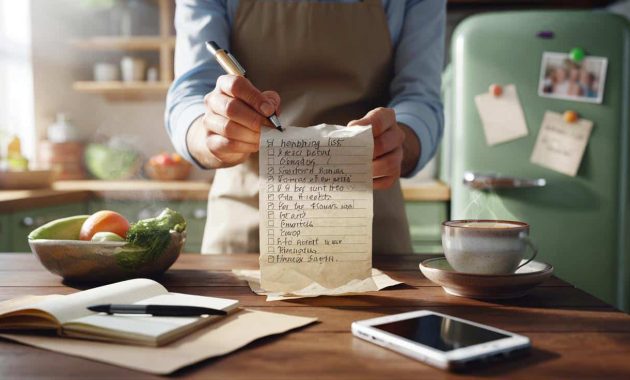
That small, crumpled list in a pocket or handbag looks harmless, even old‑fashioned. Yet psychologists say the choice between tapping a screen and scribbling on paper can reveal how we think, remember and manage our daily lives.
Why paper shopping lists are still surviving the app era
Supermarket chains push loyalty apps. Tech companies promise “smart lists” that sync across devices and predict your next purchase. On paper, the battle looked settled years ago.
And yet, paper lists keep turning up in baskets and trolleys. A folded envelope, a page from a notebook, a Post-it stuck to a wallet. For many people, this is not a refusal of progress but a deliberate choice about how they want to think and feel while organising everyday life.
Choosing paper over an app often signals a preference for clarity, control and a calmer mental load.
Behind that choice sit several psychological patterns: a taste for simplicity, stronger memory, a need for tactile contact, even a subtle stance on technology and the environment.
A taste for simplicity and focus
No log-ins, no updates, just a pen
People who stick to paper often want their shopping routine stripped back to the basics. No notifications. No dark mode settings. No ads for products they never asked to see.
Writing “milk, eggs, bread, tomatoes” on a scrap sheet gives them something an app cannot: a single, visible plan with no digital noise around it.
The paper list becomes a tiny island of order in a crowded, over-connected day.
Psychologists sometimes link this to a “low-friction” mindset. These shoppers like direct tools with clear start and end points. A list is written, used, then tossed or reused. The task is contained. Nothing lingers in a cloud or waits for an update.
➡️ Stylists say this layered cut grows out better than most and saves money on salon visits
➡️ “Trying a no-buy month challenge reset my spending habits and built savings”
➡️ Why so many bird lovers set a kitchen timer at the first sign of frost?
➡️ Cucumber with aloe vera: why this simple combination is so often recommended for skin
➡️ Why your muscles hold tension during focused work
Less distraction, more intention
Opening a shopping app usually means unlocking a phone. Once the screen is lit, messages, social feeds and alerts compete for attention. The original goal—planning dinner—can easily slide down the priority list.
Paper users tend to avoid this trap. With no incoming pings, they stay closer to the core question: “What do I actually need?” That helps them make more deliberate choices and limits impulse buys triggered by digital suggestions.
How handwriting boosts memory and cuts forgotten items
Writing by hand activates more brain areas than simply reading or typing. Several studies on learning have shown that students remember information better when they take notes on paper rather than on a laptop.
The same mechanism works, on a smaller scale, with a shopping list.
The act of forming each letter helps the brain encode the item more deeply, so the list becomes a memory tool as much as a reminder.
Many people who write lists notice they can recall most items even if they leave the paper at home. The physical effort of writing—however minor—pays off later, in the aisle, when they mentally replay the page they filled earlier.
This doesn’t mean digital lists are useless. They still help reduce errors. But those who write by hand engage more actively with the content, instead of just ticking boxes on a pre-filled template.
A moment of mindfulness before the supermarket rush
Turning a chore into a small ritual
For some, writing the list is not just preparation; it’s a pause. They sit at the kitchen table, look through cupboards, think ahead to meals and events. The list is shaped slowly, not in a rush at the shop entrance.
This planning moment can resemble a brief mindfulness exercise. Attention narrows to simple, concrete questions: what is missing, what will we cook, what can wait.
That quiet check-in with everyday needs can calm anxiety and create a sense of control, especially in hectic weeks.
Psychologists say people who value this ritual often apply the same deliberate approach to other parts of life: bills, work tasks, even family schedules. The shopping list becomes a training ground for staying present rather than scattered.
The tactile side: why the feel of paper still matters
Not everyone processes information in the same way. Some people are more “tactile”: they remember better when they touch, hold, or physically manipulate objects.
For them, a paper list is not just a record; it is part of the experience. The textured page, the weight of the pen, the slightly smudged ink—these sensations help cement what needs to be bought.
Ticking or crossing out an item creates a tiny burst of satisfaction that a glowing checkbox rarely matches.
These micro-moments of progress make the entire shopping trip feel more manageable. Completed lines show instant evidence that the task is moving forward, which can ease stress for people who find supermarkets overwhelming.
An emotional link to family habits and tradition
Echoes of parents and grandparents
For many adults, the first shopping list they saw belonged to a parent, pinned to the fridge or kept in a handbag. Holding their own list years later can spark a quiet sense of continuity.
In psychological terms, this is about identity. Repeating familiar gestures—like scribbling “tea, sugar, soap” before payday—can support a stable sense of self when everything else, from jobs to housing to technology, feels in constant flux.
Paper lists often carry memory as well as groceries: childhood kitchens, weekend markets, shared meals.
Keeping the ritual alive may also reflect a cautious stance toward rapid change. Some people accept new tools at work but prefer old ones at home, where routines feel more personal and less negotiable.
Digital independence: saying no to constant connectivity
Choosing paper can act as a small boundary in an always-online life. The list does not need battery level, network coverage or an account password. It never crashes at the till.
Fans of paper lists often speak about wanting at least a few daily tasks that do not go through a screen. This is less nostalgia and more a way to protect mental space from endless scrolling and pop-ups.
A paper list is technology-proof: it works during outages, broken phones and drained power banks.
That sense of independence can reduce low-level stress, especially for people who already feel overloaded by digital tools at work.
The quiet environmental argument for paper
There is a common belief that digital equals greener. The reality is more nuanced. Every cloud-based app relies on servers that consume electricity, devices that require rare metals, and regular hardware upgrades.
By contrast, a scrap of paper repurposed from old printouts or letters has already used its main resources. Giving it a second life as a shopping list does not trigger major extra cost to the planet.
Using the back of an envelope can be more climate-friendly than opening yet another energy-hungry app, especially on frequently replaced smartphones.
People aware of these trade-offs may keep a small, recycled notebook in the kitchen for lists. When full, it can go into paper recycling, leaving behind a very short, transparent chain of impact.
What your list style might say about you
Typical traits of paper-list people
Psychologists caution against rigid labels, but certain patterns do show up often among those loyal to pen and paper. They tend to:
- prefer simple, low-tech solutions for everyday tasks
- value focus and dislike constant digital interruption
- have strong recall of details once they have written them down
- enjoy physical contact with objects when learning or planning
- feel attached to routines learned in childhood homes
- set conscious limits on screen time during personal activities
- pay attention to the environmental cost of digital services
None of this makes paper inherently “better” than a phone app. Instead, it points to a deeper question: how do you want to think while doing routine tasks?
Practical scenarios: choosing the right method for your brain
Imagine two friends planning a big weekly shop. One types into a shared app, adding photos and prices. The other writes on a notepad, grouping items by aisle from memory.
The digital planner gains live updates and price comparisons, which helps with budgeting. The paper planner benefits from the rehearsal of writing, which strengthens memory and gives a clearer mental map of the shop.
Both strategies work, but they support different minds. Someone who feels scattered might find the physical act of writing and crossing off items more grounding. Someone managing a complex household across several phones might benefit from shared digital lists.
Small experiments to understand your own habits
If you are curious what your current style does for you, two simple tests can help:
| Test | What to do | What to notice |
|---|---|---|
| Memory check | Write a list on paper one week, use an app the next. | Which week do you remember more items without looking? |
| Stress check | Pay attention to your mood while preparing each type of list. | Which method feels calmer and leaves you less distracted? |
Over time, many people end up with a hybrid approach: paper for the big weekly shop, digital for quick midday stops; or the reverse. The key point is not the tool but the fit between list, lifestyle and mind.
Whether your list lives on a torn receipt or in a polished app, that choice carries a story about how you handle attention, memory, comfort and change. The next time you reach for pen or phone before heading to the supermarket, you may notice that story unfolding in your hand.