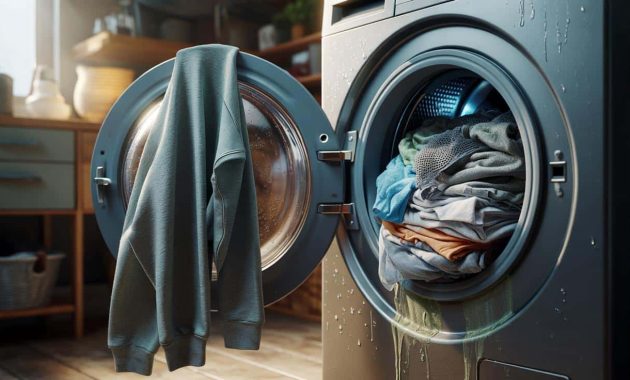
The clothes are still inside, cooling down in a damp knot, forgotten while life scrolls on Instagram or slips into another Zoom call. When you finally open the door, a warm cloud of “not quite clean” air hits your face. Not disgusting, not fresh. Just… off.
You shake the T‑shirts, pretend it’s fine and toss everything on the drying rack. A few hours later, the odor is worse. A sort of humid, locker-room ghost that clings to your favorite hoodie. You rewash the whole load, a bit annoyed at yourself and vaguely worried about the machine itself.
Next week, the same story. Same beep, same delay, same smell. And behind that harmless little habit, something stubborn is taking root in the drum.
Why laundry left in the machine starts to smell – and doesn’t really “get over it”
The first time you forget wet laundry in the machine, nothing dramatic happens to the eye. No mold patch, no horror scene. Just clean clothes that stay trapped in a warm, closed metal box, loaded with microscopic life and detergent residue.
That closed space is the perfect greenhouse for moisture. Every fiber stays humid for hours, sometimes all night. Inside the drum, the temperature drops slowly, the air doesn’t move, and the little bacteria that survived the wash begin to party quietly on leftover sweat, skin cells and soap film.
To your nose, that slow feast translates into that “wet dog meets old towel” smell. And it sticks around longer than you think.
One study from the University of Arizona found that a standard load of underwear and towels can carry millions of bacteria into the wash. Even with detergent, not all of them disappear. In a forgotten load, they simply change job description: from guests to colonizers.
Picture a stack of damp T‑shirts squashed in the drum. The center of the pile can stay humid for 8, 10, sometimes 12 hours. That’s enough time for odor-producing bacteria to double and redouble. By the time you pull everything out, the smell isn’t on the surface only.
It has seeped inside the fibers, especially in cotton and synthetic sports fabrics. That’s why rewashing quickly with a tiny splash of detergent often doesn’t cut it. You’re fighting a smell that has had time to fuse with the material, not just sit on top of it.
There’s also a silent side effect. Every time a damp load stays forgotten, a thin invisible film builds up on the drum, the door seal and the drawer. Detergent residue, softener, skin oils, micro-bits of dirt. That biofilm keeps a faint mustiness in the machine itself. Next time you wash, even a brand-new T-shirt passes through that air. You start from a smell handicap without noticing.
➡️ The 15-minute evening reset that will change your morning forever: home edition
➡️ Satellites detect titanic 35?meter waves in the middle of the Pacific
➡️ This slow-cooked dish builds flavor without demanding attention
➡️ Why bathrooms develop odors despite regular cleaning
➡️ A new set of eight spacecraft images reveals the interstellar comet 3I ATLAS in astonishing clarity
How to break the cycle and get rid of that “washing machine smell” for good
The simplest way to avoid lasting odors is brutally obvious: get the clothes out fast. In real life, that means setting a timer on your phone for the exact end of the cycle, or using the app if your machine has one. The beep alone rarely wins against a busy day.
If you know you’re the “I’ll forget” type, launch shorter cycles when you’re around, not right before leaving the house. A 40-minute wash at 40°C that you empty immediately beats a 2-hour eco cycle that sits full for 5 hours after. *Cleaning is a chain; the last step counts as much as the first.*
When you open the door, pull the clothes out loosely, let them breathe a minute, then spread them well on the rack or throw them in the dryer. The goal is to break that compact, damp ball as fast as possible.
On a bad day, you open the machine and the smell hits you straight away. The load has been sitting overnight, and the clothes feel heavy and lukewarm. You know that if you just dry them, the odor will follow and you’ll hate wearing them.
This is the moment where a lot of people sigh, slam the door and press “Quick 30” with extra detergent. The result is usually disappointing. The smell fades a little but comes back as soon as the garment heats up against your skin. Instead, running a repeat wash with hotter water and no extra softener often works better.
For really stubborn loads, some people add white vinegar in the softener tray (about half a cup) and let a full cycle do its thing. The vinegar helps dissolve residues that feed bacteria. It doesn’t turn your clothes into a salad, and the scent usually disappears once dry.
There’s a less visible battle going on inside the machine itself. The rubber door seal stays a bit slimy, the detergent drawer never fully dries, and the drum smells faintly swampy when you open it. That’s not your imagination.
Here, regular “maintenance” washes with an empty drum at 60–90°C and a bit of specialized cleaner or just plain washing soda can change the baseline smell of your laundry. Wiping the seal with a cloth after a wash, and leaving the door ajar, lets air break that humid cocoon where mold likes to grow. Soyons honnêtes : personne ne fait vraiment ça tous les jours.
“The odor you notice on your clothes is often just the tip of the iceberg. Most of the problem lives inside the machine, in places you never see but your laundry passes through every single time.”
- Golden rule for your nose: if the machine smells musty when empty, your laundry will never smell truly clean.
- Open the door and the detergent drawer after each wash to dry out the interior more quickly.
- Once a month, run a hot “machine cleaning” cycle, especially if you often wash at 30°C.
- Use a bit less detergent than you think; excess product feeds the biofilm that locks in odors.
- Trust your senses: faint smells often mean bacteria are already one step ahead.
The quiet habits that decide how your laundry will smell next year
We talk about smelly laundry like a small, annoying detail, yet it says a lot about how we live with time, with chores, with our own bodies. A load forgotten in the drum is often a load squeezed into an already saturated day. The machine waits in the corner, patient, turning humidity into chemistry while we run to something else.
On a practical level, breaking this cycle is rarely about buying a miracle product. It’s more about tiny moves that become almost automatic. Starting a wash when you know you’ll be home to empty it. Letting the machine breathe between loads. Choosing one evening a month to “reset” the drum and seals. None of this takes long, yet it quietly changes how your clothes feel on your skin.
On a more intimate level, those faint musty smells cling to more than fabric. They color how we step into a meeting, slip into a clean T‑shirt, hug a child goodnight. On a tous déjà vécu ce moment où l’on se demande, en levant le bras, si notre pull sent vraiment le frais. Talking about it out loud, sharing tricks, admitting that we also forget the laundry sometimes, makes room for a different relationship with these everyday rituals.
Odors are memory magnets. A towel that always smells slightly stale turns your bathroom into a place you tolerate, not a place that restores you. A hoodie that carries a whisper of mold ends up abandoned at the back of the chair. Changing how long your laundry stays trapped in that closed drum, changing how your machine breathes between cycles, is a discreet way of changing the atmosphere of your home. The next time the wash ends and you think “I’ll grab it later”, you’ll know what’s actually starting to grow behind that thought.
| Key point | Details | Why it matters to readers |
|---|---|---|
| Maximum “safe” time in the drum | Ideally, remove laundry within 30–60 minutes after the cycle ends. Beyond 4 hours, humidity and warmth give bacteria and mold a serious head start. | Helps you decide when a quick rewash is necessary and when you can simply dry the load without risking stubborn odors. |
| Best cycles to avoid musty smells | Alternate low-temperature eco cycles with occasional 60°C washes for towels, sportswear and bed linens to kill more odor-causing microbes. | Prevents the machine from becoming a lukewarm, bacteria-friendly place while still keeping energy use under control. |
| Simple “rescue” method for forgotten loads | If clothes sat in the drum for several hours and smell off, run a new cycle with hotter water and a half-cup of white vinegar in the softener tray. | Gives a concrete, cheap way to save a smelly load without throwing products at it or living with that “semi-clean” scent. |
FAQ
- How long can I realistically leave laundry in the washing machine?In most homes, up to an hour is usually fine, especially in a cool room. Beyond 3–4 hours, the risk of a musty smell rises fast, and after overnight, you’ll almost always need to rewash.
- Do smells mean my clothes are actually dirty again?The fibers aren’t covered in visible dirt, but the odor means bacteria are active on residues and moisture. Your nose is right: if it smells “off” when wet, it will come back once you wear the garment.
- Is adding more detergent the solution for smelly laundry?Often the opposite. Too much detergent leaves a sticky film that traps bacteria and keeps your machine damp inside. Using the recommended dose—or slightly less—usually keeps things fresher.
- Can a smelly washing machine make clean clothes stink?Yes. A musty drum, dirty door seal or moldy detergent drawer can transfer that odor to every load, even if your detergent is great and you empty the drum on time.
- Are front-loaders worse for odors than top-loaders?Front-loaders tend to trap more moisture in the seal and door area, so they need the door left ajar and regular hot “maintenance” washes. Top-loaders can smell too, just usually a bit slower.
- Does fabric softener play a role in bad smells?Thick softeners can build up inside the drum and on fibers, creating a sticky buffet for bacteria. Using less, or switching to white vinegar for some loads, often reduces long-term odors.