Farmers rarely see it, but their crops often feel the difference.
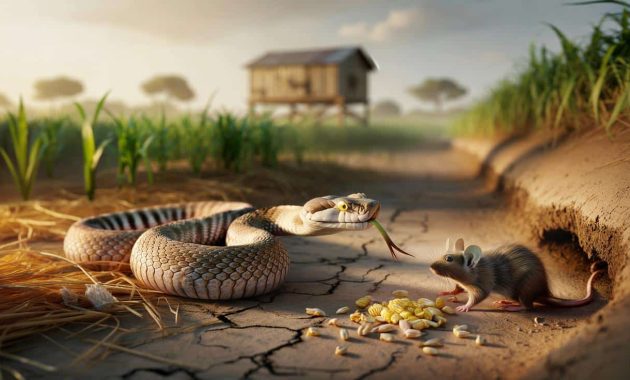
On small farms from Senegal to South Africa, rodents raid seeds, chew roots and foul stored grain. New research suggests an unlikely ally already helps hold that line: the puff adder, a stocky ambush viper that many people dread, yet many fields quietly benefit from.
A deadly reputation meets a farming reality
The puff adder (Bitis arietans) thrives in savannas and grasslands across sub‑Saharan Africa. The snake grows to around one metre, blends into scrub, and waits for prey to pass. That stealthy strategy brings it into contact with people, so it features in many bite statistics and folk warnings.
Snakebite kills tens of thousands globally each year, with sub‑Saharan Africa carrying a heavy share. The puff adder is blamed for a large fraction of serious bites on the continent because it sits still, strikes fast, and often lives near farms and paths.
A study led by the University of the Witwatersrand in Johannesburg, published in Scientific Reports, reframes that reputation in a practical way. It looks at what these snakes remove from fields when rodents boom, not only what they add to hospital caseloads.
Puff adders can ramp up their food intake to meet rodent surges, turning natural behaviour into free pest control when it matters most.
How the puff adder tips the balance
Rodent outbreaks hit African smallholders hard. Rats devour germinating seed, clip young shoots and dig up tubers. They contaminate grain stores and spread disease to livestock. Farmers respond with traps, baits and cats, yet the pressure often returns with the rains.
What the researchers measured
The team introduced a metric that estimates how much a predator can increase consumption beyond its baseline needs during prey peaks. They applied it to puff adders using feeding trials, field observations and modelling of snake density in farmland edges.
The result stands out. In periods of rodent abundance, a puff adder can multiply its intake far beyond routine levels.
Field-informed estimates suggest individual puff adders may eat up to twelve times more rodents than their normal rate during peaks.
➡️ The People Who Walk Fast Share These 5 Personality Traits
➡️ This opioid 40 times stronger than fentanyl has reached France, alarming health authorities
➡️ When silence speaks volumes: what psychology reveals about people who speak little
That flex matters during boom‑and‑bust cycles. When rats spike, an ambush predator that sits in runways and grain margins can keep taking prey at the source. The study also notes that a single snake can swallow up to ten rodents in one extended feeding bout, which compounds the effect.
Rodent damage in context
Smallholder agriculture supports 60–70% of the active workforce in many African countries. Yield losses from rodents can erase months of labour for families who farm with few buffers. Any low-cost, low-effort control helps. Natural predation does not require baits, fuel or maintenance. It scales with the prey, not with a budget line.
For households living on narrow margins, a stable community of natural predators can mean kept seed, steadier yields and less time spent guarding fields at night.
Snakes versus mammal predators
Foxes, mongooses and wild cats also hunt rodents. They patrol widely and can eat more per day than a snake. The difference, the researchers argue, lies in numbers and behaviour.
Why density matters more than appetite
Puff adders often occur at relatively high densities in mosaics of hedges, fallow strips and ditch banks. They stay put when prey concentrates, so they encounter rodents repeatedly within narrow zones of activity. Mammal predators roam, which spreads their impact thinly across larger areas.
| Predator | Strength in farms | Constraints |
|---|---|---|
| Puff adder | High local density; ambushes at burrow mouths and grain margins; scales intake during booms | Venom risk near people; hard to monitor; needs rough ground cover |
| Mongoose | Active rodent hunter; diurnal patrols deter pests | Requires territory; may raid poultry; impact diffuses with ranging |
| Wild cat/fox | High daily intake; hunts across varied habitats | Lower densities; susceptible to persecution; may avoid busy farms |
Because puff adders sit and wait, they harvest rodents that move along predictable routes between nests, fields and stores. That pattern gives snakes a strong leverage on damage hotspots even if each snake eats less overall than a fox or a mongoose.
What this means for farmers
Natural control works best as part of integrated pest management. The research does not argue for loose snakes in kitchens. It suggests using existing snake populations in field edges, while reducing risky encounters with people.
Practical steps without courting danger
- Keep rough cover and grass strips at the outer margins of fields, not along footpaths or house perimeters.
- Raise grain stores off the ground and rodent‑proof them to concentrate activity outside living areas, where predators hunt.
- Clear clutter around homes, wear boots at night and use torches to lower bite risk.
- Train community members in basic snakebite first aid and rapid transport routines.
- Coordinate with local wildlife groups to map common snake haunts and mark safe routes.
These measures nudge rodents toward zones where puff adders already wait, while creating safer human spaces. They also fit other natural allies. Barn owls use perches and nest boxes. Small carnivores use hedgerows. Each piece adds pressure on pests.
Caveats, risks and what needs testing next
Venomous snakes near people carry real risk. Programmes that lean on puff adders must weigh local bite patterns, hospital access and community tolerance. Education matters. So do simple barriers such as raised thresholds and tidy yard edges. Where fields sit beside schools or clinics, other predator options may suit better.
Evidence gaps remain. Researchers need longer datasets from different agro‑ecosystems, including irrigated plots and peri‑urban farms. They also need to test how changing cover or field layout shifts both rodent and snake behaviour across seasons. Insurance against unintended effects, such as snakes entering homes after habitat tweaks, must sit in the design.
Costs, benefits and realistic expectations
Rodenticides work fast but can poison non‑target wildlife and risk secondary poisoning of predators. Trapping takes labour and loses ground during sudden rodent spikes. Snakes cost nothing to deploy, but they cannot clear an outbreak alone. The best outcomes usually combine clean storage, habitat design, community protocols and a tolerance for useful wildlife.
One practical way to gauge value is to run a simple field trial. Farmers can divide a field into matched plots. They can keep one with clean margins only, and one with a planned rough strip at the exterior boundary. They can monitor rat damage, boot encounters and storage losses over a season. If the rough strip plot shows fewer bites on crops without raising snake incidents near homes, the approach earns its place.
Two terms help when discussing this with communities. “Ambush predator” describes how puff adders feed by waiting in runways rather than roaming. “Functional response” describes how a predator’s intake changes with prey density. Together they explain why a small, hidden hunter can punch above its weight during rodent booms and then fade into the background when numbers drop.