Fresh data from Germany’s Robert Koch Institute (RKI) show that cancer has become a near-routine diagnosis, touching almost every extended family. The new report details how many people were diagnosed in 2023, which types of tumours strike most often, and how lifestyle choices influence the odds of falling ill.
Half the population faces a cancer diagnosis in their lifetime
The RKI’s latest bulletin leaves little room for doubt: cancer is no longer a rare tragedy, but a widespread reality in Germany. Across all age groups, almost one in two people can expect to receive a cancer diagnosis at some point in their life.
According to the RKI, 49% of men and 43% of women in Germany will develop cancer during their lifetime.
The timing of these diagnoses is as striking as the total risk. Before the age of 65, one in six women and one in seven men already hear the word “cancer” from their doctors. That means the disease is not only an issue of very old age, but a threat affecting working life, parenthood and retirement plans.
In 2023 alone, an estimated 517,800 people in Germany were newly diagnosed with some form of cancer. Around 276,400 of them were men and 241,400 were women. For a country of roughly 84 million people, that figure means more than 1,400 new cases every single day.
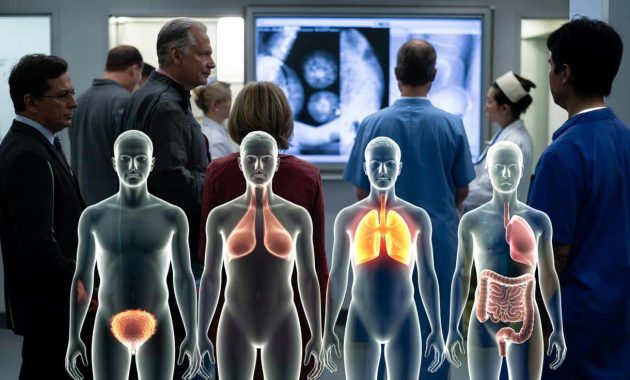
The four tumour types that dominate: prostate, breast, lung, bowel
Although cancer encompasses well over a hundred different diseases, a handful of tumour types account for roughly half of all new cases in Germany.
Prostate, breast, lung, and colorectal cancers together make up about 50% of all new cancer diagnoses.
Based on the RKI’s analysis for 2023, the four leading cancers are:
- Prostate cancer – 79,600 new cases
- Breast cancer – 75,900 new cases
- Lung cancer – 58,300 new cases
- Colon and rectal cancer – 55,300 new cases
Prostate cancer is the most frequently diagnosed cancer among men, largely because of population ageing and regular urological checks that pick up more cases. Breast cancer remains the dominant cancer among women and is heavily shaped by screening programmes, reproductive patterns and lifestyle trends.
➡️ China unveils new technology that turns bees into remotely controlled “cyborgs”
➡️ Since I started doing this, blue tits return every day at exactly the same time
➡️ A mysterious signal from the Moon detected by Chinese scientists revives alien life discussions
Lung cancer, strongly linked to tobacco use, continues to exact a heavy toll, while bowel cancers remain common yet in many cases preventable or detectable at an early, treatable stage through screening colonoscopies and stool tests.
Deaths show a heavy, lingering burden
Cancer does not just change lives; it often ends them. The 2023 mortality data show around 229,000 deaths from cancer in Germany. Men accounted for about 123,000 of those deaths, women for approximately 106,000.
That makes cancer the second leading cause of death nationwide, behind heart and circulatory diseases. For doctors and health planners, this means two parallel priorities: preventing as many new cases as possible, and improving survival for those who are diagnosed.
| Indicator (Germany, 2023) | Estimated number |
|---|---|
| New cancer diagnoses (all) | ≈ 517,800 |
| New cases in men | ≈ 276,400 |
| New cases in women | ≈ 241,400 |
| Deaths from cancer (all) | ≈ 229,000 |
| Deaths in men | ≈ 123,000 |
| Deaths in women | ≈ 106,000 |
Lifestyle, risk factors and what can be changed
While genetics and ageing play a major role, many cancers do not arise out of thin air. They grow out of long-term patterns in how people live, work and eat.
The German Cancer Research Centre estimates that at least one third of cancer cases in the country could be prevented. The most firmly established risk factors include:
- Smoking and other tobacco use
- Regular, high alcohol intake
- Excess body weight
- Poor diet, low in fibre and vegetables, high in processed meat
- Lack of physical activity
For adults aged 30 and over in the United States, a major study by the American Cancer Society linked around 40% of cancers to modifiable risk factors.
That US figure aligns with European assessments and suggests similar potential for prevention in Germany. Smoking remains the single most damaging habit, driving lung cancer but also tumours in the mouth, throat, bladder and pancreas. Heavy drinking increases the risk of cancers of the liver, breast, bowel and upper digestive tract.
Excess weight and inactivity feed a different cluster of problems: they raise the likelihood of bowel, breast (especially after menopause), uterus and kidney cancers, among others. These patterns develop quietly over years, meaning that small day‑to‑day changes early in life can pay off decades later.
Global context: a shared challenge beyond Germany
The RKI data are part of a wider picture. Across industrialised countries, cancer is crowding into the top ranks of both illness and death as infectious diseases recede and populations age.
Researchers warn that some cancers could surge further in the coming decades. One recent study, for instance, suggested that liver cancer cases might almost double by 2050, driven by factors such as obesity, diabetes, chronic viral hepatitis and alcohol misuse.
Germany’s experience sits squarely within this trend. Many of the same risk factors seen in US and UK data – tobacco, alcohol, calorie-dense diets, sedentary work – shape the cancer landscape there as well.
World Cancer Day: from statistics to action
The RKI released its latest figures around World Cancer Day, marked every year on 4 February. The aim is not only to share data, but to push governments and citizens towards concrete steps.
World Cancer Day campaigns encourage people to attend screening appointments, quit smoking, review their alcohol habits, and watch for persistent symptoms that might otherwise be brushed aside. Policymakers are urged to fund public awareness, research and equal access to treatment.
Cancer is now common enough that prevention, early detection and long-term care have become routine public health tasks rather than niche concerns.
What these numbers mean for an individual
Statistics at the national level can feel abstract, but they quietly shape everyday risk. For a typical German man, a lifetime chance of just under 50% means that either he, his partner, or someone close in his circle is likely to face cancer at some point. For women, a 43% lifetime risk sends a similar message.
That does not mean cancer is inevitable. It means that personal and political decisions matter. Choosing not to smoke, moderating alcohol, keeping a stable weight, and using screening programmes for breast, prostate, bowel and cervical cancers can shift the odds quite significantly.
Key terms and practical angles
Two phrases appear frequently in cancer statistics: “lifetime risk” and “modifiable risk factor”. They sound technical, but they describe simple ideas.
- Lifetime risk is the probability that a person will be diagnosed with a disease at any point from birth to death, assuming current rates stay the same.
- Modifiable risk factors are influences that can, at least in theory, be changed: smoking status, physical activity, diet, alcohol use, and some workplace exposures.
For example, imagine a 40‑year‑old office worker in Munich. He smokes half a pack a day, enjoys several beers most evenings, rarely exercises and has gained weight over the past decade. Each factor nudges his long-term cancer risk upward. If he manages to quit smoking, cut alcohol to weekends, and walk or cycle for 30 minutes most days, his risk does not vanish, but it shifts closer to that of someone with healthier habits.
Health services in Germany, as in the UK and US, increasingly try to address these factors together. A weight‑loss programme that also tackles alcohol use and encourages movement does more than one thing at once: it lowers the chance of diabetes and heart disease and at the same time chips away at cancer risk.
The RKI’s figures, and the studies from the American Cancer Society, underline a hard but empowering message: cancer is widespread, and no one can control every cause, yet a substantial share of future cases could be avoided or delayed through everyday choices and well‑designed public policies.