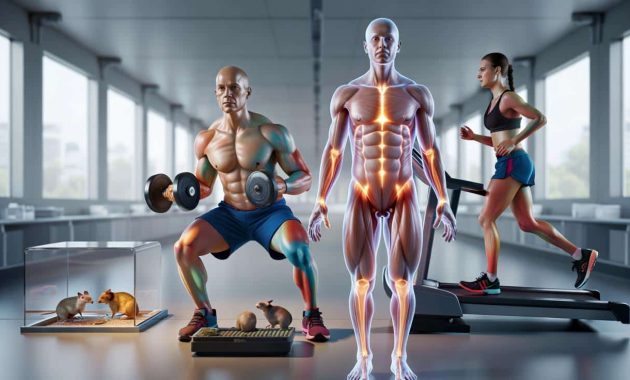
The experiment sounds almost cartoonish, but the results could reshape how doctors talk about exercise and blood sugar, hinting that strength training may rival – or even outperform – running for preventing type 2 diabetes.
Why exercise matters for blood sugar
Physical activity has long been linked with lower risks of heart disease, obesity and depression. Less talked about is its direct effect on blood sugar, also known as glycaemia.
Blood sugar reflects the concentration of glucose circulating in the bloodstream. Glucose mainly comes from food and serves as the primary fuel for cells. When levels stay too high for too long, organs start to suffer.
In healthy adults, fasting blood sugar usually sits between about 0.70 and 1.10 grams per litre of blood. When it rises above that range on a regular basis, doctors start to worry about hyperglycaemia, a state that often precedes type 2 diabetes.
The hormone insulin, produced by the pancreas, helps move glucose from the blood into cells. In type 2 diabetes, cells gradually become less responsive to insulin, a process called insulin resistance. The pancreas struggles to keep up, and blood sugar climbs.
Exercise helps muscles soak up more glucose and respond better to insulin, making it one of the most effective non-drug tools against type 2 diabetes.
Most advice has focused on aerobic activities like walking, jogging or cycling. A new mouse study from Virginia Tech and the University of Virginia suggests that lifting weights, or at least its rodent equivalent, deserves equal attention.
Mice that had to “lift” for their dinner
The research team, whose findings appeared in the Journal of Sport and Health Science in late October 2025, set out to compare endurance and resistance training head-to-head, using animal models that closely mimic human exercise.
Building a mouse version of weight training
The main challenge was obvious: you cannot hand a mouse a dumbbell. So the scientists engineered a clever workaround. They housed one group of mice in special cages where the animals had to push up a weighted lid to reach their food.
➡️ Starship V3 explodes during tests and slows the race back to the Moon
➡️ Loose eyelid syndrome can reveal an underlying sleep disorder
➡️ The USB port on your TV is not useless: here are 4 smart ways to use it
➡️ 10 hobbies to adopt that help prevent loneliness in old age, according to psychology
Each time a mouse wanted to eat, it had to perform a brief but intense lifting motion. Over time, the researchers gradually increased the weight of the lid. That progressive loading mimicked how humans add plates to a barbell or move to heavier weights in the gym.
This “resistance group” was compared with an “endurance group” of mice that had free access to a running wheel, simulating regular cardio training.
To complete the picture, the study also included sedentary control groups. Some inactive mice followed a standard diet, while others were fed a high-fat diet designed to push them towards obesity and metabolic problems similar to human type 2 diabetes.
What the scientists measured
Over eight weeks, the team tracked a wide range of health markers:
- Body weight and body composition (fat versus lean mass)
- Where fat was stored, especially abdominal and under-the-skin fat
- Physical performance in endurance and strength tests
- Heart and muscle function
- Blood sugar levels and how they changed after glucose challenges
- Insulin sensitivity and the signalling pathways inside skeletal muscle
The goal was not only to see which form of exercise helped most with weight and blood sugar, but also to understand what was happening in the muscles at the molecular level.
Strength training edged out running on blood sugar control
Both types of exercise clearly improved metabolic health. Mice that ran and mice that lifted ate differently, moved differently and looked different from their sedentary peers.
Running and resistance training both reduced abdominal and subcutaneous fat and improved blood sugar control, but strength training showed at least equal, and in some cases stronger, anti-diabetic effects.
According to the researchers, the mice performing the weight-lifting style exercise showed particularly robust improvements in how their muscles responded to insulin. The signalling pathways that tell muscle cells to pull glucose out of the blood were more active and more efficient.
That better insulin signalling translated into tighter blood sugar control. When the animals faced metabolic stress, such as a high-fat diet, the “muscle-trained” mice appeared better protected than many of their running counterparts.
The study’s lead author, exercise medicine researcher Chen Yan from Virginia Tech, reported that resistance training matched or exceeded endurance exercise in boosting insulin action in skeletal muscle. For people who dislike running or are limited by joint pain, this kind of data could change the conversation about which exercise to prioritise.
What this could mean for humans
The experiment was carried out in mice, not people. That matters, because animal results do not always translate directly to humans. Still, the model was carefully designed to mirror human training patterns, including progressive overload and realistic exercise volumes.
Type 2 diabetes currently affects roughly one in nine adults worldwide, according to international estimates from 2024. Many live with high blood sugar for years before diagnosis, accumulating damage to their eyes, kidneys, nerves and blood vessels.
By showing that strength training can powerfully improve insulin sensitivity, the study points toward new ways to structure exercise prescriptions and even inform drug development.
Changes observed in the mouse muscle cells involved several biochemical pathways that pharmaceutical researchers already watch closely. If scientists can map precisely how resistance exercise reprograms these pathways, they may be able to design new therapies that mimic some of the benefits of lifting weights.
How strength and cardio can work together
This research does not suggest throwing your running shoes away. Cardio and strength training affect the body in different, complementary ways.
| Type of exercise | Main benefits for metabolism | Other key effects |
|---|---|---|
| Endurance (running, cycling, brisk walking) | Improves heart and lung function, helps burn calories during the session, supports lower resting blood sugar | Boosts mood, stamina and cardiovascular fitness |
| Resistance (weights, resistance bands, bodyweight) | Builds muscle mass that uses more glucose, enhances insulin signalling in muscle cells | Improves strength, posture, bone density and joint support |
For someone at risk of type 2 diabetes, a mixed routine may give the best protection: walking or cycling most days of the week, plus two or three short strength sessions targeting major muscle groups.
What “strength training” can look like in everyday life
People often picture heavy barbells and intimidating gyms, but strength training can be far simpler. Many of the benefits seen in the mouse study came from repeated, moderate efforts against increasing resistance – the same principle you can apply at home.
Practical examples for beginners
- Bodyweight moves: squats, wall push-ups, lunges, step-ups on a low stair
- Household weights: lifting water bottles, shopping bags or backpacks with books
- Resistance bands: cheap, portable bands that add tension as you pull or push
- Short sessions: 10–15 minutes, two to three times per week, focusing on slow, controlled movements
The key idea is progressive overload: once a movement feels easy, add a little weight, an extra repetition or a slower tempo. That constant, gentle challenge is what nudges muscles to grow and adapt, improving their ability to clear glucose from the blood.
Risks, limits and who should be careful
While the study highlights clear metabolic benefits, strength training is not risk-free. People with advanced eye disease, severe joint problems or unstable heart conditions need medical advice before starting intense resistance work.
Anyone already on medication for diabetes should be particularly cautious, since stronger muscles and better insulin sensitivity can lower blood sugar. Without adjustment, that may raise the risk of hypoglycaemia, especially when combining exercise with drugs that increase insulin.
The research also does not answer every question. The mice trained for eight weeks, but humans often need years of consistent habits. We do not yet know the ideal “dose” of strength training for blood sugar control, or whether benefits plateau at a certain point.
Key terms worth clarifying
Insulin sensitivity describes how easily cells respond to insulin. High sensitivity means cells need only a small amount of insulin to absorb glucose. Low sensitivity means the body must pump out more insulin to achieve the same effect, setting the stage for type 2 diabetes.
Skeletal muscle is the type of muscle attached to bones that you can voluntarily contract, such as your biceps or thigh muscles. This tissue is a major site of glucose use. When you increase its size and activity through training, you expand the body’s capacity to store and burn sugar.
The mouse study suggests that by strengthening this vast tissue network, resistance training acts almost like a second medicine cabinet inside the body, quietly adjusting blood sugar every time those muscles move and contract.