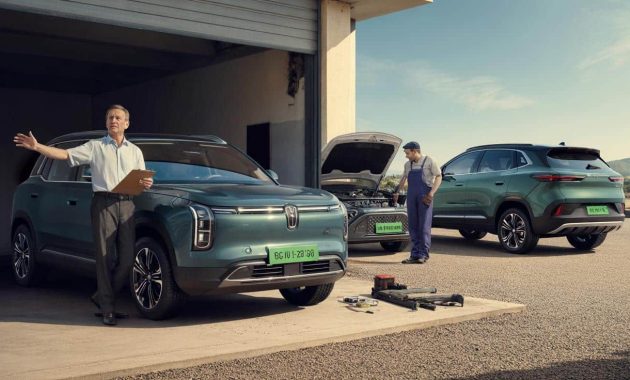
The salesman at a small used-car lot outside Lyon shrugs, palms open, when you ask about the Chinese SUV parked at the back. The price is tempting, the range on paper looks great, but when you mention spare parts, his face tightens. “If something breaks, good luck,” he says, lowering his voice. “We’ve already had one stuck here for months. The client is furious.”
In France, that story has become almost routine. Seductive electric crossovers arriving from Shanghai, then sitting in garages because a tiny component is missing, or the official importer has disappeared as fast as it arrived. Social media is full of photos of dusty Chinese models abandoned in dealership corners.
Beijing has finally noticed. And this time, it’s not laughing.
China’s turning point: from ‘cheap and risky’ to ‘export with pride’
For years, Chinese brands quietly accepted their “cheap but fragile” label abroad, especially in Europe. The strategy was clear: flood markets, win on price, worry about image later. That era is ending. Beijing has just signaled a radical shift, announcing it will clamp down on exports of low-quality vehicles and models with no guaranteed spare parts network.
Behind the diplomatic language, the message is sharp: cars that risk dying at the first glitch, without after-sales support, will soon be blocked at the source. Not by Brussels. By Beijing itself.
In France, this move lands in a tense climate. Critics of Chinese EVs are loud: stories of owners waiting 6 months for a simple headlight, bumpers impossible to replace, touchscreens that fail with zero local expertise to fix them. That’s all it takes for a model to become “that car no one wants to touch” in a workshop.
A Parisian taxi driver who bought a little-known Chinese electric sedan for its low price now jokes he owns a “disposable smartphone on wheels”. When his infotainment system froze, his garage told him the part would come “direct from China, with no exact date”. He ended up renting another car for weeks, eating into his savings while staring at his silent EV plugged outside his building.
From Beijing’s point of view, this reputational spiral has become toxic. Chinese manufacturers are finally mastering safety tests, battery technologies, and even design… and yet the headline abroad often remains the same: “Cheap, risky, complicated to fix.” That stigma doesn’t just hurt a few brands. It weighs on the entire country’s industrial ambitions.
So the new line from Chinese authorities is clear: export fewer “ghost cars” with no spare parts, push brands to invest in service networks, and align quality with the country’s global ambitions. **China wants its cars to be seen like its latest smartphones, not its old plastic toys.**
What this really changes for drivers in France and beyond
Behind the diplomatic statements, something very concrete is emerging: a kind of pre-filter at the Chinese border. Vehicles that don’t respect minimum durability, safety, or traceability standards, or whose manufacturers cannot prove a robust spare parts supply, will be strongly discouraged from leaving the country, even blocked in extreme cases.
➡️ Scratches on glass-ceramic cooktops: removal in four simple steps
➡️ The streak-free window-cleaning method that still works flawlessly even in freezing temperatures
➡️ This cleaning paste from Germany removes rust from metal tools like magic
➡️ Goodbye air fryer: new kitchen gadget goes beyond frying with 9 different cooking methods
➡️ People who make friends easily share these 4 traits
In practical terms, that means only the most structured, long-term-minded brands will keep pushing into Europe. Those betting on quick profits with no after-sales service are about to disappear from the radar. For a French buyer, this could be the real start of a Chinese offer that’s tempting on price without feeling like a gamble.
We’ve all been there, that moment when you see an online ad for a surprisingly cheap new SUV, full of options, with a logo you barely recognize. On paper, it beats your usual brands on everything: power, range, huge screen, aggressive design. Then you google the name. You fall on scattered forums, half-broken websites, no official service network, and horror stories about parts blocked in customs or simply not produced anymore.
That gap between dream and reality is exactly what Beijing is trying to close. If a Chinese car arrives in France, the idea is that it must come with a clearly identified distributor, a guarantee of spare parts for several years, and technical documentation that European mechanics can actually use.
From the Chinese regulator’s side, the logic is almost strategic self-defense. If too many “orphan cars” pile up in French garages, local governments and the EU may react with harsher rules, taxes, or even de facto bans targeting Chinese origin. Limiting exports of fragile models is a way of protecting long-term access to the European market.
*Plain truth: short-term sales no longer matter as much as long-term trust.*
And for once, interests line up. French drivers want reliability, European workshops want cars they can repair, Brussels wants traceable and safe vehicles… and Chinese authorities want their industrial champions to stop ruining their own reputation with disposable models no one can maintain.
How to read this shift when you’re thinking of buying a Chinese car
This new Chinese stance doesn’t magically turn every Chinese car into a safe bet. It gives you, as a buyer, a better starting point. The smartest move now is to treat origin as just one factor, and focus on the ecosystem around the car. Who imports it officially? Where are the authorized workshops? What’s the parts supply timeline, written in black and white?
Before signing, pick one simple gesture: call a local mechanic and ask if they’ve already worked on the brand you’re considering. Their reaction — a sigh, a laugh, or a confident “yes, no problem” — is often more revealing than any glossy brochure.
The big trap is to think: “Since China is cracking down on low-quality exports, I’m automatically safe.” Reality is more nuanced. Some models already on French roads were imported before this policy shift. Others may pass the minimum bar but still have shaky after-sales service. Let’s be honest: nobody really reads the fine print on parts availability and service contracts every single time.
The emotional pull is strong: a new electric SUV for the price of a used European compact is hard to resist. That’s exactly when you need to slow down, breathe, and ask boring but crucial questions about warranties, software updates, and how long the brand commits to supplying spare parts.
One Chinese industry insider summed it up bluntly during a recent automotive forum in Shanghai.
“Our problem isn’t that our cars break more,” he said. “Our problem is that when they do, no one knows how to fix them, or where to find the right part. If we don’t change that, Europe will close the door on us.”
For you as a driver, the checklist is becoming clearer:
- Confirm if the brand has an official French or at least European subsidiary, not just a local reseller.
- Ask how long they guarantee spare parts production and logistics (5, 7, or 10 years).
- Check if independent garages can access technical data and diagnostic tools.
- Look for real owner feedback in France, not just sponsored influencer videos.
- Compare total cost of ownership, including potential rental of a replacement car if repairs drag on.
A silent revolution that could reshape the auto market
This Chinese move won’t change your next car purchase overnight. Policies take time to become concrete, brands need months or years to build real after-sales networks, and some players will simply vanish along the way. Yet something deeper is shifting. Beijing is publicly acknowledging that the era of “sell and forget” is over. The battle is no longer just about price or tech specs, it’s about trust.
For French drivers, that might be the most surprising turn in this story. The country that once flooded Europe with anonymous, low-cost gear is now imposing its own internal filter on what’s allowed to leave its ports. The next time you see a Chinese badge on a car in a dealership near you, the question will change a little. Not just “Is this cheap?” but “What does it mean that this model was deemed good enough to export, with parts and service behind it?”
The answer, in a few years, will say a lot about how we all learned — or failed — to reconcile price, ecology, and reliability on our roads.
| Key point | Detail | Value for the reader |
|---|---|---|
| China will restrict low-quality car exports | Vehicles without guaranteed spare parts or basic standards will be blocked or discouraged | Fewer “orphan” cars that can’t be repaired in France |
| Brands must build real after-sales networks | Pressure from Beijing to invest in service, logistics, and technical support abroad | Better long-term reliability and less stress if things break |
| Buyers still need to stay vigilant | Check importers, workshops, warranties, and owner reviews before buying | Lower risk of nasty surprises and hidden costs with Chinese models |
FAQ:
- Are Chinese cars in France going to become more reliable?Not overnight, but the trend is heading that way. With Beijing pushing to stop exports of low-quality models and those without spare parts, only the most structured brands should remain visible in Europe.
- What happens to Chinese cars already sold and lacking spare parts?Those vehicles won’t magically get better coverage. Owners still depend on existing importers and distributors. The new rules mainly target future exports, not past mistakes.
- How can I know if a Chinese brand is serious about after-sales in France?Check if it has an official French or European branch, a listed network of authorized garages, and clear commitments on spare-part availability for several years.
- Will these Chinese measures increase the price of their cars?Probably a bit. Investing in service networks and stock of parts costs money. The promise is that you pay slightly more upfront, but lose less time and cash when something goes wrong.
- Is it risky to buy a little-known Chinese EV right now?It can be, if the importer is fragile or the parts chain is unclear. The safest approach is to favor brands already present in multiple European countries and to speak directly with local mechanics before signing.