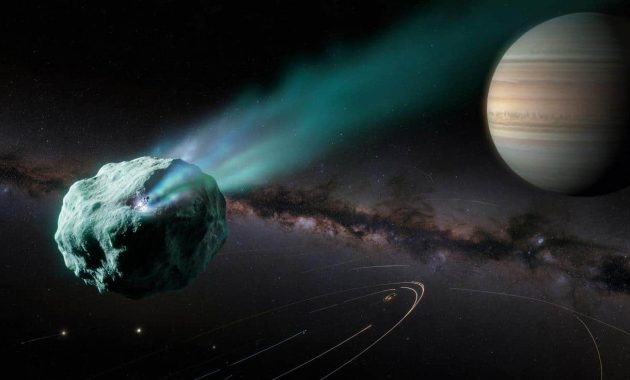
On a chilly January evening, I watched a group of amateur astronomers huddle around a telescope in a suburban parking lot. Breath fogged the eyepiece. Phone screens glowed as someone tried to pull up the latest orbit data for a faint visitor with a strangely poetic name: Comet 3I Atlas.
From the outside, it looked like a casual stargazing meetup. Yet the conversation circling that telescope was anything but casual.
“Another one from out there,” one of them whispered, as if “out there” were a neighbor’s yard and not the dark between the stars.
Nobody said it directly, but the feeling was clear.
We’re no longer sure what is quietly slipping through our solar system.
When a comet doesn’t behave like a local
The first time astronomers realized 3I Atlas was not from here, it jolted a memory: ‘Oumuamua in 2017, then comet 2I/Borisov in 2019. We thought those were rare cosmic flukes. Now here comes a third interstellar object, and the pattern is getting hard to ignore.
3I Atlas is moving on a hyperbolic trajectory, the celestial equivalent of a “drive-by.” Its speed and path say it plainly: this object came from far beyond the Sun’s family and will never come back.
That alone would be fascinating.
What unsettles people is the quiet thought behind the headlines: if we caught this one, how many passed by unseen?
Picture this: a survey telescope in Hawaii runs its nightly scan. Software chews through thousands of faint dots. One moves a little “wrong.” That’s how 3I Atlas popped out of the noise — not thanks to some heroic astronaut moment, but due to patient, routine sky-trawling.
➡️ A New Strategy Turns Cancer Cells Into Visible Targets For The Immune System
➡️ Why lending land to a beekeeper could be the biggest financial mistake a retiree can make
➡️ Psychology says people who sleep in the same bed as their pets often have these 10 quiet strengths
➡️ China ‘resurrects’ a 50?year?old technology that uses 200 times less energy than digital
➡️ Fatty liver: how to recognise symptoms and identify the disease
➡️ Attention, surprise: this heat-loving fruit tree thrives in cool climates (and not just a little)
Astronomers then pulled older images from archives and realized the object had been there before, just not recognized for what it was. It had literally slipped through our digital fingers.
This is the part that sticks in your throat.
We only saw 3I Atlas because our tools happened to be pointed in the right direction, at the right time, with the right sensitivity.
There’s a plain truth lurking behind the math: space is huge, our instruments are not.
Even with all-sky surveys and automated detection, our coverage is patchy, especially for faint, fast-moving bodies that don’t blaze across the sky like movie comets. Many will be too dim, too quick, or coming from angles we barely watch.
So 3I Atlas is less a strange exception and more a data point in an emerging reality. **Interstellar objects are likely passing by all the time**, brushing through the solar system like strangers on a crowded platform.
We’re only just learning to notice the ones that leave footprints.
The awkward question: what are we actually sharing space with?
If you want to feel the scale of the problem, try this simple mental habit: every time you see a “near-Earth object” alert, ask yourself, “And how many did we miss?”
Professional sky surveys prioritize rocks that could pose a risk, especially those larger than 140 meters. They do an impressive job with the budgets and instruments they have. Yet interstellar visitors like 3I Atlas are a different category. They arrive from unfamiliar directions, at higher speeds, and often with very little warning.
The method we use today is reactive. We spot, we calculate, we catalog.
But the objects don’t slow down just because we’re behind.
We’ve all been there, that moment when you almost step in front of a bike you never saw coming until it whizzed past your shoulder. That’s the emotional equivalent of how the public feels each time a new interstellar visitor hits the news cycle.
First we get the dramatic headlines. Then the technical jargon. Then the quiet admission that, no, we definitely didn’t see everything that came through before. You start to realize our solar system isn’t a private yard with a locked gate. It’s more like an open hallway where people can walk through at any time, sometimes without ringing the bell.
Let’s be honest: nobody really tracks every pebble, fragment, and icy shard that might be crossing that hallway right now.
Astrophysicists are careful with their words. They talk in probabilities, detection thresholds, survey limits. Yet reading between the lines, 3I Atlas forces a bigger conversation. **What if our mental map of the solar system is still surprisingly naive?**
For decades we treated asteroids and comets as mostly “ours,” born from our own protoplanetary disk. Interstellar visitors were theoretical, like rare birds on a long migration. Now we have three confirmed cases in a decade, and models suggesting there could be millions of such objects drifting between stars.
The unsettling part isn’t that they exist.
It’s that we have no complete idea what mixes in with those anonymous chunks of ice and rock.
Between science, imagination, and that uncomfortable doubt
If you want a practical way to navigate the flood of stories about 3I Atlas and its cousins, start with a simple filter: separate what we measured from what we merely imagine. Look for numbers first — speed, size estimates, orbital parameters, observation dates. Those are the hard bones of the story.
Then, gently, notice where the narrative drifts into speculation: “could be artificial,” “might carry life,” “suggests unknown technology.” That’s where our human hunger for mystery kicks in, and we start filling the gaps left by limited data.
A calm habit is to read twice. First for the wonder, second for the evidence.
Many people feel almost embarrassed to admit that interstellar objects spook them a little. The mind goes straight to science fiction: alien probes, hidden messages, silent watchers drifting through the dark.
Scientists roll their eyes at the wilder theories, yet they also admit they can’t rule everything out. There’s space here, figuratively and literally, for our fears and fantasies. The mistake is not feeling those things; it’s confusing emotional impact with likelihood.
The cosmos doesn’t owe us a comfortable story.
What we can do is stay curious without falling into every trap set by clickbait and conspiracy forums.
“Interstellar objects like 3I Atlas are a gift and a headache,” one planetary scientist told me. “They bring us material from other star systems, which is scientifically priceless. But they also highlight how blind we still are to what’s passing right under our cosmic nose.”
- Ask what’s confirmed — Is this about a measured trajectory, or a “what if” scenario layered on top of it?
- Check who’s speaking — Astronomers, space agencies, or anonymous accounts reposting the same dramatic claim?
- Notice the verbs — “could be”, “might indicate”, “some believe” are red flags for speculation, not certainty.
- Keep one wild card — Allow yourself one imaginative theory you don’t fully believe, just to keep the sense of wonder alive.
- Return to the sky — When possible, go outside, look up, and remember that all this starts with real light hitting real eyes.
A quiet shift in how we see our place in space
3I Atlas won’t rewrite physics. It’s not crashing into Earth, and it probably isn’t a disguised probe. On most days, it’s just a faint, distant speck that only a handful of telescopes will ever resolve. Yet its presence nudges something in our collective self-image.
For a long time, we pictured the solar system as a relatively closed stage: Sun, planets, our home. Now the curtains are cracking open, just a little, and we’re glimpsing the traffic from the galaxy beyond. That traffic is messy. It doesn’t announce itself, doesn’t follow our schedules, doesn’t care about our sense of safety.
*The doubt that 3I Atlas raises isn’t about aliens as much as about our own assumptions.*
What else is moving through our backyard, nameless, invisible, already gone by the time we think to look?
| Key point | Detail | Value for the reader |
|---|---|---|
| Interstellar visitors are real and recurring | 3I Atlas is the third confirmed object from beyond the solar system, following ‘Oumuamua and 2I/Borisov | Helps you see these stories as part of an emerging pattern, not isolated anomalies |
| Our detection systems are powerful but limited | Many objects are missed due to size, brightness, and survey coverage gaps | Gives a realistic sense of what we do and don’t know about what passes near us |
| Separating data from speculation matters | Media narratives often mix measured facts with imaginative scenarios | Lets you enjoy the wonder without getting lost in unfounded fear or hype |
FAQ:
- Is Comet 3I Atlas dangerous for Earth?Current observations show no threat. Its trajectory is a flyby on a hyperbolic path, meaning it will pass through the solar system once and head back out into interstellar space.
- How do we know 3I Atlas is from outside the solar system?Its orbit is not closed around the Sun. The shape of the path and its high velocity indicate it’s not gravitationally bound and must have originated in another star system.
- Could 3I Atlas be an alien probe?There’s no evidence suggesting artificial origin. That idea comes from speculation, not from observed signals, maneuvers, or structures associated with technology.
- Why are we finding more interstellar objects now?Wide-field survey telescopes and better detection software mean we’re finally sensitive to faint, fast-moving visitors that would have gone unnoticed a few decades ago.
- Will we ever send a probe to an object like 3I Atlas?Technically it’s incredibly challenging because these objects move fast and are detected late. Some space agencies and research teams are studying rapid-response missions, but nothing concrete has launched yet.