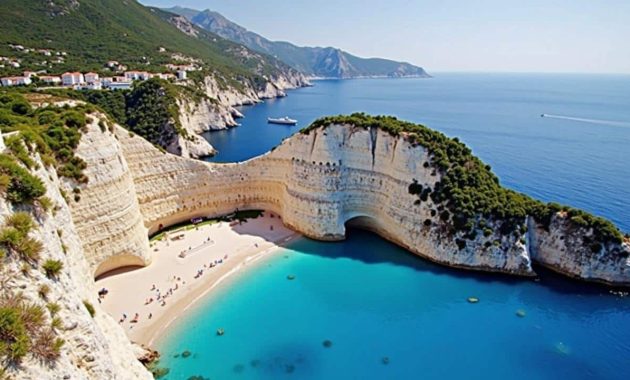
Travel experts are pointing past Santorini and Mykonos towards a wilder, older Greece — the kind etched with gods, oracles, and stone. One mythical region, too often a whisper on the map, is suddenly being called one of the best places to visit next year.
I reached Ioannina at the hour the lake looks like a sheet of tin. A fisherman pushed off with a single oar, the winter air snapping at my cheeks, the bell of a distant goat carrying across Pamvotida. On the island, a monk watered basil pots outside a small monastery, the scent of incense lingering on my jacket. Later, on the climb towards Zagori, the road curled past slate roofs and stone bridges that look drawn by a patient hand. A woman in black handed me a quince, then vanished behind a blue door. The light felt precise, like someone had adjusted the dials. Something is waking here.
Epirus: Greece’s myth-soaked secret edging into the spotlight
Ask a Greek grandparent about Epirus and you’ll get stories, not itineraries. This is the northwest, where the Pindus mountains fold into **myth-dusted mountains**, and a whisper from Dodona’s sacred oaks still seems to hang between the pines. For years, Epirus sat out the glitter and the yacht selfies. Now travel editors, mountain guides and slow-travel fans are quietly naming it among the most compelling places to visit in 2026. The pitch is disarmingly simple: clear rivers, stone villages, honest food, and space to breathe.
Take one day and you’ll see why the murmurs have grown. Dawn in Ioannina brings silversmiths tapping filigree behind fogged glass, bougatsa pastries flaking on warm plates, and the lake ferry puttering towards the island’s frescoed chapels. By lunch you can be on the lip of Vikos Gorge, a yawning green scar with a record-setting depth-to-width ratio, the Voidomatis River below flashing lime and ice blue. By evening, the Zagori villages glow like embers, a stray dog claiming a stone bridge as if it were a throne. One place, three worlds.
What’s changed isn’t the essence, it’s the lens. Travellers are chasing trips that feel storied and grounded, and Epirus is the kind of place that rewards a slower clock. The new Egnatia Odos makes the mountains more reachable, and boutique guesthouses in Kapesovo, Dilofo and Monodendri now offer heat, linens and woodsmoke without the fuss. Add in a post-overtourism hunger for less-trodden corners, and Epirus rises. *This is where Greece drops its guard.* People come, not to tick, but to dwell.
How to see Epirus in 2026 like you’ve known it forever
Anchor yourself for two nights in Ioannina’s old town, within earshot of the Ottoman clocktower. Walk the lakeside before coffee, ride the ferry to the islet’s monasteries, and spend an hour in the folk museum just to feel the textures of life here. Then go high: three nights across Zagori works, splitting time between a village near Vikos and one towards Papigo. Hike the old cobbled paths (kalderimi), eat wild greens pies, and keep a day free for Tzoumerka, where waterfalls come roaring off cliffs like a curtain. Finish on the coast in Parga for a sea rinse and citrus-scented evenings.
Don’t try to “do” all 46 Zagori villages unless you enjoy driving past the best of them. Pick two or three and let the rest be mystery. Roads are sinuous and beautiful, not playgrounds for speed; skip mountain night drives if you’re tired. We’ve all had that moment when the sat-nav sends us up a goat track and our stomach drops. Carry cash for small tavernas, learn two words of Greek, and build weather slack into your days. Let a spring shower rewrite your plan without drama.
Let’s be honest: nobody really does that every day. You’ll forget a layer, miss a trailhead, order the wrong thing, and still you’ll be fine. Local guides swear by late spring and early autumn for the cool air and the kind light, and many will tell you the Acheron springs feel like someone left the door to myth ajar.
“Epirus is not remote, it’s intact,” says Giorgos, a mountain guide from Kapesovo. “You come for the views, and you leave with a quieter way of seeing.”
- Best months: May–June, late September–October for colour, clarity, and fewer tour buses.
- Don’t miss: Dodona’s ancient oracle, the stone bridges of Kokkoros and Plakida, Voidomatis River walk.
- Flavours to try: Epirus pies (hortopita), frog legs by the lake, tsipouro in tiny glasses.
- Low-impact tip: Refill from village fountains where signed as potable; carry out every scrap in the gorge.
Beyond the map: what a ‘mythical’ trip really gives you
A place like this changes how you travel, not just where. You start noticing the angle of a roof tile, the way a pomegranate splits on a sill, the quiet pride of a taverna that writes no menus. Stories become milestones: the oracle at Dodona rustling answers through oak leaves, the Acheron flowing from a cold blue mouth the ancients tied to the underworld. You’ll take home photographs, sure, though the better souvenirs might be a recipe, a phone number, a line of verse scrawled after a long walk. **Quiet-luxe villages** leave room for your own voice to be heard. That’s what keeps echoing when the news cycle moves on and maps reset.
➡️ Why some rooms never stay clean no matter what you do
| Point clé | Détail | Intérêt pour le lecteur |
|---|---|---|
| Why Epirus in 2026 | Travel experts highlight its beauty, authenticity and breathing space | Join a rising wave without joining the crowds |
| Signature experiences | Vikos Gorge, Dodona, Acheron springs, Ioannina lake and Parga sunsets | Easy-to-plan anchors for a memorable route |
| Smart logistics | Base in Ioannina, 3 nights in Zagori, day trip to Tzoumerka, coastal finale | Less faff, more feeling; **crowd-free Aegean light** on your terms |
FAQ :
- Is Epirus safe for solo travellers?Yes. Mountain roads demand care, villages feel neighbourly, and Ioannina has a relaxed student energy. Share trails if hiking long distances.
- How many days do I need?Five to seven days lets you balance lake, mountains and coast without rushing. Ten days adds deeper hikes and Tzoumerka time.
- Do I need a car?A car unlocks the smaller villages and trailheads. Buses run between cities, but the best bridges and views sit off the main lines.
- When is the best time to visit in 2026?May–June and late September–October for crisp air and open trails. July–August bring heat and more visitors in seaside spots.
- What about costs compared to the islands?Rooms and meals in Epirus generally cost less than marquee islands. You’ll find boutique stays, but also family guesthouses with generous breakfasts.