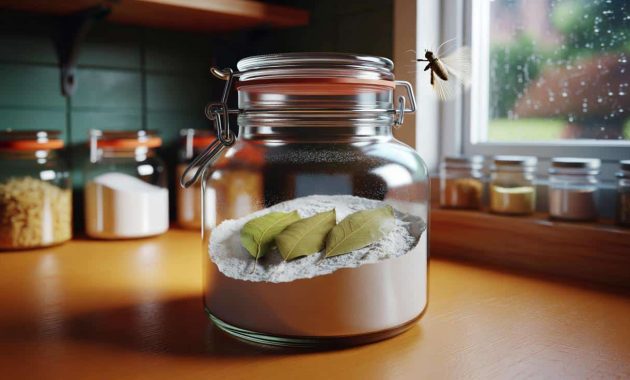
Tiny specks dart, a shadow moves, and suddenly your cake plans morph into a full cupboard audit. I wanted a fix that didn’t smell like science class and didn’t turn baking into a biohazard drill. That’s how a humble herb from the spice rack ended up standing guard in my pantry.
It started on a Tuesday evening with rain static on the window and a craving for pancakes. I dug out the flour tub and saw the tell-tale dusting that wasn’t flour at all. A few specks moved like they owned the place, smug and soft-winged. I stood there, wooden spoon in hand, feeling oddly outnumbered. A neighbour messaged back three words that felt almost silly: “Use bay leaves.” I didn’t expect the fix to be this simple. And then something unexpected happened.
The quiet power of a fragrant leaf
Here’s the short version: I tucked dried bay leaves into my flour container and the bugs stopped showing up. Not instantly, not theatrically, but steadily. The cupboard smelt like a new recipe, and the flour just stayed… flour. It felt weirdly old-school, like borrowing a trick from a great-aunt who always knew things.
My test was messy and human. One airtight jar, two cups of fresh flour, three bay leaves resting on top like roof tiles. Another jar with the same flour but no leaves. Both sat in the same cupboard for eight weeks. The jar with leaves stayed clean. The other? I spotted a single weevil by week four, then more by week six. Not a lab trial, sure. But in my kitchen, the pattern was clear.
There’s logic under the folklore. Bay leaves contain aromatic compounds — eucalyptol and cineole — that release a strong, camphor-like scent. That odour seems to mask the cues that stored-product pests follow, making your flour a less attractive stop. Think of it as a “No Vacancy” sign for pantry moths and weevils. The leaves don’t poison eggs or fix an infestation on their own. They simply tilt the odds in your favour, especially when paired with tight lids and a clean shelf.
How to do it right, without faff
Decant your flour into a clean, truly airtight container. Slip 2–3 dried bay leaves along the sides and one on top, not buried, so the aroma circulates. If you’re bringing home new flour, freeze the bag for 48 hours first, then let it come back to room temp sealed. Add the leaves, label the jar, and store it cool and dark. Replace the leaves every two to three months, or when the scent fades. That’s the whole ritual. **Airtight containers do the heavy lifting.** Bay leaves add a quiet layer of defence.
Common snag: wet or fresh leaves. They can introduce moisture, and that’s an open invitation to mould and clumping. Stick to dried leaves and keep them intact. Another mistake is treating bay as a cure-all. If you already have pests, you’ll need a clean-out: empty shelves, vacuum crevices, wipe with warm soapy water, then white vinegar for residue. We’ve all had that moment where you’re binning flour with a sigh and promising better habits. Let’s be honest: no one does that every day. Build small safeguards that run on autopilot.
Think of bay leaves as a scent barrier, not a silver bullet. **Bay leaves don’t kill pests**; they nudge them away from your food. Pairing them with tidy storage is where the magic happens.
“Scent-based deterrents won’t salvage contaminated food, but they can shrink your risk window,” a veteran pest tech told me. “Get the lids right first. Then use the leaves, cedar, or cloves as your perimeter.”
- Freeze new flour 48 hours, then decant into airtight containers.
- Add 2–3 dried bay leaves per jar; swap them when the smell fades.
- Keep shelves crumb-free; wipe and dry before restocking.
- Rotate staples so older flour gets used first.
- If you see activity, pause baking and deep-clean the zone.
The small habit that pays you back
Bay leaves shine in summer when warm cupboards speed up pest life cycles. A pantry moth can go from egg to fluttering adult in as little as four weeks. That’s why a mild scent helmet around your jars buys time. It breaks the chain. Your flour isn’t sending strong “come find me” signals, and your lids make entry awkward. You’re not nuking anything; you’re closing the gaps that make infestations likely.
➡️ I stopped aiming for spotless and my home stayed cleaner
➡️ Psychology highlights the three colors used by people with low self-esteem
➡️ Rihanna celebrates her birthday with A$AP Rocky following their recent court win
➡️ The plants to plant in November for a spring-blooming garden
➡️ Every autumn, gardeners make this mistake with their leaves
➡️ They’ve created liquid gears that transmit motion… without touching or teeth!
➡️ Navy’s top admiral concerned about strain on Ford carrier strike group
There’s a knock-on benefit: you start treating your staples with the respect you give your best coffee beans. Freshness lasts. Flavours stay true. Cakes rise without that uncanny stale note. The leaves cost pennies and don’t perfume your bakes. They sit there quietly, like a little promise that tonight’s batter won’t come with an extra protein surprise.
And the rhythm becomes second nature. Top up the jar, peek at the leaves, swap them when they’re brittle and faint. It’s a two-minute act that feels like a tiny kindness to your future self. **A zero-cost fix** that smells like order and gives your cupboards a bit of old-world calm.
What this small trick says about home
This isn’t a tale about heroics. It’s a story about choosing the middle path between panic-cleaning and surrendering to the crumbs. When a simple leaf can bend the odds while you get on with life, you take it. You keep the romance of weekend baking without the drama of moth traps and midnight purges.
The funny thing is how quickly a cupboard shifts when you tweak one habit. The bay leaves nudged me to decant grains, label jars, and toss that cracked canister I was pretending still worked. My food waste shrank, and so did that nagging sense that I’d lost control of my own kitchen. It felt like reclaiming a small square of daily life.
You could say the leaves are symbolic, and maybe they are. A pocket of fragrance holding the line against chaos. Use them not as superstition, but as a pragmatic, gentle nudge towards a pantry that stays yours, month after month.
| Point clé | Détail | Intérêt pour le lecteur |
|---|---|---|
| Bay leaves deter, not destroy | They release strong aromatics (eucalyptol/cineole) that make flour less attractive | Sets realistic expectations and prevents relying on a single fix |
| Airtight first | Seal flour in quality jars; freeze new flour for 48 hours before decanting | Reduces infestation risk at the root while preserving freshness |
| Light, repeatable routine | 2–3 dried leaves per container; replace when scent fades every 2–3 months | Simple maintenance you’ll actually keep doing |
FAQ :
- Do bay leaves really keep bugs out of flour?They help deter common pantry pests by masking the scent cues those insects follow. Use them with airtight containers and good cupboard hygiene for best results.
- How many leaves should I use per container?For a 1–2 kg flour jar, use 2–3 dried leaves. Larger bins can take 4–5 spaced around the sides and one on top.
- Fresh or dried bay leaves — which is better?Dried only. Fresh leaves add moisture and can encourage mould. Dried leaves have a strong, clean aroma without the damp.
- Will bay leaves make my cakes taste odd?No. The leaves scent the airspace in the jar, not the flour itself. Remove them before scooping and your bakes will taste normal.
- What if I already see bugs in my flour?Bin the contaminated flour and clean the cupboard thoroughly. Vacuum crevices, wash, wipe with vinegar, dry, then restock in airtight containers with fresh bay leaves.