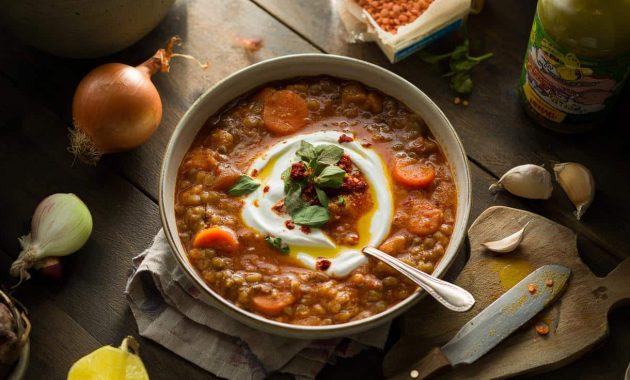
The night I threw this dish together, I was tired enough to seriously consider popcorn for dinner. The kind of end-of-day exhaustion where the sink is already full, the fridge looks chaotic, and your brain is quietly whispering “just order something.” I opened a cupboard, then another, and landed on a bag of lentils and a wrinkled onion with the gravitas of a last chance.
I didn’t have the time or energy for “mains plus two sides.” I wanted one pot, one spoon, one bowl. That’s it.
An hour later, I sat at my tiny kitchen table with a steaming bowl of food that somehow felt like a hug and a victory at the same time.
I took the first bite…and instantly knew I didn’t need anything else on the side.
The night a one-pot meal quietly replaced the whole menu
What I ended up making was a kind of improvised lentil stew, halfway between a curry and a rustic soup. It was thick, deeply savory, and dotted with soft carrots and bits of tomato that had melted into the sauce. Nothing fancy, nothing that would impress a food critic, but every spoonful felt complete.
There was protein from the lentils, gentle sweetness from the vegetables, and enough garlic to scare off an entire vampire convention. It was rich without being heavy, and somehow both simple and layered.
By the third spoonful, the thought of bread, salad, or anything “on the side” felt unnecessary, almost like background noise.
We’ve all been there, that moment when you’re scrolling through recipes filled with “serve alongside roasted vegetables, a crisp salad, and crusty bread,” and you think, with what time or energy exactly? That night, it hit me: maybe the real luxury isn’t three different dishes on a plate, but one really good one that does all the work.
My lentil bowl didn’t need rescuing by a side dish. It had chew, creaminess, acidity, a bit of heat, and enough color to not feel depressing.
I ate slowly, not because I was being mindful and virtuous, but because I honestly didn’t want it to end.
There’s a quiet power in a meal that holds its own. Nutritionally, it checked the boxes: lentils for protein and fiber, vegetables for micronutrients, spices for flavor that lingers instead of hitting you once and fading. Psychologically, it cut the mental load in half.
No juggling oven timings, no wondering if the potatoes are cooked while the chicken dries out, no second pan to watch. Just one thing, done well.
*That’s when I realized how much energy we waste chasing “proper” dinners instead of deeply satisfying ones.*
How to build a hearty, stand-alone meal that needs nothing else
The secret to a meal that doesn’t need a side usually starts with a base that does more than one job. Beans, lentils, chickpeas, whole grains like farro or barley – these are the heavy lifters. They bring protein, texture, and that satisfying, “I’m actually full” feeling.
Start with one of these, then build upward: aromatics (onion, garlic, ginger), something fresh or bright (tomato, lemon, herbs), and a fat that carries flavor (olive oil, butter, coconut milk).
Think in layers: first you build smell, then color, then body. By the time you’re adding liquid, you’re already halfway to dinner.
One simple pattern works again and again.
Sauté chopped onion in oil until soft, add garlic and spices, toss in your lentils or beans, then cover with stock or water. Drop in chopped carrots, celery, or whatever vegetable is about to give you a guilt trip from the fridge drawer. Let it simmer until everything is tender and cozy. Finish with something fresh: lemon juice, yogurt, herbs, or a swirl of pesto.
Let’s be honest: nobody really does this every single day. But having a formula like this makes the difference between “ugh, I guess toast” and “I actually cooked something and feel okay about my life right now.”
This is where a lot of people trip up: they stop too early. They see soft lentils and think the job is done, when the magic often happens in the last 10 minutes. That’s when you taste, adjust, and transform a “fine” dish into a “don’t-talk-to-me-I’m-eating” dish.
A pinch of salt, a squeeze of lemon, a spoonful of yogurt, or a drizzle of olive oil can tilt everything toward balance.
“Season at the end like you’re finishing a story,” a chef once told me. “You already know the plot. Now decide how you want people to remember it.”
- Start with a protein-starch base – lentils, beans, chickpeas, or hearty grains.
- Layer flavors early – onion, garlic, spices toasted in fat before liquid goes in.
- Add “soft comfort” – vegetables that break down a little and thicken the dish.
- Finish with contrast – acid, herbs, crunch, or creaminess.
- Stop when the bowl feels full of color, texture, and scent, not when the timer beeps.
Why one complete bowl can feel better than a full table
There’s something oddly calming about eating from a single, generous bowl. No small talk between forkfuls with different textures, no negotiating which part of the plate gets cold first. Just one story, told clearly and warmly.
For a lot of us, the old idea of “proper” dinner – protein, veg, carb, all separate – is more about habit than joy. A deep dish of stew, a loaded grain bowl, a saucy pasta with beans and greens can carry you from the first bite to the last without leaving you scanning the table for something else.
That night with the lentil stew, I scraped the bowl clean and sat there in the quiet kitchen, surprised by how…settled I felt. No food guilt, no sugar crash, no need to ransack the cupboards an hour later. Just the gentle heaviness of having been fed in all the ways that count.
Maybe the real side dish I was missing before wasn’t salad or bread. It was the feeling that one simple, thoughtful meal can be enough, even on a messy, ordinary weeknight.
➡️ I kept turning up the heat and still felt cold : experts explain this common home problem
➡️ France Races To Britain’s Rescue To Help Design New Mine-Hunting AI
➡️ Why your body feels heavier when your day lacks structure
➡️ Keeping a bowl of vinegar uncovered overnight can affect indoor smells by morning
➡️ The overlooked reason kitchens feel stuffy even when clean
➡️ Why men over 30 quietly choose this simple haircut while everyone else chases trends
Cooking like this nudges us to rethink what “enough” looks like on a plate. Not sparse, not overdone, not showy for social media, just balanced in a way your body recognizes instantly.
The next time you’re tempted to plan three different recipes for one dinner, you might try channeling that tired-night version of yourself who just wants one honest, hearty bowl that can stand alone.
You might be surprised how often a so-called “main” quietly becomes the whole story.
| Key point | Detail | Value for the reader |
|---|---|---|
| Build around a strong base | Use lentils, beans, or grains for protein, fiber, and fullness | Reduces the need for extra sides and keeps you satisfied longer |
| Layer flavors, finish with contrast | Aromatics and spices early, acid and freshness at the end | Makes simple, cheap ingredients taste rich and “restaurant-level” |
| One bowl can be enough | Design the dish to cover comfort, nutrition, and texture | Cuts stress, dishes, and decision fatigue while still feeling cared for |
FAQ:
- How do I know if my meal is “complete” without sides?Check for three things: a protein source (beans, lentils, eggs, meat), some kind of complex carb (grains, potatoes, legumes), and at least one vegetable. Then taste for balance: salty, sour, and a bit of richness.
- Can pasta really be a full meal on its own?Yes, if you add protein and vegetables. Think pasta with white beans and spinach, or chicken and broccoli, not just plain noodles with sauce.
- What if I still feel hungry after a one-bowl meal?Try boosting the fat and fiber next time: olive oil, avocado, nuts, or extra beans often make the difference between “tasty” and “satisfying.” Also give your body 15–20 minutes before judging.
- Is this approach good for meal prep?Very. Stews, curries, grain bowls, and chili all reheat well and don’t need fussy sides, so you get grab-and-eat meals that still feel home-cooked.
- What’s an easy starter recipe for a no-side-needed meal?Try a pot of red lentils simmered with onion, garlic, curry powder, canned tomatoes, and coconut milk. Serve it in a bowl, squeeze over lemon, and you’re done – no sides required.