The day I realized my “clean” home didn’t actually smell clean started with a stranger’s silence.
A friend of a friend stepped into my hallway, froze for half a second, then forced a polite “Wow, cozy place.” Their nose twitched, just once. The kind of micro-expression you only notice when you’re watching your home like a hawk. I’d scrubbed the bathroom, vacuumed twice, lit a fancy candle. Still, as I closed the door behind them, a faint, stale, almost damp smell floated up from nowhere.
I followed it like a detective, sniffing corners, laundry baskets, the fridge. Nothing. Yet the air felt… heavy.
That night, I opened a window and the scent vanished in seconds. When I shut it again, it crawled back.
That was my first clue that the problem wasn’t my cleaning.
It was my ventilation.
When “clean” still smells wrong
You know that smug little moment when you’ve just scrubbed the sink, changed the sheets, and taken the trash out, and you think: yes, the place is spotless. That was me, for months. I bought the “fresh linen” sprays, wiped the baseboards, even cleaned the washing machine seal. The house looked like a staged real-estate photo.
But the air told a different story.
As soon as I came back from a weekend away, I opened the door and got that hit of flat, stuffy smell. Not full-on mold, not garbage. Just… used. Lived-in in a tired way. It clung to fabrics, to the hallway, to the bathroom that never quite dried out. I’d light a candle, crack a window for ten minutes, pretend it was fixed. The truth was, it always came back.
The turning point came after a particularly rainy week. A small patch of paint in the corner of my bedroom started to bubble, just slightly. I thought it was nothing, until a faint gray shadow appeared around it. I pressed my hand against the wall and felt a hint of cold damp. The smell in that room changed from “stale” to “basement-adjacent” in about three days.
I did what most of us do: I blamed the weather, then my cleaning products, then my paranoia. Finally, I borrowed a cheap humidity meter. The reading in that bedroom after a closed-up night? 72% humidity. That’s not “slightly stuffy”. That’s mold’s favorite dating app.
It dawned on me that my home didn’t have a personality problem. It had a ventilation problem.
➡️ The everyday driving habit that increases winter risk
➡️ Science confirms it : the most efficient and cost‑effective home heating system
When you think “clean home”, you probably picture empty countertops and folded towels. Our brains are trained to see surfaces, not air. Yet the air in a home is like the blood in a body: if it doesn’t circulate, things go wrong in quiet, sneaky ways.
Without proper ventilation, every shower, every pot of boiling water, every load of drying laundry releases moisture that just… hangs there. Add cooking smells, human breath, pet dander, cleaning products, candles. Tiny particles build up and settle into fabrics, carpets, walls. You still see a tidy living room. Your nose senses a closed jar.
*Smell is often the first alarm our homes give us, long before we see the damage.*
I had been muting that alarm with fragrance sprays instead of fixing the volume knob.
The day I opened the wrong panel (and the right problem)
The big reveal started with a badly installed bathroom fan. I’d always assumed that little plastic grille did its job. Flip the switch, fan buzzes, steam disappears… right? One morning, fed up with the foggy mirror that stayed wet forever, I unscrewed the cover out of curiosity. A small snowstorm of gray dust and lint fell on my face. Behind it, the duct looked like a neglected vacuum cleaner hose.
I turned the fan on with the cover off. Barely any pull. A tissue held against the opening didn’t even flutter properly. That’s when it hit me: this fan was mostly noise and no airflow. It had been recirculating damp, warm air instead of throwing it out.
No wonder my “fresh” bathroom always smelled a bit like yesterday’s shower.
Once you start looking for ventilation issues, you see them everywhere. A friend confessed their kitchen always smelled like last night’s dinner, even after cleaning everything. We checked their range hood: it wasn’t ducted outside, just “filtering” and sending the air straight back into the room. The filter hadn’t been changed in years. The metal mesh was so greasy it shone.
Another person in my building had black dots creeping along their window frames. They wiped them off weekly. We tested their windows: they were so airtight they might as well have been welded shut. No trickle vents, no deliberate air inlets. Just sealed glass trapping moisture from drying clothes on radiators.
Once you see this pattern, you can’t unsee it: clean homes, tired air.
The logical explanation is depressingly simple. Homes have become more airtight for energy efficiency, but our habits haven’t adapted. We cook with lids off, take long hot showers, dry clothes inside, sleep with doors closed. All that moisture and odor needs an exit strategy. When it doesn’t have one, it finds the weakest point: corners, cold walls, behind wardrobes, soft furnishings.
Ventilation isn’t just “opening a window sometimes”. It’s about controlled, regular air exchange. Ideally: fresh air in, stale air out, all day, every day. Mechanical systems, fans, vents, and yes, old-school window habits, are the lungs of the building. When those lungs are clogged, missing, or switched off, the house starts to “sweat”.
Let’s be honest: nobody really does this every single day.
We shut things up to save on heating, to avoid noise, to feel safe. Meanwhile, our homes quietly stew in their own air.
How I actually fixed the smell (and not just covered it)
The first real change I made wasn’t buying a new candle. It was treating air like a cleaning task with steps and timing. I started with the simple stuff: twice a day, I opened windows wide in opposite rooms for ten minutes. Short, sharp cross-ventilation. Not a crack, but full-on open. Yes, even in winter. The drop in temperature was way smaller than I feared, and the mental reset of fresh air was instant.
Then I tackled that lazy bathroom fan. I cleaned the duct, replaced the fan with a model rated for my room size, and wired it to run on a timer for fifteen minutes after every shower. Steam that used to hang around for an hour now disappears in a quarter of that.
Next, I went on a small detective mission around the rest of the apartment. I checked for air inlets above windows and vents high on the walls that I’d absent-mindedly taped or blocked with furniture. Guilty: one vent completely hidden behind a wardrobe, another stuffed with tissue “to stop drafts” by a previous tenant. I freed them.
I also stopped drying entire loads of laundry in one closed room with the door shut. When I had no choice, I at least opened a window and kept the door slightly ajar to create a path for moisture to escape. Tiny behavior shifts, repeated, started to do what no lavender spray ever managed: the background smell of the place changed from “enclosed” to almost neutral.
One of the most surprising things was how much I’d internalized the idea that “real” cleaning is visible. When I told a friend I was spending a weekend “declogging the apartment’s lungs”, they laughed. Then they came over a week later and stopped mid-sentence in the hallway.
“Your place smells like… nothing. In a good way,” they said. “Like outside air, but indoors. What did you buy?”
I hadn’t bought more candles. I’d bought time and attention for things like:
- Running the bathroom fan long enough, not just while I’m in the room
- Cleaning or replacing the kitchen hood filters every few months
- Leaving interior doors slightly open after showers and cooking
- Checking that vents and trickle inlets aren’t painted over or blocked
- Airing mattresses, cushions, and closets on rotation days
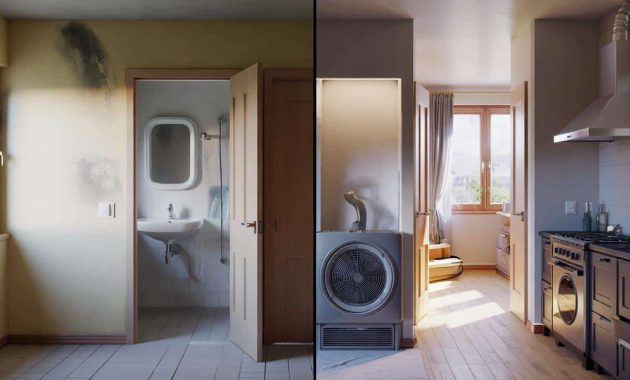
The “before and after” wasn’t dramatic in a picture. It was in the air.
The invisible part of feeling at home
Once the smell shifted, something else did too: my sense of ease in my own space. Coming home stopped being a series of minor olfactory negotiations. No more “Is that the trash? The sink? The shoes?” The air felt light enough that I noticed other things—sunlight on the floor, the quiet. It made me realize how much background discomfort we learn to ignore when we call a place “cozy”.
There’s also a quiet shame that hangs around smells. We worry about what guests think, what it says about our hygiene, our lifestyle, even our personality. Yet so often, the culprit isn’t dirt. It’s physics. Architecture. Habits we inherited from leakier houses.
I thought I had a “cleaning standard” problem, when I actually had a ventilation strategy problem. Once I started talking about it, other people admitted the same story: the immaculate living room with the mysterious odor, the constantly fogged-up bathroom, the rental that never fully dried. We don’t brag about these things on social media. We just buy stronger candles.
Fixing the root of it isn’t glamorous. Nobody will like your post about a new extractor fan. But the quiet luxury of air that simply smells… like nothing much at all? That sticks with you. It changes how you sleep, how you breathe, how you judge your own house.
Maybe this is the part of home care we’re only just learning to talk about. Not the right color of cushions or the latest organizing hack, but the unseen flow that carries away yesterday and brings in today. The way a room resets itself between showers, meals, arguments, work calls.
If your home “looks” clean but never quite smells that way, you’re not imagining it. You might not need another product. You might need a path—an actual route out—for the life you live there.
The question is simple, and slightly unsettling once you ask it out loud:
Where does your home’s air actually go?
| Key point | Detail | Value for the reader |
|---|---|---|
| Hidden ventilation issues | Clogged fans, blocked vents, and non-ducted hoods quietly trap moisture and odors | Helps readers identify the true source of “mystery smells” beyond surface cleaning |
| Simple daily habits | Short cross-ventilation, post-shower fan use, and open pathways between rooms | Gives realistic, low-cost actions that improve air quality without major renovations |
| Rethinking “clean” | Shifting focus from visible surfaces to invisible air circulation | Encourages a deeper, more effective approach to creating a healthy, pleasant home |
FAQ:
- Question 1How often should I air out my home to reduce that stale smell?Short, intense airing twice a day (around 5–10 minutes with windows wide open on opposite sides) is far more effective than keeping one window cracked all day.
- Question 2My bathroom has no window. What can I realistically do?A properly sized and regularly cleaned extractor fan, ideally with a timer or humidity sensor, is your best ally, plus keeping the door ajar afterward.
- Question 3Do scented candles and sprays actually solve odor problems?They mask smells temporarily but don’t remove moisture or particles; without ventilation, the underlying issue stays and often gets worse.
- Question 4How can I tell if humidity is part of my smell problem?A cheap hygrometer will show if your indoor humidity regularly sits above 60%; persistent condensation on windows is also a big red flag.
- Question 5Is upgrading ventilation expensive?Sometimes it’s as simple as cleaning ducts, unblocking vents, and changing filters; bigger fixes like new fans or hoods are mid-range costs that pay off in comfort and health.