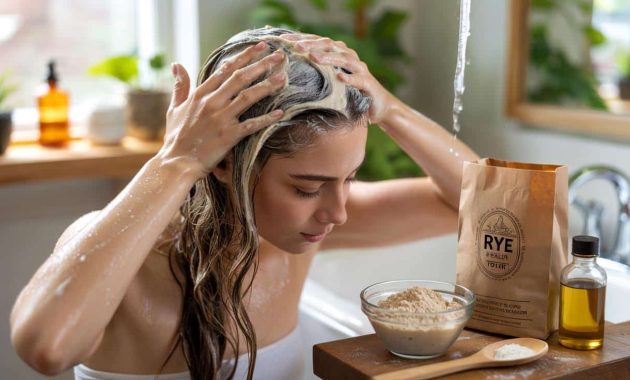
Across Germany and beyond, a small but growing group has already answered that question by swapping foamy bottles for a pantry staple: plain rye flour mixed with water.
From fringe trend to quiet bathroom revolution
Rye flour hair washing sits inside the so‑called “no poo” movement, where people cut out conventional shampoos and conditioners entirely. The goal is simple: give the scalp a break from synthetic surfactants, fragrances and preservatives, and let it regulate itself.
Unlike some extreme routines that involve nothing but water, the rye method offers a middle path. It aims to clean effectively while staying gentle, cheap and low‑waste. Social media searches show tens of thousands of posts about it, and eco‑shops in cities like Berlin and Hamburg report regular questions from curious newcomers.
Rye flour acts as a mild, biodegradable cleanser that can remove oil and dirt without stripping the scalp’s natural barrier.
For many, the appeal is emotional as well as practical: the ritual feels almost old‑fashioned, closer to baking bread than lathering up with fruit‑scented foam.
Why rye flour works on hair
At first glance, flour and hair do not seem like natural partners. Yet rye contains several properties that make it unexpectedly suited to cleansing.
Starch as a natural emulsifier
Rye flour is rich in starches. When mixed with water, these starch molecules swell and form a soft, gel‑like paste. This paste can bind to sebum, sweat and fine dust particles sitting on the scalp.
Once rinsed away, the mixture carries off that bound dirt and oil. Unlike harsh detergents, it usually leaves behind a thin protective film of natural lipids, which can help reduce dryness and frizz for many users.
Gentle on the scalp’s acid mantle
Healthy scalp skin maintains a slightly acidic pH, often called the “acid mantle”. Many shampoos are adjusted to be skin‑friendly, but frequent washing and strong surfactants can still disturb that balance.
➡️ This baked recipe is perfect when you want something steady
➡️ Gardeners urged to act now for robins with a 3p kitchen staple you should put out this evening
➡️ Hairstyles after 50: the best cuts to “look younger” in 2026
Rye flour tends to sit in a mild, skin‑tolerant range. Supporters say that over several weeks they notice less itching, fewer flakes and reduced redness, especially when they combine the wash with an acidic rinse made from diluted apple cider vinegar.
Environmental angle: paper bag instead of plastic bottle
Beyond hair, sustainability is driving interest. A standard bag of rye flour often comes in recyclable paper packaging and contains no microplastics, silicones or synthetic fragrances that can wash into rivers and seas.
For zero‑waste enthusiasts, rye flour functions as both product and packaging solution: one kilo can replace multiple plastic bottles.
That shift can reduce household waste and shrink the chemical load flowing from bathrooms into wastewater systems.
How to wash your hair with rye flour
The procedure sounds unusual, but once learned it can be as quick as a regular wash.
Basic recipe for shoulder‑length hair
- 4 tablespoons of finely ground rye flour
- 230–250 ml of lukewarm water
- Optional: a splash of apple cider vinegar for a post‑wash rinse
First, whisk the flour with the water until no dry lumps remain. Let the mixture stand for around ten minutes. This rest time allows the starches to swell, which tends to improve the cleansing effect.
In the shower, wet your hair thoroughly, then spread the rye paste onto the scalp and upper lengths. Massage gently with your fingertips. There will be no foam, which can feel unsettling for shampoo loyalists, but the massage still distributes the paste where it is needed.
Leave it on for about five minutes, then rinse with plenty of water. For long or thick hair, carefully separate sections with your fingers to ensure all flour residue is removed. A final rinse with water mixed with a small amount of apple cider vinegar can help smooth the cuticle and add shine.
Navigating the transition phase
For many people, the first two to four weeks are the hardest part. The scalp, used to frequent degreasing, often overproduces oil when conventional shampoo is suddenly stopped.
During the early weeks, hair may feel heavier or greasier as the scalp recalibrates its oil production.
Specialists in holistic hair care advise using supportive tools rather than giving up at this point. A brush with tightly packed natural bristles can help distribute sebum from the roots towards the lengths. A wooden comb is useful for detangling without snapping fragile strands, particularly when hair is damp.
Drying technique also matters. Instead of rough towel‑rubbing, many advocates press excess water out gently with a microfibre towel or an old cotton T‑shirt, which reduces frizz and breakage.
Who might benefit the most?
Responses to the method vary, but anecdotal reports and small community surveys suggest certain groups often notice particular gains.
| Hair/scalp type | Typical experience with rye flour |
|---|---|
| Fine, quickly greasy hair | Scalp may normalise over weeks, with some users stretching washes further apart. |
| Dry, wavy or curly hair | Less frizz and a softer feel for many, especially when combined with light oils on the ends. |
| Sensitive, itchy scalp | Some people report reduced irritation, provided they rinse thoroughly and avoid scratching. |
| Coloured or bleached hair | Mixed results: some like the gentleness, others miss the slip of conditioner and add masks. |
Rye flour versus classic shampoo
Dermatologists contacted by European media outlets tend not to dismiss the trend outright, but they do raise questions. Traditional shampoos must pass safety checks and stability tests. Rye flour, by contrast, is a food product repurposed for beauty.
Key differences include:
- Foam and feel: Shampoos use surfactants to foam and spread easily. Rye paste feels thicker and can take longer to rinse.
- Preservation: A mixed rye paste should be used quickly or kept briefly in the fridge. It spoils far faster than bottled products.
- Allergies: People with wheat or grain sensitivities need to be cautious and might experience itching or redness.
- Hard water: In very hard water areas, some users find residue issues and rely heavily on acidic rinses to compensate.
Specialists sometimes recommend an alternating routine: rye flour for most washes, with an occasional gentle shampoo to remove any build‑up from styling products or minerals.
Real‑life experiments and small bathroom dramas
In Berlin’s allotment communities, rye flour hair stories have already taken on a life of their own. One group in Neukölln turned the method into a kind of neighbourhood science project. They compared full‑grain rye with type 1150 flour, timing how long each mix needed to become smooth and which version left less residue.
There were mishaps. One participant admitted skipping a wash during a busy week and turning up to a family dinner with visibly oily roots. Another misjudged the water ratio and ended up with paste so runny it slid straight off the fringe. Yet after several weeks, most said they would not go back entirely to conventional shampoos.
What started as a niche eco‑experiment became a talking point about how much product we truly need for basic hygiene.
Risks, limits and when to avoid the method
Despite the enthusiasm, rye flour is not a cure‑all. Trichologists caution that anyone with diagnosed scalp conditions—such as psoriasis, severe seborrheic dermatitis or recurrent fungal infections—should talk to a professional before changing routines.
Using flour also carries a few specific risks:
- Incomplete rinsing: If paste is left in the hair, it can dry into tiny flakes that resemble dandruff.
- Product build‑up: Heavy styling products, silicones or hairsprays may not wash out fully with rye alone.
- Storage mistakes: Preparing large batches and leaving them at room temperature can invite bacterial growth.
For people with very low mobility or limited bathroom time, the more laborious rinse process can be a barrier. In those cases, a low‑irritant shampoo might be more practical.
Practical scenarios and combinations that work
Many users end up combining rye flour with other simple household ingredients. A common pattern looks like this: rye wash once or twice a week, a diluted apple cider vinegar rinse afterward, and a few drops of light oil—such as argan or jojoba—on the ends while hair is still damp.
Others keep rye for deep‑clean days and use plain water rinses or co‑washing (washing with conditioner) between times. For active people who sweat a lot, a quick rinse after exercise followed by a full rye wash only when needed can reduce dryness.
Rye flour hair care does not need to be all or nothing; many households use it as one tool among several low‑impact options.
For those considering a trial, dermatologists suggest a simple protocol: test a small amount of the paste on the inner arm, wait 24 hours for any reaction, then start with one gentle wash and monitor how the scalp feels over the next few days.
Seen this way, the trend says less about flour itself and more about a wider shift. People are questioning long shelves of brightly coloured bottles and asking whether a quieter, simpler routine might be enough for clean, healthy hair.