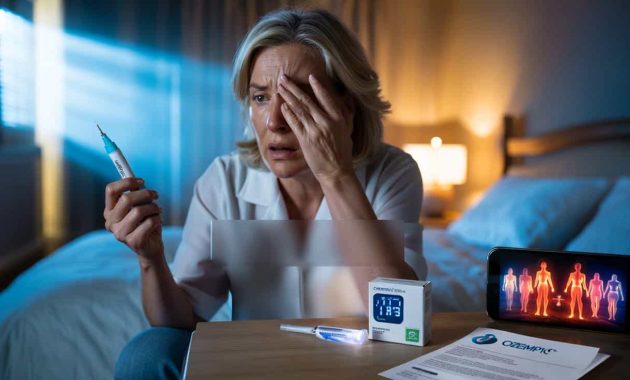
The lights in the supermarket pharmacy were too bright, the kind that make everything look a little unreal. Mary, 47, stood in line clutching her first box of Ozempic, half-excited, half-ashamed, scrolling through TikToks of dramatic “before and after” weight-loss videos. Behind her, a man joked to the cashier, “This stuff is liquid gold, right?” Everyone laughed. No one mentioned eyes, or blindness, or the word “risk”.
Two months later, Mary woke up and couldn’t read the digits on her alarm clock. The edges of her vision had turned foggy, like someone had smeared Vaseline across the lenses of her life.
She went back to the leaflet that came with the pen. She didn’t remember seeing this coming.
Not like this.
Ozempic’s glow-up, and the risk few people talk about
Ozempic has exploded from a niche diabetes drug into a cultural phenomenon, a kind of injectable willpower for people desperate to lose weight. The social feeds are full of red-carpet bodies, 30-pound losses, and breathless testimonials from patients who say the weekly shot “gave them their life back”. For many, side effects are a brief nausea, a slower appetite, a smaller wardrobe.
Talk to these fans and one phrase comes up over and over again: “Serious side effects are rare.”
That word hangs in the air like a safety net.
Yet scattered across Facebook groups and patient forums are stories that don’t fit the glossy narrative. A 52-year-old man describes losing half of the vision in one eye after his Ozempic dose was increased. A teacher from Texas says her eyesight “collapsed in weeks” after starting the drug, turning everyday tasks into terrifying guesses.
Emerging lawsuits in the US allege that patients were not adequately warned about the possibility of severe eye complications, including sudden vision loss linked to rapid changes in blood sugar. Lawyers say they are hearing the same sentence again and again: “No one told me this was even on the table.”
Doctors have long known that people with diabetes can see their eyesight fluctuate when blood sugar shifts quickly, regardless of the drug behind it. With powerful GLP-1 medications like Ozempic, those shifts can be dramatic, especially when weight falls fast and blood glucose plummets. That doesn’t mean most users will lose their sight, far from it.
But for a small number of vulnerable patients, especially those with pre-existing damage to the retina, those rapid swings may be a tipping point.
*The controversy isn’t just about numbers, it’s about how real risk feels when you’re the one living it.*
Fans, warning labels, and the silent space in between
If you read the official prescribing information for Ozempic, you will find references to retinopathy, to eye problems, to patients with diabetes who need monitoring. It is there, in medical phrasing that sounds distant and strangely calm. On social media, though, the drug is sold in a different language: transformations, glow-ups, “new me” arcs stitched into 30-second clips.
Between the fine print and the filtered videos, something important gets lost.
Plain talk about what “rare” really means when side effects hit a real human body.
Say you start Ozempic and your blood sugar is high, your weight is up, your self-esteem is low. You scroll Instagram and see someone your age who looks like they rewound a decade in six months. Your doctor says the drug is generally safe, side effects mostly mild, vision loss very uncommon. You nod. You want the hope more than you fear the risk.
Then your sight blurs, or you see dark patches, or driving at night suddenly feels like being underwater. You’re caught between the promise you were sold and the tiny asterisk you never really saw.
We’ve all been there, that moment when you realise the thing you pinned your hopes on had a shadow no one dwelled on.
This tension fuels the growing anger among patients who say they were blindsided. Some feel dismissed when they report eye problems, told it’s “probably your diabetes” or “just a temporary adjustment”. Others say they were treated like outliers, statistical noise against a backdrop of success. Let’s be honest: nobody really reads every line of a drug leaflet every single day.
For critics, that’s exactly the problem. In real life, disclosure that lives in dense text or technical jargon may be legal, yet still feel like no warning at all.
In the gap between legality and lived experience, trust frays.
What you can actually do if you’re on, or considering, Ozempic
If you already use Ozempic, or you’re thinking about it, the most practical move is brutally simple: treat your eyes as part of the therapy, not an afterthought. Before your first injection, get a baseline eye exam, especially if you’ve ever been told you have diabetic retinopathy or “minor changes” in the back of your eyes.
Ask your eye doctor to write down what they see and when you should come back. Pin that date somewhere you will actually look at it.
When your blood sugar and weight start shifting, your retina is riding the same roller coaster.
When dose changes are on the table, push for a conversation that feels human, not rushed. Ask your prescriber how quickly your blood sugar is expected to drop, what that means for existing eye damage, and what warning signs should send you straight back to clinic. If you feel brushed off, that’s a signal, not a personality flaw.
Many patients say they felt guilty for “overreacting” when their vision went strange, so they waited. That lost time can be the difference between a temporary scare and long-term harm.
You’re not being dramatic for wanting your eyesight protected as fiercely as your weight or A1C.
“People tell me, ‘My doctor said vision changes are rare, so I thought it couldn’t be that,’” says one ophthalmologist who has started tracking Ozempic-related cases in his clinic. “Rare doesn’t mean impossible. It just means you don’t expect to be the one sitting in my chair.”
➡️ What you absolutely must do with meat 30 minutes before cooking it
➡️ The simple reason some rooms echo more than others
➡️ Baking soda and houseplants: the simple step that can change everything
- Ask directly whether you have any signs of diabetic retinopathy before starting Ozempic.
- Schedule eye checks when your dose goes up or your blood sugar drops fast.
- Call your doctor immediately if you notice sudden blurring, dark spots, or flashes of light.
- Keep a short diary of visual changes during the first months of treatment.
- Bring someone with you to key appointments so they can help ask and remember questions.
Between miracle drug and silent risk, a messy middle
The story of Ozempic and vision loss sits in an uncomfortable middle ground. On one side, you have people whose lives have genuinely been changed by the drug: less pain, better blood sugar, more energy, a body they finally recognise in the mirror. On the other side, you have patients who can no longer see that mirror clearly and who feel like they were sold a half-truth.
Both groups are real. Both deserve to be heard without being turned into statistics for someone else’s argument.
What’s emerging is not a simple “good drug / bad drug” narrative, but a much older one: who gets to control the story of risk. Regulators point to data, companies point to labels, doctors point to guidelines. Patients point to their eyes, their lives, their sense of betrayal.
Somewhere in the middle is a conversation we rarely have in plain English: how much uncertainty we are willing to accept for the promise of fast change, and what kind of warning feels like respect rather than a legal checkbox.
As more lawsuits are filed and more stories surface, that conversation will only grow louder. Maybe the real shift won’t just be in blood sugar charts or bathroom scales, but in how we talk about rare harm in the age of viral “miracle” drugs.
If you or someone close to you has lived through this, your experience is already part of that debate, whether it’s written into a legal complaint or whispered across a kitchen table.
The question now is who will listen closely enough to let those stories reshape the way these powerful medications are presented, prescribed, and watched.
| Key point | Detail | Value for the reader |
|---|---|---|
| Eye risks exist | Ozempic can trigger rapid blood sugar shifts that may worsen existing retinopathy | Helps readers weigh benefits against potential harm to vision |
| “Rare” still matters | Serious eye events are uncommon but devastating for those affected | Encourages proactive checks instead of passive trust in statistics |
| Practical safeguards | Baseline eye exams, close monitoring, and fast response to symptoms | Gives concrete steps to protect eyesight while using the drug |
FAQ:
- Can Ozempic really cause vision loss?Current research suggests Ozempic can worsen existing diabetic eye disease in some patients, especially when blood sugar drops quickly, but outright blindness remains uncommon.
- Who is most at risk for eye problems on Ozempic?People with long-standing diabetes, pre-existing diabetic retinopathy, or very high starting blood sugar levels seem to face higher risk when their numbers improve rapidly.
- What warning signs should I watch for?Sudden blurring, dark spots, flashes of light, difficulty reading, or feeling like part of your visual field is missing should prompt urgent medical attention.
- Should I stop Ozempic if my vision changes?Don’t stop on your own; contact your prescriber and an eye specialist immediately so they can evaluate what’s happening and decide the safest next step.
- How can I talk to my doctor about this without sounding paranoid?Bring a short list of questions, mention stories you’ve read, and say you want a clear plan to protect your eyes while using the drug; that’s a reasonable, responsible request.