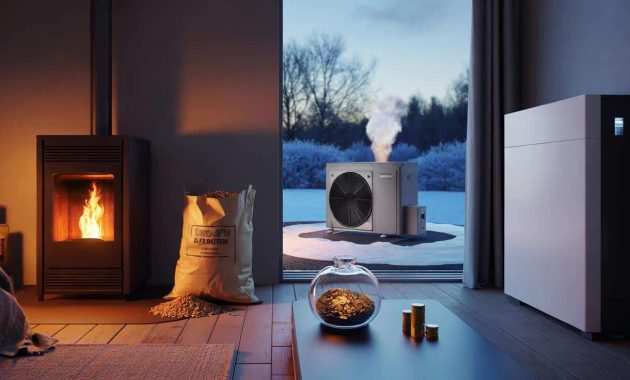
Two contenders promise relief, with very different vibes, running costs, and daily habits.
Households are weighing pellet stoves against heat pumps as temperatures drop. Both can trim bills. Both change comfort. The best pick depends on your home, your climate, and how you like to live.
Two paths to warm rooms, one goal: lower bills
A pellet stove burns compressed wood pellets. It delivers radiant and convective heat right where you sit. It feels like a modern fire with a thermostat. A heat pump doesn’t burn anything. It moves heat from outside air or the ground into your home using electricity.
Pellet stoves typically hit 75–90% efficiency at the appliance. They warm the space they’re in, fast. Air-source heat pumps often deliver 2.5–4 units of heat for each unit of electricity in mild weather, less in hard frost. Ground-source models stay steadier but cost more to install.
Heat pumps move heat rather than make it. That’s why their efficiency can beat gas, oil, and direct electric heat when sized and set up well.
Pellet stoves excel at zoned heating. Warm the living room deeply, let spare rooms sit cooler, and watch the meter slow down.
Upfront cost and running cost
Budgets steer many decisions. The table below gives broad, real‑world ranges. Local prices vary, and design choices matter.
| Item | Pellet stove | Air-source heat pump |
|---|---|---|
| Typical installed cost | £2,000–£5,000 / $2,500–$6,000 | £6,000–£13,000 / $7,000–$16,000 |
| Annual maintenance | Owner cleaning weekly + sweep yearly (£80–£150 / $100–$200) | Annual service (£120–£250 / $150–$300) |
| Fuel or power | Pellets £250–£400 / $280–$500 per ton | Electricity 18–35p/kWh UK, $0.12–$0.30/kWh US |
| Typical seasonal use | 2–4 tons in a cold climate zone | 2,000–6,000 kWh depending on home and climate |
If pellets cost £320 ($380) per ton and your stove uses 3 tons, that’s roughly £960 ($1,140) for the season. A well‑sized heat pump with a seasonal COP near 3 needs about one kWh of electricity to deliver three kWh of heat. At 28p/kWh ($0.18/kWh), 4,000 kWh of electricity could land near £1,120 ($720). Insulation, setpoints, and local tariffs push those figures up or down fast.
Before swapping systems, tighten the house. Insulation and air‑sealing shrink bills for every heating technology, year after year.
Where each system wins
Small homes and open-plan living
A pellet stove shines in a compact home or an open ground floor. It delivers a cozy core temperature in the living area. Bedrooms can sit cooler with doors cracked. This pattern trims consumption without sacrificing comfort where you spend time.
➡️ The bright promises of EyePulse, the French military drone from Daher that the armed forces lack
➡️ Iron Water Tank Scaling Up Fast? The Simple Trick That Stops Marks And Breakdowns
➡️ The hidden reason vehicles feel sluggish in winter
➡️ A powerful soaking method revives cast iron pans even after years of buildup
Whole-home comfort and summer cooling
An air-source heat pump handles every room when paired with ducts or multiple indoor units. It also cools in summer, which changes the value math. One machine, two jobs. Smart controls let you schedule setbacks and use off‑peak electricity when your tariff allows it.
Cold snaps and climate reality
Modern “cold‑climate” heat pumps keep working well below freezing, but output drops and defrost cycles add noise and brief pauses. A pellet stove keeps a steady flame in a blizzard if you have pellets and power for the auger and fans. A small battery backup or generator covers short outages.
- Very cold, rural areas with pellet supply nearby often favour pellet stoves for resilience.
- Urban and suburban homes with decent insulation lean toward heat pumps for whole‑home coverage.
- Oil or direct electric users see the biggest savings from heat pumps; mains gas users see mixed results based on tariffs.
Noise, space, and maintenance
Pellet stoves need dry storage for bags and a suitable flue. Expect weekly ash emptying during peak season and a yearly deep clean. Fans hum, and lower‑quality pellets can soot up the glass and produce more ash.
Heat pumps bring an outdoor unit that makes a gentle whir and an indoor unit that moves air. You clean filters, clear leaves, and book annual servicing. Defrost plumes on cold mornings look like steam, not smoke.
Incentives and carbon
Support can tilt the decision. In the UK, the Boiler Upgrade Scheme offers grants toward heat pumps. In the US, federal tax credits currently cover a portion of installed costs for qualifying heat pumps and biomass appliances, and many utilities add rebates. Local rules and paperwork apply.
On emissions, heat pump impact falls as the grid greens. Pellets come from wood waste or managed forests, yet they release particulates if burned poorly. A properly vented, modern stove with dry pellets reduces smoke sharply. Some urban areas restrict solid‑fuel appliances, so check local codes.
This winter’s money question: which saves more?
There isn’t one universal winner. The better earner depends on your baseline fuel, your home, and your tariff.
Well‑insulated home, average electricity price, and a need for whole‑home heating: a right‑sized heat pump usually delivers lower annual cost and adds cooling.
Older, leaky home where you mostly use one living area: a pellet stove can cut bills by heating the zone you live in and dialing back the rest.
Want a quick sense-check? Try this simple approach:
- Estimate heat demand: last winter’s kWh of gas/oil/electric or pellets used, adjusted for a typical year.
- Pellet option: multiply expected tons by local price, add sweeping and a small electricity allowance.
- Heat pump option: divide your heat demand by a realistic seasonal COP (2.5–3.5), then multiply by your electricity rate.
- Add maintenance, then compare over five to ten years, including the upfront cost and any grants or credits.
Hybrid tricks that stretch savings
Mixing technologies works. Many households run a pellet stove in the evenings and weekends, then let a heat pump or existing system hold background temperatures. Some use time‑of‑use tariffs to preheat during cheaper hours. Smart thermostats prevent overlap and wasted energy.
Extra pointers before you buy
Get a proper heat‑loss calculation, not a rough guess. Oversized heat pumps short‑cycle and waste power. Undersized stoves won’t keep up in a cold snap. Ask installers for noise data, warranty terms, and references from similar homes.
Check pellet supply quality and storage. Moist pellets crumble and raise ash. Look for low‑ash, certified products. Fit CO and smoke alarms near stoves. Keep clearance distances. If you choose a heat pump, plan the outdoor unit location to avoid bedrooms and neighbour windows, and ensure good airflow.
If you love numbers, run a two‑scenario simulation: zoned heating with a pellet stove versus whole‑home heat pump at different electricity tariffs. Test a colder winter week and a milder shoulder season week. Small shifts in usage patterns can flip the winner on cost charts.
One more angle: comfort. A pellet flame changes how a room feels on a dark January evening. A heat pump’s quiet, steady output changes how the whole home behaves. Your preference matters, because a system you like is a system you’ll run smartly—and that’s where the real savings hide.