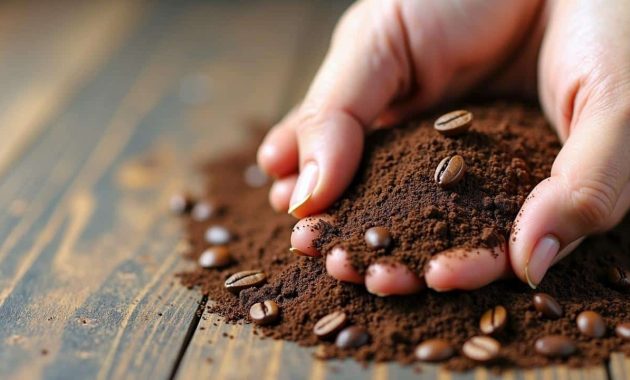
The barista wipes down the counter, sweeping a small mountain of used coffee grounds into a bin with a practiced flick of the wrist. The smell is deep and bitter, familiar in a way that feels almost comforting. A couple scrolls their phones while they wait for their takeaway cups, never glancing at the dark, damp piles heading straight for the trash.
Yet somewhere, on the other side of the planet, a group of researchers are treating that very same waste like gold dust. They’re drying it, heating it, mixing it into something that looks nothing like a latte.
Behind the daily ritual of your morning coffee, a quiet revolution has started.
And it’s aimed straight at the concrete under your feet.
Coffee grounds meet concrete: from café bin to building site
In a university lab in Australia, the smell of freshly brewed espresso mixes with the dusty scent of cement. On a metal tray, a thin layer of used coffee grounds is spread out like chocolate crumbs. A researcher in gloves slides the tray into a furnace, and the “waste” begins to glow with possibility.
This is not a quirky art project. It’s a serious attempt to rethink one of the dirtiest materials on Earth: concrete.
And the secret ingredient might be that soggy lump left in your coffee machine every morning.
The team behind this unlikely pairing, from the Royal Melbourne Institute of Technology (RMIT), started with a simple idea. If coffee grounds are rich in carbon, why not use them to replace some of the sand in concrete? Sand is becoming scarce, and its extraction is tearing up riverbeds and coastlines worldwide.
They tried mixing raw coffee grounds into concrete. It failed. The mix weakened, crumbled, lost its strength.
So they changed tactics. They “biocharred” the grounds — heating them at high temperatures without burning them completely — and then blended this black, lightweight material into the concrete mix. That’s when the numbers started to shift.
Tests showed something that surprised even the researchers. Concrete with biochar from coffee grounds could be up to **30% stronger** than standard concrete when the sand replacement was carefully calibrated. The material set properly, bonded well, and handled stress the way solid building materials should.
At the same time, every cubic metre of this coffee-concrete saved a chunk of sand and locked away carbon that would otherwise end up decomposing in landfill.
The logic is simple, almost disarming. Take a waste product we have too much of. Transform it with heat into a stable form. Fold it back into a system that desperately needs alternatives.
It’s not sci‑fi. It’s chemistry meeting your morning espresso.
From your kitchen counter to climate-friendly cities
The method itself sounds strangely domestic. First, the coffee grounds are collected from cafés or industrial facilities and carefully dried to remove moisture. Then they’re heated in a low-oxygen environment at around 350–500°C, a process known as pyrolysis. The result is a light, crumbly biochar that looks like blackened breadcrumbs.
This biochar is then used to replace a small portion of the sand in a concrete mix, usually around 10–15% by volume, depending on the formula. The rest of the recipe — cement, water, aggregate — stays familiar.
On the surface, it’s still concrete. It just carries a secret layer of coffee DNA inside.
Engineers started running real-world style tests: slabs, blocks, cylinders that could mimic pavements, small structural elements, even potential prefabricated panels. One pilot project looked at non‑load bearing applications first: garden pavers, footpaths, urban furniture, where failure would not be catastrophic.
Municipalities interested in circular economy projects began watching closely. A mid-sized city can generate tonnes of used coffee grounds every week, especially where café culture is strong. Instead of paying to send that organic waste to landfill — where it emits methane as it breaks down — they could funnel it into local construction projects.
We’ve all been there, that moment when you toss a coffee pod or a filter into the bin and feel a slight sting of eco‑guilt. Imagine if that tiny daily action could be wired into the story of a new park or bike lane.
On the technical side, the science has its own quiet elegance. Coffee biochar has a porous internal structure, like a sponge made of carbon. When mixed into concrete, these pores interact with the cement matrix, influencing how water moves and how the material cures. Some configurations even improve resistance to micro-cracks as the concrete ages.
Researchers are still mapping the long-term durability, freeze-thaw behaviour, and fire resistance, because construction standards are unforgiving. Life-cycle assessments suggest reduced emissions compared with traditional mixes, especially when the pyrolysis process is powered by renewable energy.
Let’s be honest: nobody really reads a building’s material safety sheet before stepping inside. Yet the future of low‑carbon cities might depend on these obscure charts and the odd decision to value coffee waste as a raw material, not garbage.
What this means for cities, builders… and your daily cup
For city planners and builders, the “how” starts with logistics, not lab coats. Coffee waste has to be collected separately from other rubbish, kept relatively clean, and moved quickly enough that it doesn’t start rotting. Some forward‑thinking councils are already testing dedicated coffee bins in dense café districts, much like glass or paper collection points.
On the other side, small concrete plants can partner with universities or biochar startups to install compact pyrolysis units. These turn bags of damp grounds into consistent, dry biochar ready to be blended into the production line.
The gesture is simple: redirect a daily waste stream into a local construction loop.
For professionals in construction, the temptation is to jump too fast or dismiss it outright. Both are traps. Moving from lab to large-scale is always messy. Early adopters risk using experimental mixes in the wrong contexts, like critical load‑bearing structures without enough testing. Others may cling to old habits and lose ground as rules and tenders evolve toward low‑carbon requirements.
The smarter path is incremental. Start with small, non‑structural projects. Demand clear data from suppliers: compressive strength, durability, standards. Stay curious, but also gently skeptical.
If you’re just a coffee lover reading this on your phone, your role is different: support venues that separate organic waste, back local circular projects, and talk about them. Quiet consumer pressure still shifts the market.
“Every espresso shot leaves behind about 15 grams of grounds,” notes one sustainability engineer involved in coffee‑concrete trials. “Multiply that by billions of cups a day, and you get a waste problem big enough to build cities from — or at least pavements, for a start.”
➡️ Almost one in two people will develop cancer in their lifetime, says Robert Koch Institute
➡️ What walking with your hands in your pockets means, according to psychology
➡️ This is what happens when you clean without a clear end point
- Concrete is responsible for around 8% of global CO₂ emissions, mainly from cement production.
- Sand, a key ingredient, is being mined faster than natural systems can regenerate it.
- Cafés and offices generate tonnes of coffee grounds that usually end up in landfill.
- Coffee biochar can partially replace sand and lock carbon into long‑lasting structures.
- Early tests show stronger mixes and potential cuts in both waste and emissions.
A small ritual, a big material shift
Next time you stand in line for a flat white, look around. The industrial grinder, the clatter of portafilters, the steaming milk — all of it part of an everyday choreography we barely notice. Just out of sight, there’s probably a black plastic bin quietly filling with used grounds, headed nowhere in particular.
That same bin could one day be connected, by a short supply chain and a handful of smart decisions, to the foundations of a school, a tram stop, or a shaded bench in a public square. *The gap between those two futures is smaller than it looks.*
We tend to imagine climate solutions as vast, distant technologies. Yet sometimes they start with simple swaps: sand for coffee, trash for resource, habit for intention.
The question isn’t only whether coffee‑concrete will become mainstream. It’s whether we’re ready to see everyday waste as part of the city’s skeleton, not just its leftovers.
| Key point | Detail | Value for the reader |
|---|---|---|
| Coffee grounds as a resource | Used coffee can be transformed into biochar and blended into concrete mixes | Shows how a familiar waste product can contribute to cleaner construction |
| Stronger, lower‑impact concrete | Tests suggest up to 30% higher strength with partial sand replacement | Reveals that sustainability can align with performance, not compete with it |
| Local circular loops | Cities can connect cafés, biochar units, and concrete plants | Offers a practical vision of how neighbourhoods might turn waste into infrastructure |
FAQ:
- Question 1Does concrete made with coffee grounds really perform as well as traditional concrete?
- Question 2Can this type of coffee‑concrete be used for big buildings and bridges yet?
- Question 3What happens to the coffee smell — does the concrete or pavement smell like espresso?
- Question 4Could I try making coffee‑based concrete at home for DIY projects?
- Question 5How soon could I see this used in my city’s pavements or public spaces?