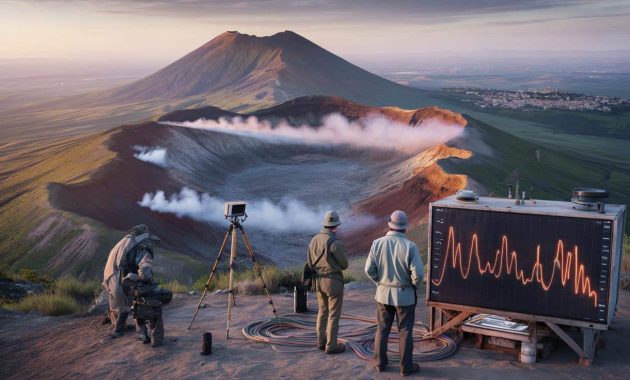
The first thing they noticed was the silence.
Up on the rim of Italy’s Campi Flegrei, the usual hiss of steam was weaker, the pale plumes thinner and strangely lazy in the morning air. The sensors on the monitoring station, usually scrolling neat, predictable lines of data, had started to draw something else: a sharp, almost overnight drop in carbon dioxide and a surprising rise in water vapor. No tremors. No swelling of the ground. No crackling on the seismic channels that would hint at magma on the move.
Down in the nearby town, people drank coffee, checked their phones, and walked past souvenir shops selling “Volcano!” T‑shirts. No one could see the invisible shift in gas chemistry unfolding just beneath their feet.
Up on the crater, one volcanologist whispered to another: “This is… not what we expected.”
And that’s when the real questions began.
When a volcano goes quiet in the strangest way
On paper, the volcano looked calm.
Tiltmeters that usually pick up the tiniest swell of magma stayed flat. Seismographs, so sensitive they can feel a truck a few kilometers away, registered only the ordinary rumble of daily life. Yet the gas monitors — those little electronic noses perched around the crater — flashed numbers that made every scientist in the observatory lean in closer.
Carbon dioxide levels dropped fast, sulfur dioxide wobbled, and the ratio between gas types shifted like someone had quietly changed the settings underground. No steam roaring out of new vents, no red lava show for TV cameras, just data on a screen that said: something down there has changed.
A similar scene played out at Costa Rica’s Turrialba volcano a few years ago. One week, gas emissions looked “normal scary”: high CO₂, sharp sulfur smell, a reminder that magma was sitting not too far below. The next week, the chemistry swerved. CO₂ suddenly plunged while water vapor rose, as if someone had turned off one pipe and opened another.
Tour guides on the slopes noticed nothing strange. Cows grazed. Tourists posed. Yet in the monitoring room, scientists started calling colleagues, scrolling back through months of data, trying to see if they’d missed a slow trend. *They hadn’t.* The change really had been that sudden.
What’s going on in these moments is a sort of underground redirection. Gases escaping from magma usually find their way up through a web of cracks and porous rock, filtering slowly to the surface. When those tiny pathways clog, collapse, or shift, the gas finds new routes. That can mean less CO₂ at the crater and more seeping invisibly through the hillsides or even under nearby towns.
Sometimes the cause is as simple as rain cooling the ground and sealing fractures with minerals. Sometimes it’s a pressure change deeper down as magma moves sideways instead of up.
The volcano looks calm, yet its plumbing has quietly rewired itself.
How scientists “listen” when a volcano won’t shout
To catch these sudden twists, volcanologists rely on a patchwork of tactics that feel half high‑tech, half field craft. They plant permanent gas stations around craters, small boxes with tubes that sip the air and send readings in real time. They walk the slopes with handheld detectors, following invisible trails of CO₂ the way a tracker follows footprints in sand.
➡️ Hairstyles after 50: this very trendy cut from the 60s is making a comeback in 2026.
➡️ How to stop dust from settling on shelves as quickly
➡️ Caught by nightfall: a mother and her two four-year-old twins lost in fog and snow
On some volcanoes, they set up long plastic tubes along fractures to “breathe in” the underground gas, then bring samples back to the lab. They even use drones when the crater is too dangerous, flying them through plumes that would knock a person flat in seconds. Each method catches a different piece of the story.
The hard part is knowing when a weird number on the screen is just weather… and when it’s the volcano speaking.
Rain can dilute gases. Strong winds can scatter them. A cold front can change how plumes rise or hug the ground. We’ve all been there, that moment when your phone keeps sending contradictory notifications and you’re trying to figure out which one to trust. Scientists face the same mess, just with far higher stakes.
They run the data against local weather, past patterns, and other instruments: ground deformation, seismic noise, even satellite images of heat. A sharp gas change with no other sign might mean blocked pathways. The same gas change with subtle tremors could mean magma quietly shifting where nobody can see.
Let’s be honest: nobody really watches every single chart every single second.
Monitoring teams are human. They rotate shifts, miss sleep, sip too much coffee, and sometimes stare at the same data so long they doubt their own eyes. That’s why many observatories now lean on automated alerts that flag abrupt gas shifts, sending messages to phones before anyone even gets into the car.
“Volcanoes don’t owe us a clear warning,” says one Italian researcher. “Sometimes the only alarm you get is a line on a graph that suddenly bends when you weren’t expecting it.”
- Trend, not snapshot – One strange reading can be noise; a sustained change in gas ratios over days is what really matters.
- Cross‑check signals – Gas shifts gained meaning when paired with **even tiny** changes in seismic or deformation data.
- Context is king – The same gas anomaly on a sleepy old dome and on a restless caldera can mean completely different things.
Living with a restless underground that doesn’t always erupt
The unsettling truth is that a volcano can change its breathing overnight and still never erupt. For nearby communities, that can feel like living beside a neighbor who sometimes slams doors, sometimes whispers through the wall, and never explains why. One month you’re seeing gas alerts on the local news. The next month, silence.
Scientists must walk a tightrope between alarming people and keeping them informed. A gas anomaly might mean deeper pressurization… or just a clogged fracture system. So they talk with local authorities, schools, and residents, repeating the same message again and again: a change in gas is a sign of activity, not a guarantee of disaster.
| Key point | Detail | Value for the reader |
|---|---|---|
| Gas can change without eruption | Shifts in CO₂, SO₂, and water vapor often reflect underground plumbing changes, not lava on the way up | Reduces panic when headlines scream about “mysterious gas spikes” |
| Multiple clues matter | Scientists combine gas data with seismic, deformation, and satellite heat readings | Helps readers understand why volcanologists rarely rely on a single number |
| Calm surface ≠ calm volcano | No visible plume or tremors doesn’t mean nothing is happening underground | Encourages respect for hazard zones even on quiet, sunny days |
FAQ:
- Question 1Does a sudden change in volcanic gas always mean an eruption is coming?
- Question 2What gases do scientists watch most closely on active volcanoes?
- Question 3Can people living nearby smell dangerous volcanic gases?
- Question 4Why would gas emissions drop instead of rise before an eruption?
- Question 5How can regular people follow gas changes at volcanoes near them?