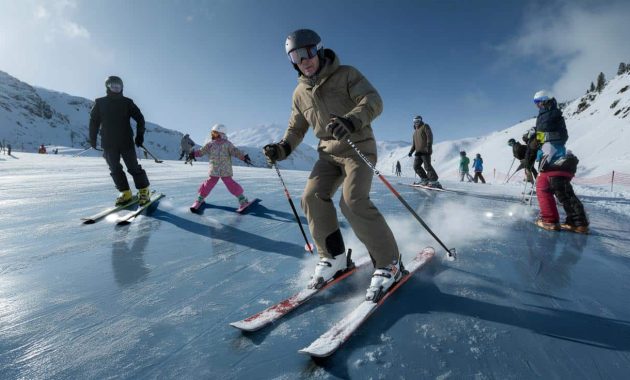
By mid-season the slopes look festive and harmless, yet mountain rescuers are logging record calls and tragedies that start with tiny, avoidable mistakes.
Record accident numbers on European slopes
Across popular European ranges such as the Beskids and the Alps, ski patrols and mountain rescue teams report a sharp rise in accidents this winter. In one Polish region alone, rescuers counted more than a thousand incidents between New Year’s Day and mid‑February, already eclipsing the total from the previous season.
Most of these cases end with bruises, sprains or broken bones. But some are devastating. This season, an 11‑year‑old boy died after colliding with another skier. Both were on a marked piste, both doing what millions of holidaymakers do every day. One moment of excessive speed and misjudged distance turned a normal run into a fatal crash.
Behind every accident statistic stands a specific person whose day on the slopes became a trauma that no one had expected while buckling their boots.
Rescue chiefs say this spike does not come from extreme freeriders or high‑level racers. It comes from ordinary recreational skiers, many of them parents on half‑term trips, making the same basic mistakes again and again.
The classic error: skiing like you drive on an empty motorway
The single most common cause of accidents, according to rescuers, is mismatched speed: people skiing far faster than their technical ability and the conditions allow. Hard, icy snow only amplifies the problem.
This winter, many European resorts have struggled with a thin snowpack and freeze–thaw cycles. That means bulletproof pistes, patches of ice and sudden changes in grip. On such surfaces, dull or poorly tuned edges bite badly, skis chatter and stopping distance increases dramatically. Yet skiers used to soft “holiday snow” often charge on as if nothing has changed.
On a crowded, icy slope, 5–10 km/h too fast can be the difference between avoiding a child in front of you and ploughing straight into them.
Another pattern worries experts: people behave as if they were alone. They cut across the piste without looking uphill, make giant carving turns that ignore others’ lines, or stop in blind spots just below a rollover. Many simply forget that the basic rule is identical to driving: you are responsible for not hitting anyone in front of you.
➡️ Homeowners in Near West Side neighborhood turn garages into artist alley unexpected trend
Fitness and preparation: you can’t ski straight from the office chair
Rescuers stress that a big share of accidents are rooted not in freak bad luck, but in poor preparation long before anyone reaches the lift.
- No physical preparation: weeks of sitting at a desk followed by six hours of skiing on day one.
- No equipment check: skis with blunt edges, bindings wrongly adjusted, boots that barely close.
- No mental briefing: no idea about local rules, signs or how to react in an emergency.
When legs fatigue, technique collapses. People lean back, lose control and start to compensate with upper body twists. Falls then become more violent and harder to control, especially on hard snow. Late‑afternoon collisions and knee injuries rise sharply once tired skiers push for “one last run” to justify the price of the day pass.
The hidden role of modern lifts
Rescuers also point to an unexpected factor: modern, comfortable lifts. Old drag lifts and T‑bars, notorious for pulling beginners off their feet, used to act as a kind of natural filter. If you couldn’t stand on skis, you probably wouldn’t make it to the top of a red run.
Now, heated chairs and gondolas carry anyone up the mountain, including those who have barely mastered stopping. Families often underestimate this. A child who “got down somehow” on a small hill at home is suddenly taken onto steep, narrow pistes in the Alps. The family goal—“we must do this long run we saw on Instagram”—can outweigh honest assessment of what the weakest member of the group can handle.
A ski group is only as safe as its least confident skier, yet trips are still planned around the strongest, not the slowest.
Helmets, rules and responsibility: what people still get wrong
Helmet use is widely promoted, yet around 10 percent of injured skiers treated by one Polish rescue group this season were bare‑headed. In many countries only under‑16s must wear helmets by law, even though other European states, such as Italy, have extended the requirement to all piste users.
A helmet cannot cancel the forces involved in a high‑speed collision with a tree or another skier, but it can dramatically reduce the risk of skull fractures and some brain injuries at moderate speeds. Rescue teams consistently describe it as the single simplest protective measure most adults still treat as optional.
Equally overlooked is the FIS “skiers’ code” – ten simple rules for safe conduct on pistes, covering speed control, overtaking, entering and leaving runs, stopping, and helping after an accident. In many resorts the code is posted near lift stations, yet few holidaymakers read it and even fewer follow it strictly.
Every skier is legally responsible for their behaviour on the slope, including damage to another person’s body or equipment caused by reckless riding.
Alcohol and the après‑ski trap
Bars at the bottom and even alongside pistes are part of the charm of many resorts. The problem starts when “just one beer” at lunch becomes several, and the same skier heads back onto busy slopes in flat afternoon light.
Ski patrols in parts of Central Europe now work directly with police units patrolling the slopes. They can breathalyse visibly drunk skiers and, in serious cases, treat a crash like a road accident. The message is blunt: if you cause an injury while intoxicated, you may face criminal charges and a hefty bill for medical and rescue costs.
What to do if you see or are involved in an accident
Rescuers complain about a growing trend of “hit and ski” behaviour, where someone causes a crash and simply continues downhill. Legally and ethically, that is indefensible.
If you are involved in, or even just witness, an accident you should:
- Stop immediately and check whether anyone is hurt.
- Secure the scene: plant crossed skis uphill, keep others from crashing into the group.
- Give basic first aid within your abilities.
- Call the resort’s emergency number or mountain rescue, stating clearly what happened and where.
- Provide your name and contact details to rescuers and, if requested, to those involved.
Several European rescue organisations recommend installing dedicated emergency apps that send your GPS location straight to the control centre. In cold weather phone batteries drain quickly, so a small power bank in a pocket can make the difference between reaching help and being stranded.
Choosing the right piste and planning the day
Good safety decisions start at the map board, not after the first fall. Every resort colour‑codes pistes for difficulty, yet many holiday groups treat blue, red and black signs more as suggestions than rules.
| Piste colour | Typical profile | Best for |
|---|---|---|
| Green / blue | Gentle gradient, wide, slower traffic | Beginners, children, first day back on skis |
| Red | Steeper, narrower sections, higher speeds | Confident intermediates with solid braking and turning |
| Black | Very steep, often icy, technical | Advanced skiers who can handle falls at speed |
Rescue teams suggest basing the plan on the least skilled or least fit person in the group. That might mean spending a full day on easy runs when one child is nervous, or turning back halfway if conditions worsen. Sticking stubbornly to an ambitious loop because it was on the morning’s checklist is a common thread in both piste and winter hiking accidents.
Hidden risks off the slopes: winter hiking mistakes
The same rescue services that pick up injured skiers also respond to winter hiking incidents. The mistakes look familiar: poor clothing, blind faith in smartphones and routes chosen with the strongest, not the weakest, walker in mind.
Short winter days catch people out. Walks started late in the afternoon end with darkness on icy paths, flat phone batteries and disoriented hikers calling for help from anonymous forest clearings. Many wear trainers instead of boots and leave hats and gloves at home, underestimating how quickly wind and wet snow can drain body heat.
Simple gear – warm boots, light crampons, poles, a hat and gloves – would prevent a surprising number of mountain rescues each winter.
Practical scenarios every skier should picture before clipping in
Ski professionals suggest mentally rehearsing a few realistic situations before your first lift ride of the day. It sharpens awareness and nudges you towards safer decisions.
Imagine a child suddenly cutting across your line just below a crowded blind crest. At your usual holiday pace, could you stop in time on icy snow, or would you need an emergency side‑slide that you’ve never practised? If the honest answer is “I don’t know”, that is a sign to reduce speed and stick to gentler terrain.
Picture losing your group on a white‑out afternoon: your phone is at 10 percent, the piste markers are hard to see and lifts are about to close. Would you know the way down from the nearest signpost, or are you relying entirely on Google Maps? That simple thought experiment often persuades people to keep a paper trail map in their pocket and pay more attention to signage during the day.
Key terms and concepts worth knowing
Two pieces of jargon often used by rescuers can help skiers read conditions better:
- “Hardpack” or “iced” piste: Snow that has melted slightly and refrozen, forming a very firm surface. Falls are harsher and edges need to be sharp to grip.
- “Flat light”: Overcast conditions where contrasts vanish and you cannot easily see bumps. Skiers misjudge terrain and catch edges more easily.
Recognising these terms on bulletin boards or weather apps lets you adjust quickly: slowing down, choosing easier runs, or finishing earlier if your technique or confidence is not up to it.
Skiing will always carry some risk; that is part of its appeal. Yet the patterns seen by rescue teams show how much of that risk comes from routine, human mistakes. A bit more preparation, honest self‑assessment and respect for others on the slope can turn those accident curves back down, so that a day on skis remains what most people set out for in the morning: shared, memorable fun rather than a story told from a hospital bed.