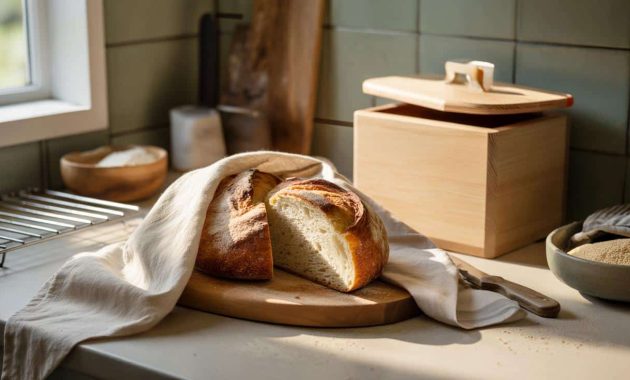
The loaf was still warm when you brought it home. Crust crackling, flour on your fingers, that smell that turns a “quick stop at the bakery” into a small life event. Fast forward to the next morning: you reach for the same bread and… the crust has gone leathery, the crumb is dry, and suddenly toast seems like the only option. The day after that, it’s hard enough to qualify as a kitchen weapon.
We’ve all been there, that moment when you hesitate between throwing it out or pretending it’s “perfect for croutons.”
There’s a quiet trick bakers and grandmothers use, one that doesn’t involve plastic, or a humming fridge, or fancy bread boxes.
It sits right on your counter.
And almost nobody talks about it.
The old-school method that quietly beats the fridge
Ask a traditional baker how to keep bread fresh and they often give the same answer, almost without thinking: linen or cotton, on the counter, in a cool corner. That’s it. No zip bags, no Tupperware, no complicated hack from the depths of social media. Just breathable fabric around a good loaf.
It sounds almost too simple in a world obsessed with airtight containers and smart kitchen gadgets.
Yet this old trick respects what bread actually is: a living, drying, slowly aging food that needs to breathe, not suffocate.
Picture a farmhouse kitchen, no fridge dedicated to bread, no roll of plastic on hand. The daily loaf sits on the table, loosely wrapped in a clean tea towel, sometimes slipped into a wooden box or a clay pot with the lid just resting, not sealed.
Three days later, the crust is a little softer, the crumb slightly chewier, but the bread is still alive. You can slice it without crumbs flying everywhere. You can tear it by hand without feeling like you’re snapping a dry twig.
This scene isn’t nostalgia. It’s what happens when bread is kept in a breathable microclimate instead of a moisture trap.
Bread ages because the water in the crumb moves and the starches reorganize themselves. Put it in the fridge and that process speeds up, even if it feels “soft” for a moment. Wrap it in plastic and you trap humidity; the crust loses its crispness, and the inside can turn gummy before it dries out.
Fabric does the opposite. It lets a gentle amount of air circulate, slows down evaporation, and still protects the loaf from drafts and dust.
The bread doesn’t stay “like day one”, but it stays edible, honest, and surprisingly good for several days.
Exactly how to keep bread fresh for days without plastic or a fridge
The best method is almost disarmingly simple. Let your bread cool completely, if it’s still warm, so steam doesn’t get trapped. Then wrap it in a clean, dry linen or cotton cloth: a tea towel, a napkin, even an old pillowcase cut in half.
Place the wrapped loaf cut-side down on a wooden board or slide it into a breathable container: a wooden bread box, a ceramic pot, a fabric bread bag. Leave a tiny bit of space so air can still move.
Keep it away from the oven, from sunny windows, and from the dishwasher’s steam. A calm, shaded corner of the counter is ideal.
Most people do the opposite without thinking. They slice the bread, shove it in the fridge “to keep it fresh”, or cram it into a plastic bag because that’s what they’ve always seen. The next day the crust is sad, the inside tastes stale, and the loaf quietly migrates to the freezer or the trash.
Let’s be honest: nobody really does this every single day with surgical discipline. Life happens, kids touch everything, you forget the loaf in a shopping bag.
The idea isn’t perfection. It’s giving your bread a fighting chance by avoiding the two worst enemies: cold air and suffocating plastic.
Bread doesn’t want to be embalmed. It just wants a calm place to grow old slowly.
- Use natural fabric only
Linen or cotton works best. Synthetic fibers don’t breathe the same way and can trap odd smells or moisture. - Wrap loosely, not tightly
The goal isn’t to vacuum-pack the loaf. A soft, loose wrap keeps the crumb from drying too fast while letting the crust stay itself. - Store cut-side down
If the bread is already sliced or cut, press that side gently against the board under the cloth. It limits air contact where the crumb is exposed. - Avoid warm, steamy spots
Placing bread near the stove, kettle, or dishwasher speeds up staling and can even invite mold. - *Revive, don’t regret*
If the crust feels tired after a couple of days, sprinkle it lightly with water and warm it for a few minutes in the oven. The loaf comes back to life.
Living with bread instead of fighting against it
Once you stop trying to “freeze time” and start working with the natural rhythm of bread, the whole relationship changes. You don’t panic when the crust softens a bit. You don’t feel guilty when the loaf isn’t perfect on day three. You just adjust how you use it: slices for sandwiches the first day, toast and soup accompaniments the next, chunky pieces for baked dishes after that.
This simple linen-wrap habit also quietly cuts down on plastic in your kitchen and gives your counter a more human, less packaged look. It’s a small daily gesture that feels oddly grounding.
There’s something almost intimate in unwrapping a loaf each morning, like opening a small everyday gift. You feel the weight, check the crust with your fingers, decide what that bread wants to be today. It leaves room for improvisation, for using what you have instead of chasing perfection.
And that’s the real secret behind “keeping bread fresh for days”: not a miracle trick, but a way of living with food that accepts time, respects the product, and still fits real life, with all its rush and shortcuts.
| Key point | Detail | Value for the reader |
|---|---|---|
| Breathable storage beats plastic | Wrap bread in linen or cotton and keep it in a cool, shaded spot on the counter | Loaf stays tasty and usable for several days without going soggy or rock-hard |
| Avoid the fridge for bread | Cold temperatures speed up starch retrogradation and staling | Better texture, flavor, and less waste from bread that “dies” too fast |
| Revive instead of throwing away | Lightly moisten the crust and warm the loaf briefly in the oven | Rescues tired bread, stretching your budget and reducing food waste |
FAQ:
- Question 1Does this method work for supermarket sliced bread?
- Answer 1Not really in the same way. Industrial sliced bread is loaded with preservatives and is designed to live in its plastic bag. The linen method shines with bakery-style loaves, sourdough, and rustic breads.
- Question 2How many days can I keep bread like this on the counter?
- Answer 2For a good crusty loaf, expect 2–4 days of pleasant eating, sometimes more if your kitchen is cool and dry. After that, it’s still usable for toast, croutons, or recipes on day 5 or 6.
- Question 3Should I slice the whole loaf at once or only as needed?
- Answer 3Slice as you go when possible. A whole loaf wrapped in fabric keeps moisture better than a stack of slices exposed to air. If you need pre-sliced bread, keep the cut side protected and well wrapped.
- Question 4What if mold appears on the bread?
- Answer 4If you see mold, don’t cut around it. Discard the whole loaf, as mold threads can spread invisibly. Then wash or boil the cloth and wipe down your storage area before using it again.
- Question 5Is a wooden bread box better than just a cloth on the counter?
- Answer 5A wooden box plus cloth is ideal: the box buffers temperature and light, the fabric manages humidity. If you don’t have one, a simple cloth wrap in a calm corner of the kitchen already does most of the job.
➡️ This master gardener reveals the ideal time to sow without fearing drought in 2025
➡️ People who sleep with a pillow between their knees often avoid this common back problem