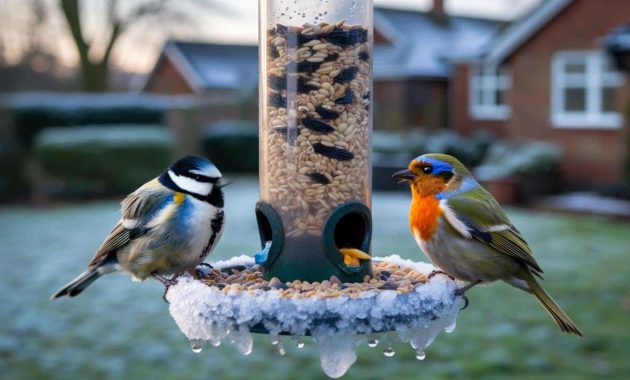
Yet one tiny oversight can quietly turn deadly.
Across the UK and beyond, people top up feeders with the best of intentions, believing they are helping birds survive the cold. Few realise that what happens when those seeds get damp can trigger disease, starvation, and a chain reaction of deaths in the very flocks they are trying to protect.
When winter kindness backfires on the feeder
Most people who feed birds in winter share the same instinct: fill the feeders right up so nothing runs out. It feels generous, and it saves trudging into the garden in freezing rain.
The problem starts the moment moisture joins the party. Rain, sleet, wet snow, even dense fog can seep into seeds. Once water reaches the heart of a seed mix, the damage begins long before it looks spoiled.
As soon as birdseed stays damp, it stops being high-energy winter fuel and starts becoming a slow, invisible health hazard.
Cold weather tricks us. The feeder still looks full, the seeds still look plentiful, and the setup feels reassuring. Yet inside that pile of grain, nutrition declines, moulds take hold, and the risk to birds rises day by day.
Why wet seeds can kill small birds
Damp seeds are not just “a bit off”. They can become seriously dangerous. In a wet, cramped feeder, three things tend to happen fast:
- seeds swell and break down
- moulds and fungi colonise the surface
- bacteria feed on droppings and rotting material
One of the most worrying outcomes is fungal growth such as Aspergillus, which can cause respiratory disease in birds. Another is bacterial infections, including salmonella, which spreads easily wherever many birds gather.
At a crowded winter feeder, one dish of infected, wet seed can sicken dozens of birds in a matter of days.
Sick birds move slowly, fluff up their feathers and become easy targets for predators. Many simply do not have the fat reserves to fight off infection while coping with sub-zero nights. For small species weighing just a few grams, one bad meal can be the beginning of the end.
➡️ Meteorologists warn early February could trigger a high risk Arctic breakdown scenario
➡️ Gardeners who stop chasing symmetry notice healthier plant behavior
➡️ Lara Croft is back with two new Tomb Raider games, but something major has clearly changed
➡️ Finally, A Super-Powerful Electric Mountain Bike For Cheap At Decathlon
➡️ Am Wochenende besucht Martin seine große Liebe im Heim, doch die restlichen Tage sind furchtbar leer
Frozen seed: the hidden energy trap
Moisture brings another, less obvious danger once temperatures drop sharply overnight. Wet seed in a feeder can freeze into a solid block. To us it looks like a harmless clump. For a robin or a blue tit, it is closer to concrete.
Birds trying to peck out single seeds must hammer at the icy lump, burning precious calories without much reward. On short, dark winter days, that wasted energy really matters.
In winter, many small birds live almost hour by hour; an evening spent burning energy on frozen seed can cost them the fat they need to survive the night.
That frozen mass also blocks access to any dry seeds trapped inside. So even if there is food technically present, it is effectively locked away at the moment birds need it most.
How to keep birdseed safe, dry and truly helpful
The good news: avoiding these problems is fairly simple. It requires more attention than filling a huge feeder once a week, but the payoff in bird survival is real.
Choose feeders built to fight moisture
Some feeder designs cope with winter better than others. A few key features make a big difference:
| Feeder type | Best use | Moisture advantage |
|---|---|---|
| Tubular seed silos | Sunflower hearts, seed mixes | Small openings, less surface exposed to rain |
| Covered tray feeders | Mixed seeds, scattered feed | Roof keeps most rain and snow off |
| Mesh peanut feeders | Peanuts, suet pellets | Air flow helps seeds dry more quickly |
Whatever the style, drainage is crucial. The base of the feeding area should have holes, mesh or gaps so water can escape instead of pooling beneath the seeds.
Ration like a pro, not a hero
Many problems start with feeders that are simply too full. A better approach is to offer smaller, fresher portions.
- Put out only what birds are likely to eat in a single day.
- Top up in the morning so food is available during the coldest, hungriest hours.
- Shake the feeder to loosen clumps and check for damp pockets.
Less seed, refilled more often, is safer and healthier for birds than a huge, soggy “all-you-can-eat” pile.
Yes, it means stepping outside more frequently, yet those extra minutes can prevent disease outbreaks on your own doorstep.
Hygiene habits that cut winter deaths
Shared feeders act like busy cafés. Without cleaning, they quickly turn into perfect spaces for germs.
Simple steps go a long way:
- Empty and scrub feeders regularly with hot water and a splash of vinegar.
- Allow them to dry fully before refilling.
- Remove any seed that smells sour, looks clumped or shows the slightest sign of mould.
- Move feeders from time to time so droppings do not build up in one spot.
Think of your feeder as shared cutlery for wildlife: if you would not eat off it, they should not either.
Birds often return to the same gardens year after year. Clean, dry feeding points can support healthy local populations through multiple winters.
Where you place the feeder also matters
Location changes how wet your birdseed becomes. A feeder hung fully exposed to driving rain will always be harder to manage than one slightly sheltered.
Good spots include:
- under the edge of a sturdy tree, high enough to avoid cats
- near a wall or fence that blocks prevailing winds
- beneath a deep overhanging roof or pergola
At the same time, birds need a quick escape route. Avoid places where predators can lurk, such as dense shrubs right underneath the feeder.
What actually happens inside a wet seed mix?
For anyone wondering why dampness is such a problem, a little biology helps. Once seed stays wet for more than a few hours, microbes use its starch and oils as food. They multiply rapidly, releasing by-products that birds are not adapted to digest in large amounts.
Fermentation can also change the smell and taste, which may attract some birds despite the damage. They often cannot “sense” the risk the way we would with obviously rotten food.
Many wild birds will continue to eat contaminated seed because hunger pushes them to take risks they would avoid in easier seasons.
This is one reason winter feeding is so sensitive: birds are stressed, desperate, and far less choosy.
Practical winter scenarios for your garden
Imagine a wet week in February. You filled your feeder to the brim on Sunday. By Wednesday, repeated showers have soaked the middle of the seed column. Outside, the outer layer looks fine. Inside, invisible mould threads are spreading. Birds keep arriving, sharing the same perches, the same food, and the same germs.
Now picture a different routine. You half-fill a narrower silo each morning. You give it a quick check with a wooden spoon, stirring and checking for clumps. On the third day of heavy rain, you throw away anything slightly damp, rinse the feeder, leave it to drain, then refill. The birds get less overall seed at once, but more of them stay healthy long enough to enjoy it.
The change is small at human scale. At bird scale, it is the difference between a risky feeding station and a genuinely safe winter resource.