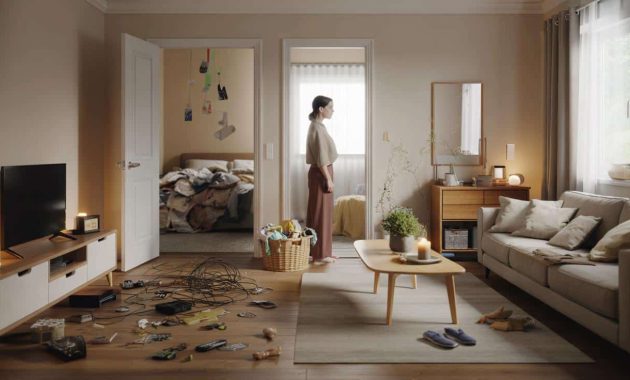
The living room looks decent at first glance. Cushions plumped, coffee table wiped, toys relegated to a single proud basket against the wall. You take a photo for your own satisfaction and for a second, it almost passes for something out of a magazine. Then your eye catches the corner behind the sofa where dust bunnies have formed a small community. The “misc” drawer in the hallway is bulging again. The laundry pile you pushed into the bedroom is silently waiting like a reproach.
The room is calm, but you don’t feel calm.
You’ve cleaned the visible mess, and yet the weight is still there.
Something in this picture doesn’t quite add up.
Why surface-only cleaning keeps failing on you
There’s a strange cycle that happens in a lot of homes. You spend a whole Saturday blitzing the visible mess: counters, sofa, dishes, whatever’s on the floor. For a moment, you get that sweet hit of satisfaction. Then, barely a day later, the house looks like you did nothing at all. It’s like throwing a blanket over a pile of clutter and calling it “done”.
What you’ve really cleaned is your anxiety, not your environment.
The chaos under the bed, at the back of the wardrobe, in the overstuffed inbox and the random baskets? Still there. Just waiting for its cue.
Picture this: you’re expecting guests at 7 p.m. At 6:15, you’re doing that frantic, slightly sweaty round through the house. The “good” plates come out. Surfaces get wiped with a speed that would impress a Formula 1 team. Anything without an obvious home is scooped into bags, baskets, drawers. Doors are shut on rooms that don’t pass the vibe check.
By 6:58, the hallway is clear, the table looks charming, and your bathroom is almost unrecognizable. Your guests compliment how tidy everything is. You mumble something about “trying to keep on top of it” and smile.
Then, two days later, you open that one stuffed drawer and everything you hid comes tumbling out.
➡️ “I feel tense when there’s nothing to worry about”: what psychology says about this reaction
➡️ A powerful soaking method revives cast iron pans even after years of buildup
➡️ Legendary rock band calls it quits after 50 years the hit everyone knows was never really that good
➡️ This is what happens when you clean without a clear end point
➡️ I found a simple way to keep gardening all winter (without using a greenhouse)
This happens because visible cleaning deals with symptoms, not causes. The real problem isn’t dust on the TV stand; it’s the fact you own 14 old remotes and three of them don’t even belong to current devices. The problem isn’t the pile of clothes on the chair; it’s that your wardrobe is already full, so clean laundry has nowhere to land.
Our brains love quick wins. Wiping a counter is fast. Sorting a decade of paperwork is not. So we clean what other people will see and postpone what only we know about. *That’s why your home can look “tidy” and still feel like a mental minefield.*
The mess comes back because it never truly left.
How to clean in a way that actually lasts
A lasting clean usually starts in a place nobody else will praise you for. Not the shiny kitchen island, but the junk drawer, the bathroom cabinet, the teetering pile of “important papers” on top of the fridge. Pick one small, very specific hidden zone and commit to actually emptying it.
Touch every object. Decide: keep, toss, donate, or relocate. Give what you keep a clear, logical home that future-you can find without thinking. This isn’t about perfection or matching containers from Instagram. It’s about cutting the number of decisions you have to make tomorrow.
Visible calm lives on invisible systems.
A lot of people fall into the same quiet trap. They think cleaning means “putting things away fast”, so they move clutter from public spaces to private ones. Bedroom chairs become storage units. Wardrobes turn into archaeological sites. The basement becomes a museum of unfinished intentions.
Here’s the plain truth: **piling things in new places is not cleaning, it’s rescheduling the stress.**
If this is you, there’s nothing wrong with you. You’re not lazy, you’re overwhelmed. Start shrinking the mess by stopping the inflow. Say no to free stuff, slow down your online shopping, unsubscribe from brands that constantly tempt you. Less coming in means less to hide later.
We’ve all been there, that moment when you’re standing in a “tidy” room knowing full well the real mess is just out of sight, and you wonder why you still feel so heavy.
- Start small, but go deep: One drawer, one shelf, one box. Finish it completely before moving on.
- Create a “not today” bin: Items you’re unsure about go here. Revisit it in a month with a cooler head.
- Set a 15-minute timer: Short bursts of focused, behind-the-scenes work beat rare marathon cleans.
- Label homes for things: Simple handwritten labels cut down on “Where does this go?” fatigue.
- Protect one clear surface:
Think of it as your daily reset point, the place that reminds you what “done” can feel like.
Living in a home that isn’t pretending
There’s a different kind of clean that doesn’t scream for attention in photos, but you feel it in your shoulders. It’s when the cupboard under the sink isn’t a booby trap. When opening your wardrobe doesn’t trigger a small crisis about your past selves. When you know exactly where the spare batteries live, and you don’t have to go on a 20-minute hunt through old Christmas decorations to find them.
That kind of calm doesn’t come from polishing the coffee table every day. It comes from slow, slightly boring decisions about what truly deserves space in your home. It’s not glamorous, and most of it will never show on Instagram. Yet it quietly changes how your mornings begin and how your nights end.
When the invisible zones start to match the visible ones, something shifts. You don’t tense up at the idea of surprise visitors. You stop feeling like a fraud in your own clean house. The urge for huge, dramatic cleaning days fades because nothing ever gets quite that out of hand.
Let’s be honest: nobody really does this every single day. Life gets loud, kids grow, jobs change, seasons roll in with their own clutter. But once you’ve experienced a home that isn’t hiding its chaos behind shut doors, it’s hard to go back. You start noticing how much energy you used to spend tracking lost items, apologizing for the mess, or bargaining with yourself about those mystery boxes in the attic.
That’s the hidden payoff of not just cleaning the visible mess. It’s not about becoming a minimalist saint or folding your socks into perfect little clouds. It’s about walking through your front door and not feeling like your home is another job waiting for you. If anything in this feels raw or uncomfortably true, that’s usually a sign you’re ready for a different way of living with your stuff.
Maybe you start with one drawer tonight. Maybe you just open the cupboard you avoid and look at it for a minute without turning away. **Small honest actions beat big performative cleans every time.**
The question isn’t “How can I clean faster?” anymore. It’s “What could my life feel like if my house wasn’t hiding anything from me?”
| Key point | Detail | Value for the reader |
|---|---|---|
| Surface cleaning is temporary | Only treats what’s visible and leaves root causes untouched | Helps explain why mess keeps coming back and reduces guilt |
| Systems beat speed | Creating homes for items and reducing inflow matters more than quick sprints | Offers a realistic path to a home that stays calmer for longer |
| Start small, go deep | Focus on one hidden area at a time instead of whole-house overhauls | Makes change feel doable and less overwhelming day to day |
FAQ:
- Question 1Why does my house look messy again just days after a big clean?
- Question 2Where should I start if my hidden clutter feels overwhelming?
- Question 3How do I stop shoving things into drawers and closets before guests arrive?
- Question 4Can I get lasting results if I only have 10–15 minutes a day?
- Question 5What if other people in my home don’t care about systems or decluttering?