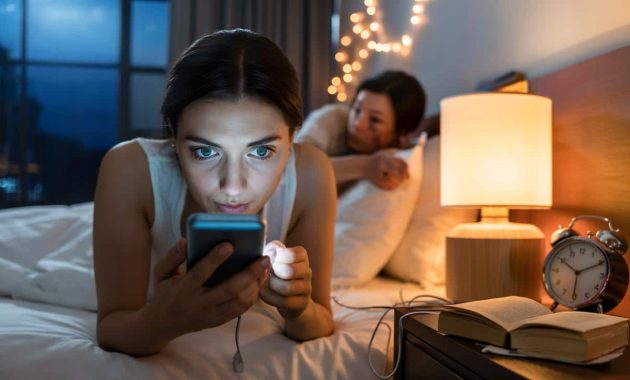
The shift feels harmless, until mornings arrive with foggy focus and heavier eyelids.
Over the past decade, the final hour of the day has filled with messages, reels, and alerts. Researchers now tie those rituals to shorter sleep, shallower rest, and edgier moods the next day. Families notice it at home. Teachers see it in classrooms. Employers feel it in productivity. The pattern looks small on any single night. Over weeks, the cost adds up.
The biology that keeps you awake
Light after dusk pushes the body’s clock later. Blue-leaning wavelengths from phone screens suppress melatonin, the hormone that signals “night mode.” Italian sleep labs have measured a drop of roughly a fifth after an hour of evening screen exposure. Many people also take longer to fall asleep—often by 25 to 35 minutes.
The alert brain effect
It isn’t just light. Scrolling primes attention networks built for novelty and vigilance. The brain stays on guard, scanning for the next reward. Heart rate ticks up a few beats. Muscles hold more tension. That chemistry fights the glide into deep sleep.
- Melatonin suppression after an hour of evening screen use: about 20–25 percent
- Average heart rate increase: around +5 beats per minute
- Delay to fall asleep compared with no screens: roughly +26 to +34 minutes
Using a smartphone within 30 minutes of lights-out correlates with about 40 minutes less total sleep, according to 2023 health data.
The “infinite scroll” is designed to keep you there
Endless feeds and triggering notifications pull you into one more clip. App design leans on variable rewards and social cues that nudge you to keep tapping. Young adults report evening anxiety when their phone goes dark for even half an hour. That unease raises cortisol, the stress hormone, which then dents sleep depth and next-day mood.
When a habit becomes a loop
Less sleep brings irritability and slower thinking. Many people respond with more nighttime distraction, which shaves off another slice of rest. The loop tightens: tired mind, anxious scrolling, lighter sleep, repeat.
Learning, memory and next-day performance suffer
Schools in northern Italy tracked grades against late-night phone use. Students who kept using phones past 10 p.m. scored lower on average and showed morning fatigue. Teachers flagged weaker attention and shakier recall of complex material. Adults aren’t immune. Employers report more errors after short nights, plus cautious decision-making that slows work.
Lack of sleep does not just reduce hours in bed. It reduces slow-wave and REM sleep, the phases that consolidate memory and steady emotion.
Households feel the friction
Home life absorbs the conflict. Many parents argue nightly about when phones go off. Couples raise the glow of a screen in bed as a source of tension. What begins as convenience eats into shared routines—talking, reading, winding down together.
➡️ Windscreen frozen on the inside : every driver should know 5 tricks
➡️ We may finally know what really causes social anxiety – and how to fix it
➡️ At a blistering 603 km/h, this new maglev officially becomes the fastest train ever built
➡️ Shocking: How 1 Drop of This £299 Oil Erased My Under-Eye Bags Overnight – Before/After Proof
➡️ A bay leaf under the pillow: The small night routine I once mocked – until it changed my sleep
Agree on boundaries before bedtime starts
People stick to limits when they set them early and together. Choose a time. Choose a place for devices to sleep. Put those choices in writing on the fridge. The goal isn’t deprivation. It’s to protect the hour when the brain transitions from alert to drowsy.
What to change in the last hour
| Habit | Expected benefit |
|---|---|
| Switch to airplane mode or power down 60 minutes before bed | Longer sleep duration, often around +30 to +40 minutes |
| Charge the phone outside the bedroom | Fewer night wakings and less urge to “just check” |
| Use paper reading or calm audio instead of video | Higher perceived sleep quality and easier sleep onset |
| Shift to warm, dim light after dinner | Supports natural melatonin rise and earlier drowsiness |
Make the environment do the work
Move the charger to the kitchen. Set a simple alarm clock on the nightstand. Put the TV remote in a drawer by 9 p.m. Many phones now include “digital well‑being” tools that pause notifications and lock distracting apps after a chosen hour. Filters and night modes help a bit, but they don’t address the stimulation of social feeds, games, and email.
Treat the bedroom as a low‑stimulation zone: cool, dark, quiet, and phone‑free.
From individual routines to community norms
Health systems across Europe report more sleep complaints tied to heavy evening device use over the past few years. Public health agencies now urge tech makers and workplaces to support calmer nights: scheduled notification batches, fewer after‑hours pings, and phone‑free settings in hotels or overnight transport. Some cities even test zones that cut connectivity after late hours to encourage real rest.
How to test your own cutoff time
Try a 7‑night reset. Pick a phone curfew—start with 45 minutes before bed. Note your sleep onset and any wakings in a small notebook. Keep caffeine before noon. Keep lights low after dinner. If the week goes well, move the cutoff to 60 minutes. Compare mood and focus at 10 a.m. on day one versus day seven. Most people see faster sleep onset and a clearer mid‑morning window.
What about blue‑light glasses and melatonin gummies?
Orange‑tinted lenses can reduce blue light, which helps a piece of the puzzle. They do not remove the mental stimulation from feeds and work chats. Over‑the‑counter melatonin may help for short stretches, but dose and timing matter a lot. Many take it too late or too much and wake groggy. If you rely on it most nights, speak with a clinician and adjust the plan toward behavior first.
Signals you’re over‑stimulating at night
- You need several “last scrolls” to put the phone down.
- Your mind replays clips or replies when the lights are off.
- You wake at 3 a.m. and reach for the screen without thinking.
- Your morning mood lifts only after your first dopamine hit online.
Small swaps with big returns
Replace ten minutes of feeds with a page of a book you enjoy. Swap bright overheads for a bedside lamp. Queue a short, slow playlist. Put the notebook and pen on the pillow before brushing teeth, so you can quickly park tomorrow’s to‑dos. Those cues guide the brain toward a predictable shut‑down. Over a month, the extra deep sleep reduces late‑night hunger, steadies blood sugar swings, and softens anxiety the next day.
For shift workers and new parents
If your schedule runs late, build a pre‑sleep buffer whenever your “night” starts. Dim lights for 30 minutes. Avoid scrolling in bed to associate the mattress with sleeping, not swiping. A warm shower can accelerate the drop in core temperature that nudges sleepiness. If you must use a device for soothing music, place it across the room and pre‑load the audio so you don’t drift into feeds.