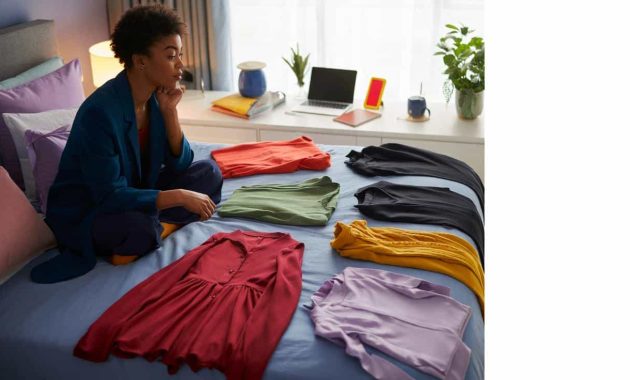
The question always seems innocent: “What’s your favourite colour?”
You answer on autopilot—blue, red, black, whatever—and move on. No one expects it to matter. Yet psychologists quietly smile when people talk about colour, because they know those quick answers often reveal things you’d never say out loud.
Think of your wardrobe, your phone case, the mug you reach for every morning. Those shades repeat for a reason.
And sometimes, your favourite colour knows you better than you do.
Your favourite colour is a quiet personality test
Look around the room you’re in right now. There’s probably one colour that keeps popping up—on your blanket, your sneakers, your notebook, even your screensaver. That dominant shade isn’t just a style choice. It’s a tiny psychological mirror.
Researchers in colour psychology have been mapping these preferences for decades. They’ve found that people drawn to strong, saturated colours often live life with the volume up. People who love softer tones tend to crave calm, depth, or safety.
You don’t need a lab coat to notice this pattern, either. Just watch who wears what, and when.
Picture a job interview waiting room. One candidate sits in a clean navy blazer, another in a crisp white shirt, a third in a bold red dress. Same level of qualifications, same nervous smile. Yet your brain makes snap judgments before anyone speaks.
Studies show that blue often signals reliability, red signals confidence and energy, while white can suggest simplicity or caution. The funny thing is, people who consistently love these colours tend to behave in ways that match them. The “blue” person may be the loyal friend who remembers birthdays. The “red” person might be the one who always volunteers to speak first.
We don’t realise how much our colour leanings shape the stories others tell about us.
Psychologists believe this comes from a mix of biology, culture, and personal history. Red triggers arousal in our nervous system, linked to danger and excitement, so bold personalities naturally gravitate toward it. Blues and greens remind us of sky and nature, which our brains associate with safety and stability.
➡️ What if grey hair is a natural defence against cancer? What the science says
➡️ Psychology points to the three colors smart people use
➡️ Nivea cream under fire experts say your skin may be paying the hidden price
Then you add life experience. Maybe your grandmother always wore emerald earrings, and green quietly became your comfort colour. Or your strict school uniform was grey, so you now avoid that shade like a bad memory. Over time, your favourite colour becomes a code: part instinct, part memory, part identity.
*You’re not just picking a colour; you’re picking a feeling you want to live in.*
What your go-to colour may reveal (and how to use it)
There’s a simple habit that turns colour from a random preference into a personal compass. For one week, notice every time you choose a colour: clothes, apps, notebooks, lipstick, even food packaging. Jot it down quickly on your phone. No judgment, no theory, just tracking.
At the end of the week, circle the shades that show up again and again. Then look at these classic patterns from colour psychology and see what resonates: blue for trust and calm, red for passion and action, green for balance and growth, yellow for optimism and visibility, black for control and sophistication, purple for imagination and depth.
The goal isn’t to put yourself in a box. It’s to notice which box you keep walking into voluntarily.
Here’s a common scene. Someone says their favourite colour is yellow, all joyful and bright. Yet they show up at work in grey and black every day “to look serious”. They hide the side of themselves they actually need more of—warmth, play, visibility.
Another person claims to love minimalist black, head to toe. They feel safe in it, powerful even. Underneath, they might be terrified of being seen as soft or messy, so colour becomes emotional armour. That doesn’t mean black is bad. It just means the love for black might be carrying a story about control, grief or reinvention.
When you start spotting these tiny contradictions, your relationship with your own wardrobe gets surprisingly deep, fast.
Colour psychologist Angela Wright once said something striking: “We respond to colour emotionally first and intellectually second.” That order matters. Your favourite colour is often your emotional home base long before you can explain why.
- If you love blue
You might value loyalty, calm, and clear communication. Blue-lovers often hate drama but can also hide their own needs to “keep the peace”. - If you love red
You may crave intensity, challenge, and attention. Red people are great initiators, yet they sometimes burn out or steamroll quieter voices without noticing. - If you love green
Balance, growth, and security tend to matter to you. You might be the mediator friend, yet feel secretly exhausted by always holding everyone together. - If you love black
You often seek control, mystery, or a fresh start. Black can signal elegance, but it can also hide vulnerability you don’t quite trust the world with. - If you love purple or pink
Imagination, sensitivity, and emotional intensity are rarely far away. You may feel misunderstood at times, yet you’re often the one who sees beauty where others see nothing.
Let your colours talk back to you
Once you see the patterns, it becomes harder to pretend your favourite colour is “just a random choice”. You might notice your blue phase started when life felt chaotic, or your sudden love of green arrived when you were trying to reset your habits. Shades you once hated may slowly become appealing as you grow into a new version of yourself.
There’s something strangely tender about opening your closet and realising it has been quietly documenting your emotional weather. Not perfectly, not scientifically, but honestly enough.
Let’s be honest: nobody really does this every single day. Yet giving yourself ten quiet minutes, looking at the colours you live in, can feel like reading a soft, visual diary you didn’t know you were keeping.
| Key point | Detail | Value for the reader |
|---|---|---|
| Colour reflects emotional needs | Favourite shades often match needs for calm, control, excitement or safety | Helps you understand why you feel drawn to certain environments or clothes |
| Preferences shift with life stages | People report “phases” of colours that align with breakups, moves, or new jobs | Gives you a gentle tool to track personal growth and hidden transitions |
| Using colour intentionally | Choosing colours that support the mood you want, not just the one you’re in | Offers a simple way to nudge confidence, calm, or creativity in daily life |
FAQ:
- Does my favourite colour really say something about my personality?Not in a rigid, horoscope-style way, but patterns do show up. Your colour preferences often reflect emotional needs, values, and the kind of energy you feel comfortable in.
- Can my favourite colour change over time?Yes, and that shift can be revealing. People often move towards new colours during big life changes, like a breakup, a new job, or becoming a parent.
- What if I don’t have a single favourite colour?That’s normal. Look at which colours you choose in different contexts: work, home, dating, relaxation. Each one may express a different side of you.
- Are some colours “better” for personality than others?No colour is superior. Bright, dark, pastel, or neutral tones all carry different messages. The key is how aligned they feel with who you are and how you want to show up.
- Can I use colour to change my mood or behaviour?Yes, to a point. Soft blues and greens can support calm, while reds and yellows can energise or increase visibility. It’s not magic, but it’s a helpful nudge for your brain and body.