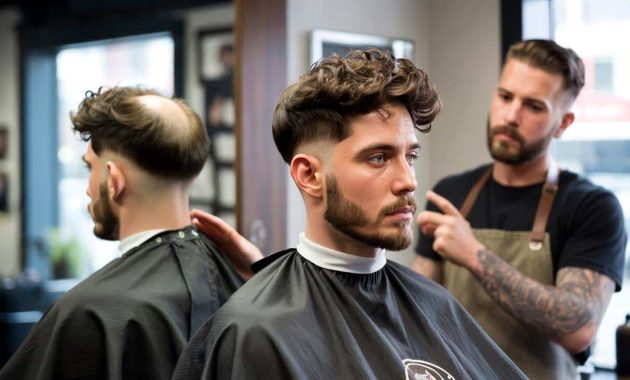
On a gray Tuesday afternoon, the kind of day when the city feels slightly out of focus, a guy in his late twenties walks into a small barbershop with a screenshot held up on his phone. It’s the same photo barbers say they see ten times a week now: a perfectly sculpted, fluffy, textured “modern crop” with a razor-clean fade and effortless volume on top.
The barber glances at the photo, then looks at the man’s hair. Thick, a little stubborn, starting to curl at the temples. He smiles politely and asks the same question he always asks: “How much time do you spend on your hair in the morning?” The guy shrugs. “Two minutes, maybe?”
The barber knows the truth before the first snip.
This is going to be a problem.
The haircut men love… until they get it
Across barbershops from London to Los Angeles, professionals are warning men about one particular style that keeps coming back like a boomerang: the ultra-clean fade with textured volume on top. That “sharp sides, messy on purpose top” look you see on footballers, influencers, and half of Instagram Reels.
On your screen, it looks like the definition of low-effort cool. Sharp, masculine, just-rolled-out-of-bed-but-somehow-perfect. In the chair, though, barbers know this cut behaves very differently in real life.
Especially once you leave the barbershop light and step into your own bathroom mirror.
Barber chairs everywhere have a similar story. A client shows a photo of a mid-skin fade with a heavy textured fringe, or that fluffy, lifted “TikTok” style where the top falls just right over the forehead. He says he wants something “easy to style, nothing crazy.”
Three weeks later, he’s back, frustrated. The fade has grown out and now looks bulky around the ears. The top has collapsed into an awkward puff that won’t sit correctly. The once-crisp hairline is soft and fuzzy. “It just doesn’t look the same anymore,” he complains.
The barber gently explains that the photo he brought in was taken on day one, under perfect light, after a professional blow-dry and styling routine he’s not repeating at home.
➡️ This is why some replies feel cold even when they aren’t
➡️ This diabetes drug could actually slow down the passage of time
➡️ This creamy baked dinner is quietly satisfying
➡️ If you feel unsettled by change, psychology explains how your brain seeks predictability
What many men don’t realize is that this kind of highly structured cut lives and dies on maintenance. A high or mid-skin fade needs a refresh every 10–14 days to stay sharp. The textured, layered top demands product, direction, and sometimes heat. Hair density, natural growth patterns, and even how you sleep can wreck the shape in a week.
The fantasy is “I’ll wake up, run my hands through it, and I’m done.” The reality is a cycle of appointments, touch-ups, and learning how to coax your hair into that just-right mess every morning.
*The gap between the photo and your actual routine is where this haircut starts to fall apart.*
Why this popular cut secretly demands so much work
Ask any experienced barber which part of this style causes the most trouble, and they’ll point to the fade. That ultra-smooth transition from skin to length, with no visible lines, is a precision job that only looks clean for a short window of time. As your hair starts to grow, the crisp contrast softens and the haircut can suddenly look unfinished.
On top of that, the layered, textured crown is cut to fall a very specific way. It’s not random. It’s built like a sculpture, designed to move with product and direction. Once you wash out that carefully applied clay or powder, gravity takes over. And gravity rarely has the same aesthetic instincts as your barber.
One barber in Manchester described a regular client who insisted on the same influencer-style cut every time. The first week, the guy walked around like a walking advert for the shop. By day ten, he started wearing caps because the fade had lost its razor edge and the top wouldn’t stay up without a full styling session.
“We’ve all been there, that moment when you look in the mirror and realize the haircut you loved yesterday already looks slightly off.” Multiply that by three weeks of growth, and the contrast that looked edgy at first now just looks uneven. The sides puff out, the crown gets flat, and the front either splits or hangs wrong over the forehead.
By the time he came back for a refresh, what he really wanted wasn’t just a cut. He wanted the original photo back.
There’s a simple explanation: this style goes against how most men actually live. It’s a haircut built for people who have both the budget and the discipline to treat it like a grooming habit, not a one-time event. Fresh fades every two weeks. Blow-drying for direction instead of letting hair air-dry randomly. Using the right product in the right amount.
Let’s be honest: nobody really does this every single day. Most men shower, towel-dry, maybe add a dab of product, and call it a morning. That routine fits a classic scissor cut, or a slightly longer, softer style. It clashes with a high-maintenance textured crop designed for sharp lines and intentional volume.
So the cut doesn’t fail because it’s bad. It fails because it’s living in the wrong lifestyle.
How to live with this cut if you still really want it
If you’re still drawn to that crisp fade and styled top, barbers suggest treating the decision like getting a tattoo: think about the upkeep, not just the first day. Start by talking honestly with your barber before the clippers come out. Tell them how many minutes you’re willing to spend on styling, and how often you’re realistically going to come back.
From there, they can “downsize” the maintenance. Maybe a low fade instead of a skin fade. Slightly more length on the sides so it grows out softer. A top that’s textured, but not so short and layered that it needs a blow-dryer to look alive. These small tweaks can give you the vibe of the cut without chaining you to the barbershop chair.
At home, the routine doesn’t have to be complicated, but it does need to exist. A quick blast with a blow-dryer, guiding the hair in one direction with your fingers or a vent brush, already changes the game. A light matte clay or styling powder applied at the roots can bring back the structure you had on day one.
The biggest mistake men make is expecting the haircut to style itself. That’s when frustration hits, and the cut gets blamed instead of the routine. On bad-hair mornings, it’s easy to think, “This cut just doesn’t work on me,” when what’s really happening is that your hair is doing exactly what it always does.
The difference now is that the shape you paid for needs you to meet it halfway.
“Guys come in with these amazing photos of freshly done hair,” says Luis, a barber in Brooklyn with 14 years behind the chair. “I always ask: are you ready to treat this like sneakers you clean every week, or is this more like a T-shirt you throw on and forget? Because this cut is definitely not the T-shirt.”
- Ask your barber for a ‘grown-out plan’ – How will the cut look at two, three, and four weeks?
- Pick one product and learn it well – sea salt spray, matte clay, or powder, not all three at once.
- Book your next appointment before you leave the shop – especially if you want to keep the fade sharp.
- Choose a version that suits your hair type – thick, fine, straight, or wavy hair all behave differently.
- Accept a “medium version” of the Instagram photo – the one you can actually live with daily.
Choosing a haircut that fits your real life, not just your screen
There’s something almost symbolic about this whole story. A lot of men are walking around with haircuts designed for cameras and ring lights, not commutes, gym sessions, and rushed mornings. That doesn’t mean you have to give up on a sharp look. It just means there’s value in picking a style that stays attractive even when it’s not in its perfect, freshly cut phase.
Some barbers quietly say their favorite cuts are the ones that still look good “messy” on day 20. Slightly longer scissor cuts that grow out softly. Gentle tapers instead of dramatic fades. Textured tops that don’t collapse the second you skip product. These aren’t as viral on social media, but they often make clients happier in the long run.
The next time you sit in a barber’s chair with a screenshot in your hand, there’s a different question you can ask: not “Can you do this?” but “What’s the version of this that fits my life?” That small shift opens a more honest conversation about your patience, your mornings, and your budget.
It also gives your barber space to do what they do best: design a cut that respects both your face and your habits. A haircut isn’t just hair. It’s routine, mood, confidence, time, and a bit of self-respect layered into something you see in the mirror every day.
The right cut isn’t always the flashiest one. Sometimes, it’s the one that still feels like you when nobody else is looking.
| Key point | Detail | Value for the reader |
|---|---|---|
| Fades grow out fast | Sharp skin or mid fades lose their clean look within 10–14 days | Helps you plan realistic visit frequency and avoid “awkward phase” weeks |
| Styling is non‑negotiable | Textured tops need product, direction, and sometimes heat | Prevents disappointment when hair doesn’t fall like the inspiration photo |
| Adapt the cut to your life | Softer fades, more length, and honest talk with your barber | Leads to a version of the trend you can actually maintain every day |
FAQ:
- Question 1Which men’s haircut needs the most maintenance right now?
- Question 2How often should I get a fade retouched to keep it sharp?
- Question 3Can I get the “fluffy textured” look without using a blow-dryer?
- Question 4What should I tell my barber if I’m low-maintenance?
- Question 5My haircut looks great when I leave the barbershop, then terrible at home. What’s going wrong?