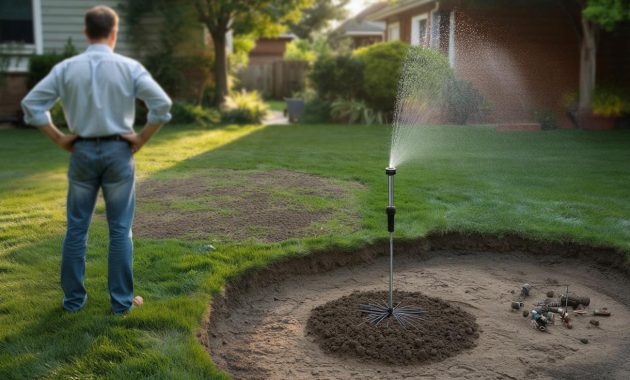
The sprinkler clicked in its steady rhythm, drops of water catching the late afternoon light. The yard should have looked like a golf course ad. Instead, the grass lay there in dull patches of brown and grayish green, like a cheap carpet that had survived one too many parties.
You’d checked the timer three times. You’d spread the “good” fertilizer from the bright bag that promised a lush lawn in two weeks. You’d stood there, hands on hips, feeling slightly judged by your neighbor’s greener yard next door.
Still, your grass refuses to cooperate.
At some point, you stop asking “Did I water enough?” and start wondering if you’re asking the wrong question entirely.
When water and fertilizer aren’t the real villains
Most struggling lawns aren’t starving. They’re suffocating. Down there, just below the surface, roots are fighting for space in compacted soil, trapped under a hard layer that looks harmless from above. You see yellowing blades and bare spots. The grass feels strangely spongy in some places and rock-hard in others.
Yet you keep reaching for the hose and the spreader, like they’re magic wands. It’s what every ad and bag tells you to do. Water more. Feed more. And still the lawn shrugs.
The uncomfortable truth is that many lawns fail not from neglect, but from the wrong kind of attention.
A homeowner in Ohio spent three summers chasing the perfect lawn. He installed a smart sprinkler system, scheduled early-morning watering, even upgraded to a more expensive fertilizer. His water bill climbed. His lawn did not. Patches thinned out along the walkway. The front strip near the street burned out every July.
One day, a local lawn specialist visited. Instead of asking about watering schedules, he grabbed a screwdriver and tried to push it into the soil. After a few inches, it stopped dead with a dull thunk. The problem wasn’t above ground at all. The soil was packed so tightly that roots could barely grow an inch deep.
The neighbor across the street, with a cheaper mower and no fancy apps, had loose, crumbly soil and deep roots. Guess whose yard stayed green during the next heat wave.
➡️ How Cats Show Affection: When They Do This, You’re Their Favourite Human
➡️ Sorry, the Matrix doesn’t exist: new mathematical proofs suggest the universe cannot be a simulation
➡️ The reason raised beds dry out faster and how to fix it long-term
Grass is a living system, not a plastic rug. It doesn’t just need water and nutrients; it needs air, space, and the right underground environment. When soil gets compacted by constant foot traffic, heavy mowers, kids, dogs, or even just years of neglect, the pores that hold air and water basically vanish.
Water runs off instead of soaking in. Fertilizer sits near the surface or leaches away instead of feeding roots. The lawn tries to survive on a shallow root system that burns out under summer stress.
So you water more, which leads to weak, shallow roots and even more disease pressure. A loop starts that looks like bad luck from the surface, but it’s just physics and biology beneath your feet.
The quiet fix hiding under your mower
The most underrated lawn move isn’t a new seed mix or a fancy fertilizer. It’s core aeration. That’s the process where a machine pulls small plugs of soil out of your lawn, leaving little cylinders scattered across the grass. It looks messy for a day or two, then quietly transforms how your yard breathes.
By removing those cores, you create channels where air, water, and nutrients can finally slip down to the roots instead of staying trapped near the surface. Deep roots start to form. Water stops pooling and begins soaking in. The lawn slowly shifts from surviving week to week to actually building resilience.
If you’ve never tried aeration, it can feel almost too simple. But simple doesn’t mean weak. In lawn care, it’s often the quiet adjustments that change everything.
Plenty of people fall into the same pattern: they notice the lawn struggling, they Google “best lawn fertilizer,” they buy the pricier bag, and they spread it with hope. That first small flush of green feels like success. Then summer hits hard, and the same thin patches return.
We’ve all been there, that moment when you’re standing in the yard thinking, “What else do you want from me?” The missing piece is usually that nothing below the surface has changed. The soil is still hardpan. Roots are still trapped in the top inch. Fertilizer becomes a short-lived bandage on a structural issue.
Let’s be honest: nobody really does this every single day. Nobody is out there poking their soil weekly or tracking compaction like a scientist. Yet a single aeration session, done at the right time of year, can deliver what months of guesswork with the hose never do.
*“Most homeowners blame themselves when their lawn fails,”* says a veteran groundskeeper who manages several city parks. “Nine times out of ten, it’s the soil, not the person. Grass is incredibly forgiving if you give its roots room to live.”
To break the cycle, you don’t need a complex spreadsheet of products. You need a short, practical checklist to reset how you think about the ground under your feet:
- Test the soil with a simple probe or screwdriver – if you can’t push it in 4–6 inches, compaction is likely.
- Schedule core aeration once a year in spring or fall, when grass is actively growing.
- Leave the plugs on the lawn to break down and feed the soil naturally.
- Top-dress with a thin layer of compost after aeration to rebuild structure and biology.
- Dial back water slightly once roots deepen, so the lawn learns to search downward.
The deeper story your lawn is trying to tell you
A struggling lawn is rarely just a cosmetic issue. It’s a conversation between you and the ground you walk on every day. Some lawns are shaded half the day by a maturing tree, and the grass underneath is losing a battle it was never going to win. Some sit on fill dirt dumped by a developer thirty years ago, still dense and lifeless. Others are simply planted with the wrong grass for the climate, clinging on year after year.
Once you step back and see that bigger picture, the guilt softens a bit. Maybe your lawn isn’t misbehaving. Maybe it’s sending signals that your watering schedule can’t fix. You start noticing where water pools for too long, where the dog always runs the same path, where the soil near the driveway is like concrete.
That’s when lawn care stops being a wrestling match and starts to feel more like listening.
| Key point | Detail | Value for the reader |
|---|---|---|
| Soil compaction often beats water issues | Hard, dense soil blocks roots, air, and nutrients | Helps explain why watering and fertilizing haven’t worked |
| Core aeration is a game-changing habit | Pulls small plugs, opens channels for root growth | Offers a concrete, relatively simple fix with lasting impact |
| Look at shade, traffic, and grass type | Trees, paths, and wrong varieties stress grass constantly | Guides smarter choices instead of endless trial and error |
FAQ:
- Why is my lawn yellow even though I water regularly?Yellow grass often points to shallow roots, compacted soil, or nutrient imbalance, not just lack of water. When roots can’t grow deep, the lawn stresses quickly under heat or sun, even with a sprinkler running.
- How do I know if my soil is compacted?Try pushing a long screwdriver or soil probe into the ground. If it stops after an inch or two and you need serious force, the soil is likely compacted and your grass roots are trapped near the surface.
- Is core aeration really necessary every year?On high-traffic lawns with kids, pets, or heavy clay soil, yearly aeration is a big help. On lighter, sandy soils or low-traffic yards, you might space it out to every 2–3 years and still see good results.
- Should I aerate or fertilize first?Aerate first so you open pathways down into the root zone. Then fertilize or add compost. The nutrients move deeper and work more effectively than when they sit on top of hard soil.
- Can I fix a bad lawn without starting over?Often yes. Combine aeration, overseeding with a suitable grass mix, and sane watering habits. Restarting from bare dirt is usually a last resort when the soil or grass type is completely mismatched to your climate and light.