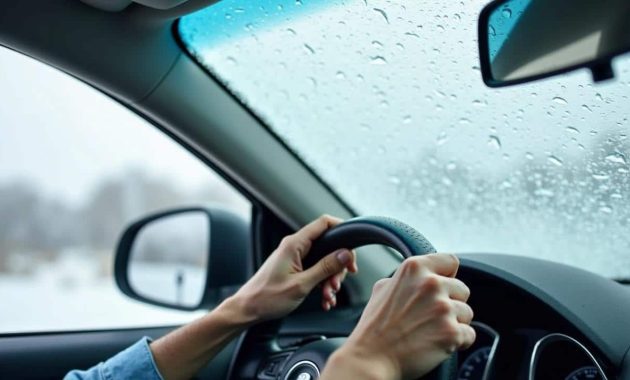
Moist air inside the car meets glass that has chilled below freezing, and a thin frost blossoms on the wrong side. That inside ice looks puzzling, yet the fix and the prevention both follow the same logic: remove moisture, warm the glass gently, and keep clean air moving.
Why a windshield freezes on the inside
Frost forms when humid cabin air hits cold glass and drops below the dew point. The moisture first condenses, then freezes as the temperature falls. Nighttime radiation cools the glass quickly. A damp interior pushes humidity higher still, which accelerates icing.
- Wet floor mats, boots and snow-laden coats add litres of water to the air.
- Short commutes never heat the cabin enough to dry it out.
- Recirculation mode traps humid air and fogs the glass faster.
- Tired door seals, blocked sunroof drains or a tiny heater core leak keep carpets damp.
- Nicotine film or interior grime gives moisture a clingy surface.
Frost inside the glass signals one root problem: too much moisture, not enough gentle airflow over a slightly warm screen.
Quick fixes that actually work
You need a clear, legal view before you move. Do not settle for a “porthole.” Clean the entire screen, mirrors and side windows.
- Air the cabin first. Open opposite doors for 60–90 seconds to dump humid air fast.
- Light rime wipes off. Use a clean microfiber or a dry sponge with firm strokes.
- Thicker ice needs a scraper. A plastic loyalty or bank card works in a pinch.
- Set ventilation to fresh air, not recirc. Aim full airflow at the glass. Use heat plus A/C if fitted to dry the air quickly.
- Start driving as soon as you have a full view. Gentle driving warms the engine and speeds demisting. Do not idle where it’s restricted.
- Keep a second cloth for the final buff to remove smears and restore night-time clarity.
Do not idle the car to “warm it up.” You waste fuel, risk a fine, and gain little demisting. Move off once you can see clearly.
What not to do
- No aerosol de-icers inside the cabin. Fumes irritate, residues smear, and overspray can damage trim.
- No heat guns, hairdryers, or candles. Rapid heating can stress the glass and start a crack.
- No boiling water. Thermal shock can shatter a screen in seconds.
- No “peephole” clearing. Police can issue penalties for restricted vision, and insurers may question liability after a crash.
Simple steps to stop it coming back
Cut moisture, keep airflow fresh, and let surfaces dry at the end of each trip.
- Knock snow and slush off footwear before you get in. Bag wet gloves and hats.
- Lift out rubber mats at night. Shake them, then dry them indoors if possible.
- Crack windows slightly for the last mile, weather and security permitting, to purge humid air.
- Use the A/C in winter. It dehumidifies while the heater adds warmth.
- Avoid recirculation except briefly to boost heat. Fresh air stays drier.
- Place a reusable desiccant bag on the dash or tunnel. Regenerate it in a low oven as directed.
- Clean the inside of the glass with an alcohol-based cleaner to strip films that trap moisture.
- Check for leaks. Damp underlay, a sweet coolant smell, or misting that never clears needs a technician.
- If safe, park facing the morning sun. A few degrees help on marginal days.
| Do | Don’t |
|---|---|
| Ventilate the cabin fully before scraping | Idle the engine to warm the interior |
| Use fresh air with heat and A/C for fast drying | Use recirculation for long periods |
| Scrape or wipe with plastic and microfiber | Pour hot water on the glass |
| Dry mats and remove wet items | Leave snow and gear soaking in the footwells |
| Fit a desiccant bag in winter | Spray chemical de-icers inside the cabin |
Legal angles in the UK and US
UK rules require a clear view of the road and mirrors before you move. Leaving a vehicle running while stationary on a public road can bring a fixed penalty, and many councils enforce anti-idling outside schools. In the US, multiple states and cities limit idling, and several “puffer” laws ban leaving a car running and unattended. Fines vary by locale, and theft risk rises sharply with engines left on.
Clear the entire screen, side windows and mirrors. Anti-idling rules exist in many places, and a full view is a legal requirement.
When tech can help
Heated windscreens and heated washer jets melt thin frost quickly once the engine is producing heat. Remote start systems need care: in some areas they remain restricted on the street, and they still add emissions. Electric vehicles offer the neatest trick here. Precondition the cabin while plugged in, which warms the glass and dries the air without tailpipe emissions. Seat and wheel heaters let you run a slightly lower cabin temperature, which cuts moisture.
➡️ This ultra-simple cardboard trick protects crops and boosts vegetable garden harvests
➡️ Tech bosses predict the end of work thanks to AI – but struggle to imagine what comes after
➡️ A 12,000‑year‑old human statue found inside a wall could rewrite the story of civilisation
A quick moisture audit you can run this week
- Feel the carpets under the mats. If they’re damp, you likely have a leak or chronic wet carry-in.
- Inspect door and hatch seals for gaps, tears, or dirt lines where water tracks.
- Check the cabin filter. A clogged filter throttles airflow and slows demisting.
- Look at sunroof drains. Pour a little water in the channels; it should exit under the car, not down the pillars.
Why the “A/C on in winter” tip works
Dry air absorbs moisture from glass faster than warm, humid air. An air conditioner is a dehumidifier. It chills air to condense water, then reheats it to the set temperature. That warm, dry stream hitting the windscreen pulls frost and mist off the surface quickly. Use it for the first minutes of every cold drive, then switch off if you like once the cabin stabilises.
Extra help for hard cases
Heavy condensation that returns daily points to soaked underlay. Consider lifting the front mats and placing small, low-wattage moisture absorbers in a garage, or leave desiccant in the car overnight. If the heater core weeps, you may notice a sweet smell, film on glass, and slow coolant loss. Tackle that early to protect health and electronics. In older vehicles, a replacement screen with a fresh bonding seal sometimes transforms winter behaviour.
Moisture out, gentle warmth in, fresh air across the glass. That trio stops inside frost before it starts.